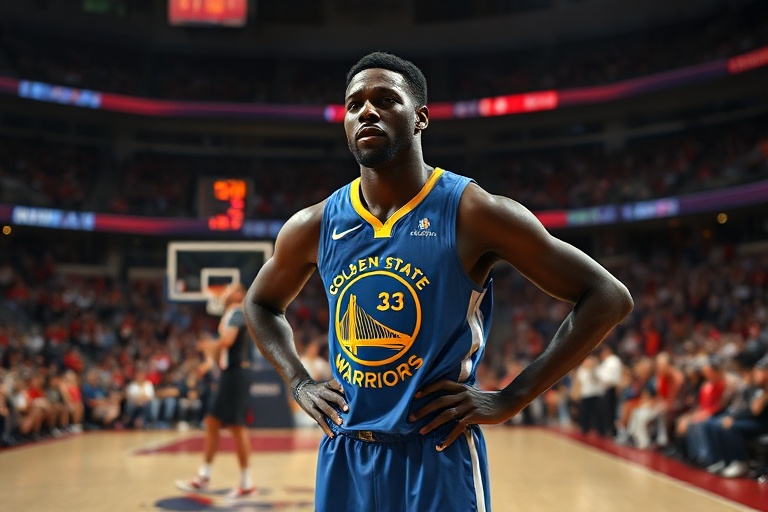
Draymond Green’s Contentious Legacy
Draymond Green, the three-time NBA champion and four-time All-Star, has spent over a decade building a reputation that extends far beyond his defensive prowess and playmaking ability. While he has been celebrated for his leadership and intensity, his career has also been marked by moments that have drawn significant backlash—so much so that opposing fans have made booing him a ritual. The reasons behind these reactions are complex, rooted in both on-court behavior and off-court persona, which have sparked debates across sports media and fan communities worldwide.
The Playing Style That Divides
Green’s style of play has often been described as physical, aggressive, and sometimes unsportsmanlike. His defensive intensity, while effective, has frequently pushed the boundaries of what is deemed acceptable. Instances such as the infamous “KD shove” during the 2019 playoffs or his repeated hard fouls on opponents have led to accusations of dirty play. These moments have not only drawn technical fouls but have also fueled perceptions of him as a player who crosses lines to gain an advantage.
His role in the Golden State Warriors’ dynasty has added another layer to the debate. While his contributions were vital to the team’s success, his confrontational approach has often overshadowed the achievements. Fans in opposing arenas have taken to booing him not just as a form of protest against his behavior but also as a way to disrupt his focus and energy on the court. This phenomenon isn’t unique to Green, but the frequency and intensity of the reactions he provokes set him apart.
The Off-Court Persona That Amplifies Reactions
Beyond basketball, Green’s outspoken nature and social activism have further complicated public perception. He has been vocal about racial injustice, police brutality, and other social issues, which has earned him both admiration and criticism. While many fans appreciate his willingness to use his platform for advocacy, others view his activism as performative or divisive, particularly when it intersects with his on-court behavior. This duality has created a schism among fans, with some defending him as a principled figure and others dismissing him as a hypocrite.
Green’s interactions with the media and public have also played a role in shaping his image. His blunt and sometimes combative responses to questions have endeared him to some while alienating others. For instance, his 2016 interview where he responded to a question about his role by saying, “I’m a small forward, motherf—er,” went viral not just for its candidness but also for the way it reinforced perceptions of him as confrontational and unfiltered. Such moments have contributed to a narrative that paints him as a polarizing figure rather than a universally respected athlete.
A Global Perspective on Fan Reactions
The booing of Draymond Green is not confined to American sports culture. His global following, particularly in countries where basketball has grown in popularity, has led to similar reactions in international arenas. For example, during the NBA’s preseason games in China and Europe, Green has faced boos that reflect a mix of cultural misunderstandings and differing expectations of sportsmanship. In some cultures, aggression is celebrated as a sign of determination, while in others, it is viewed as unsportsmanlike conduct. This clash of cultural norms has added another dimension to the way Green is perceived globally.
The rise of social media has also amplified these reactions. Clips of Green’s controversial moments circulate widely, often with captions and comments that frame him as a villain. This digital echo chamber has made it difficult for fans to separate his on-court contributions from his off-court persona, further entrenching the divisions in public opinion. The global nature of sports fandom means that these narratives transcend borders, creating a shared experience of either loving or loathing Green.
The Impact on His Legacy and Career
For a player of Green’s caliber, the consistent booing is more than just a distraction—it has tangible effects on his performance and legacy. The constant negativity can weigh on even the most resilient athletes, impacting their mental approach to the game. Green has acknowledged this challenge, stating in interviews that the boos serve as motivation rather than discouragement. However, the psychological toll of being a perpetual villain in the eyes of opposing fans cannot be understated.
Despite this, Green’s career achievements remain undeniable. He has been a cornerstone of one of the most dominant teams in NBA history, and his defensive versatility has redefined the role of a forward in modern basketball. Yet, his legacy is likely to be debated as much for his contributions as for his controversies. The question remains: will history remember him as a transformative champion or a polarizing figure whose actions overshadowed his success?
What’s Next for Draymond Green?
As Green approaches the latter stages of his career, the conversations around his legacy are intensifying. Will he find a way to redefine his public image and soften the edges that have made him a target for boos? Or will he continue to embrace his role as the league’s most divisive player, using it as fuel to drive his team forward? The answers to these questions will shape not only his personal legacy but also the broader narrative of how athletes are judged in an era where sports and social issues are increasingly intertwined.
One thing is certain: Draymond Green’s story is far from over. Whether on the court or in the public eye, his journey continues to captivate and confound fans around the world. For those who follow the NBA closely, his presence ensures that the conversation about sportsmanship, activism, and personal brand in sports will never be dull.
For more insights into the evolving dynamics of the NBA and its stars, visit our Sports section, where we break down the stories shaping the league today.
© 2023 Dave’s Locker. All rights reserved.