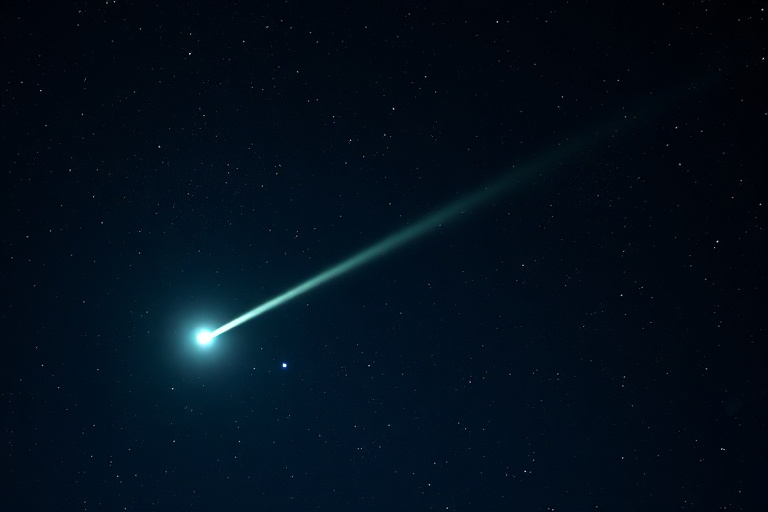
On April 12, 2026, a cosmic traveler known as asteroid 2026 JH2 will make an unusually close pass by Earth. While scientists have classified this encounter as non-threatening, the event offers a rare opportunity to study a near-Earth object (NEO) at relatively short range. The asteroid, measuring approximately 180 meters across, will approach within 4.2 million kilometers—about 11 times the distance to the Moon. Though this distance remains safe by cosmic standards, it falls within the category of “potentially hazardous” objects monitored by NASA’s Planetary Defense Coordination Office.
Understanding Asteroid 2026 JH2
Discovered in May 2024 through the Pan-STARRS survey in Hawaii, asteroid 2026 JH2 belongs to the Apollo group of near-Earth asteroids. These objects have orbits that cross Earth’s path, making them subjects of intense observation. What makes 2026 JH2 particularly noteworthy is its size and the precision of its projected trajectory. Unlike smaller space rocks that disintegrate harmlessly in Earth’s atmosphere, an object of this scale could cause regional damage if an impact were to occur.
The asteroid follows an elliptical orbit around the Sun, completing one revolution every 1.3 years. Its closest approach to Earth occurs roughly every 5-7 years, though the 2026 flyby will be the closest in the foreseeable future. Astronomers have used radar and optical observations to refine its orbit, reducing uncertainties in its path. Current models show a 0.00001% chance of impact—a figure so low it effectively rules out any immediate danger.
Key Characteristics of 2026 JH2
- Size: Approximately 180 meters in diameter
- Orbit Type: Apollo-class near-Earth asteroid
- Closest Approach: 4.2 million kilometers (April 12, 2026)
- Orbital Period: 1.3 years
- Composition: Likely a stony S-type asteroid, common in the inner solar system
Why Scientists Are Watching Closely
Close approaches like this one serve as valuable exercises for planetary defense systems. NASA’s Double Asteroid Redirection Test (DART) mission proved that humanity can alter an asteroid’s trajectory, but early detection remains critical. Asteroid 2026 JH2 will be bright enough for amateur astronomers to observe with 10-inch telescopes, providing data that could refine future impact predictions.
The event also highlights the importance of international collaboration in space surveillance. Organizations like the International Asteroid Warning Network (IAWN) and the Space Mission Planning Advisory Group (SMPAG) coordinate tracking efforts. While 2026 JH2 poses no threat, its study could inform strategies for deflecting larger, more dangerous objects in the future.
Broader Implications for Planetary Defense
Though asteroid 2026 JH2 will safely pass Earth, its flyby underscores a growing reality: the solar system is dynamic, and our understanding of it is constantly evolving. The number of known near-Earth objects has surged in recent decades, thanks to improved detection technologies. As of 2024, over 34,000 NEOs have been cataloged, with roughly 2,300 classified as potentially hazardous.
This increase in discovery doesn’t mean Earth is at greater risk—rather, it reflects better monitoring. Still, the question remains: how prepared are we for a surprise visitor? The 2013 Chelyabinsk meteor, which injured over 1,500 people, arrived without warning. Events like this serve as reminders that vigilance is essential.
What If an Asteroid Threatened Earth?
- Detection: Early-warning systems like NASA’s NEO Surveillance Mission scan the skies for incoming threats.
- Tracking: Once detected, astronomers determine the object’s size, speed, and trajectory.
- Deflection: Proposed methods include kinetic impactors (like DART), gravity tractors, or nuclear deflection in extreme cases.
- Evacuation: For smaller impacts, local evacuations may be necessary to minimize casualties.
Fortunately, asteroid 2026 JH2 will not require any of these measures. Its flyby will be a spectacle for scientists and stargazers alike, offering a chance to observe a cosmic wanderer up close. For researchers, it presents an opportunity to study the asteroid’s rotation, surface properties, and composition through spectroscopy and radar imaging.
How to Observe the Flyby
While the asteroid won’t be visible to the naked eye, backyard astronomers with the right equipment can track its movement. On April 12, 2026, 2026 JH2 will appear as a fast-moving point of light against the background stars. Websites like The Sky Live and NASA’s Eyes on the Solar System will provide real-time tracking data.
For those interested in deeper engagement, local astronomy clubs often host public observation events during notable celestial events. This flyby could inspire renewed interest in amateur astronomy, particularly among younger generations. Organizations like the Planetary Society and the Astronomical League offer resources for those looking to get involved in asteroid tracking.
For more on near-Earth objects and space exploration, visit Dave’s Locker Science and Dave’s Locker Technology for in-depth coverage of cosmic events and technological advancements.
Conclusion: A Reminder of Our Cosmic Neighborhood
Asteroid 2026 JH2’s 2026 flyby is a moment of quiet significance in the grand scale of the universe. It reminds us that Earth is part of a dynamic solar system, where objects move in predictable yet sometimes surprising ways. While the asteroid poses no danger, its study contributes to the broader effort of safeguarding our planet.
As technology advances, our ability to detect and track these objects will only improve. For now, we can marvel at the precision of orbital mechanics and the dedication of scientists who keep watch over the skies. The next time an asteroid makes headlines, it may not be as harmless—but for 2026 JH2, the message is clear: Earth’s cosmic neighbors are worth observing, even from a distance.