Black Rod: The Ceremonial Power Behind Britain’s Parliament
The Black Rod: A Symbol of Ceremonial Power
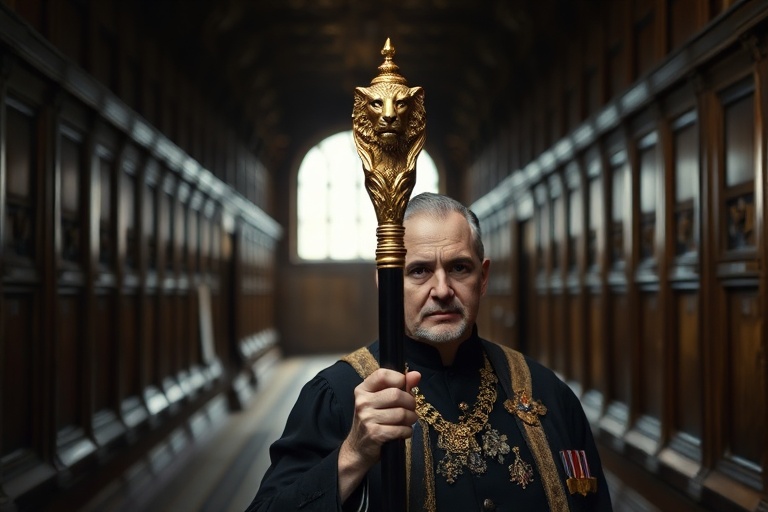
The Black Rod stands as one of the most recognizable symbols of authority within the British parliamentary system. More than just a ceremonial object, it represents the institutional power of the House of Lords and the intricate traditions that govern its proceedings. Crafted from ebony wood and capped with a golden lion, the rod is carried by the Gentleman Usher of the Black Rod, a senior official whose role blends protocol with political influence.
Its design is deliberate. The ebony shaft signifies strength and permanence, while the lion—traditionally the symbol of royal authority—reinforces the rod’s connection to the Crown. This fusion of materials underscores the dual nature of the Black Rod: both a ceremonial emblem and a functional instrument within the legislative process.
The Origins and Historical Evolution
The Black Rod traces its origins to the 14th century, emerging during the reign of Edward III. Initially, it served as a tool for maintaining order in the House of Lords, much like the mace used in the Commons. Over time, however, its role expanded beyond mere discipline to become a symbol of summoning power. The most famous instance of this occurs during the State Opening of Parliament, when the Black Rod is dispatched to summon MPs from the Commons to hear the King’s Speech.
This ritual dates back to 1340, when Edward III summoned the Commons to the Lords chamber to hear his speech—a moment that solidified the Black Rod’s place in parliamentary tradition. The act itself is laden with symbolism: the Commons must physically cross the threshold into the Lords’ domain, a rare moment when the two houses convene under the authority of the Crown.
By the 17th century, the Black Rod had evolved into a permanent fixture of parliamentary ceremony. Its design became standardized, and its role in the State Opening was codified. Today, the rod used in Parliament is a replica of the original, which was destroyed in a fire at the Palace of Westminster in 1834. The current version was crafted in 1845, blending historical continuity with modern craftsmanship.
Ceremonial Functions and Political Significance
The Black Rod’s most visible function occurs during the State Opening of Parliament. As the King’s Speech is delivered, the Gentleman Usher of the Black Rod plays a pivotal role. After the speech, he processes to the House of Commons, knocks three times on the door with the rod, and is ceremonially denied entry—symbolizing the Commons’ independence from the Crown. Only after the Speaker of the Commons grants permission does the procession continue, marking the rare convergence of both houses.
Beyond this iconic moment, the Black Rod serves several other ceremonial duties. It is present during the introduction of new peers, the swearing-in of members, and the annual prorogation of Parliament. Each appearance reinforces the rod’s association with tradition, hierarchy, and institutional memory. The Gentleman Usher, who carries it, is not merely a messenger but a custodian of parliamentary customs—a role that demands both gravitas and discretion.
Politically, the Black Rod’s symbolism extends to moments of constitutional tension. During the 2019 prorogation crisis, the rod became a focal point of debate. Prime Minister Boris Johnson’s decision to suspend Parliament, later ruled unlawful by the Supreme Court, drew scrutiny to the ceremonial tools of power. While the rod itself remained neutral, its presence in the chamber highlighted how deeply tradition is intertwined with governance—and how easily that tradition can become a flashpoint in modern politics.
The Gentleman Usher: Keeper of the Rod
The role of the Gentleman Usher of the Black Rod is one of the oldest and most enigmatic in British public life. Appointed by the Crown, the position is traditionally held by a senior military officer or civil servant, often with a background in ceremonial duties. The current officeholder, Lieutenant General David Leakey, brings a military precision to the role, blending discipline with diplomacy.
Responsibilities extend far beyond carrying the rod. The Gentleman Usher oversees the administration of the House of Lords, manages security protocols, and serves as a liaison between the Lords and the Crown. His presence in the chamber during debates is a reminder of the monarchy’s ceremonial oversight, even in an era of elected government. The role is non-partisan, yet its occupant wields subtle influence—a fact that underscores how tradition and power can coexist.
Unlike elected officials, the Gentleman Usher’s authority is derived from institutional continuity rather than public mandate. This distinction makes the role both fascinating and contentious. Some argue that the position is an anachronism, a relic of a pre-democratic era. Others see it as a necessary bridge between monarchy, parliament, and modernity—a living embodiment of the British constitution’s unwritten conventions.
Cultural Impact and Modern Relevance
The Black Rod has permeated popular culture, appearing in films, literature, and even video games as a symbol of British tradition. Its most famous fictional portrayal comes in the television series House of Cards, where it is wielded as a metaphor for political manipulation. In reality, however, its significance remains rooted in ceremony rather than intrigue.
Yet the rod’s cultural resonance extends beyond fiction. It features prominently in royal weddings, state funerals, and diplomatic ceremonies. When Queen Elizabeth II lay in state in 2022, the Black Rod rested beside her coffin—a powerful visual testament to the endurance of tradition. Such moments remind the public that while politics may shift, the symbols of governance remain constant.
In an era of rapid change, the Black Rod also raises questions about the future of ceremonial power. As debates over monarchy, Brexit, and parliamentary reform continue, its role may evolve. Could the rod one day become a purely symbolic artifact, stripped of its political functions? Or will it remain a living part of Britain’s constitutional fabric? The answers lie not in the rod itself, but in the institutions that uphold it.
Conclusion: More Than a Stick of Ebony
The Black Rod is often dismissed as a quaint relic, a piece of theater in an age of digital governance. Yet its true significance lies in what it represents: the unbroken chain of history, the balance of power, and the quiet authority of tradition. In an era where institutions face scrutiny and change, the rod endures—not because it wields power, but because it embodies the enduring idea of parliamentary democracy.
Its golden lion still gleams in the dim light of the Lords chamber, its ebony shaft still taps on the door of the Commons. And as long as those doors remain closed until invited, the Black Rod will continue to guard the rituals that define British governance.
For those interested in exploring further, the Culture and News sections of Dave’s Locker offer deeper insights into the intersections of tradition and modernity.