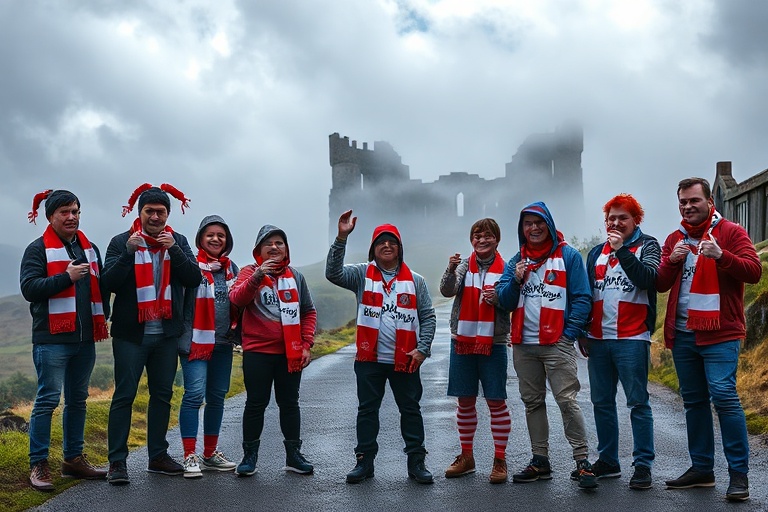
In the rugged northeastern corner of Scotland, where the North Sea meets the rolling Highlands, a football club has quietly built a reputation that extends far beyond its modest origins. Brora Rangers, based in the small town of Brora in Sutherland, may not be a household name in global football, but its story reflects the enduring spirit of community-driven sportsmanship and the unexpected pathways to success in the modern game.
The club’s rise in recent years has drawn attention not just for its on-field achievements, but for how it challenges conventional expectations of what a small-town club can accomplish. From competing in the Highland Football League to making headlines in the Scottish Cup, Brora Rangers has become a symbol of perseverance and ambition in Scottish football’s lower tiers. Their journey offers a compelling case study in how tradition and innovation can coexist, even in the face of financial and logistical challenges.
The Roots of a Highland Underdog
Founded in 1965, Brora Rangers emerged from a community eager to have its own football team. The club was formed after the merger of two local sides, Brora Thistle and Clythness Rovers, uniting the town under a single banner. For decades, the club operated in relative obscurity, playing in the lower leagues of Scottish football with limited resources and even more limited national exposure.
Yet, like many clubs in Scotland’s historic footballing culture, Brora Rangers carried a deep connection to its community. The club’s home ground, Dudgeon Park, is more than just a playing field—it’s a gathering place where local families, supporters, and players share in the rituals of the sport. The stadium’s modest facilities and the club’s reliance on local talent have always been defining characteristics, reflecting a commitment to grassroots football that prioritizes passion over prestige.
It wasn’t until the 2010s that Brora Rangers began to gain wider recognition. A series of strong performances in the Highland League, combined with a new wave of ambitious leadership, started to shift perceptions. The club’s ability to punch above its weight caught the attention of football observers, particularly as larger clubs in Scotland’s top tiers struggled with financial instability and identity crises.
A New Era of Ambition
The turning point for Brora Rangers came in the 2017–18 season when they secured the Highland League title for the first time in their history. This achievement was not merely a championship—it was a statement. By finishing at the top of a competitive regional league, Brora proved that consistency and tactical discipline could overcome the financial disparities that often favor bigger clubs.
That success opened doors to broader competition. In the 2018–19 Scottish Cup, Brora Rangers delivered one of the most memorable performances in the competition’s recent history. Drawn against Motherwell, a Scottish Premiership side with vastly superior resources, the Highlanders held their own before narrowly losing 2–1 in a tightly contested match. The result was celebrated across Scotland, with many praising the club’s courage and tactical approach. The tie drew significant attention to Brora’s model of development and community investment.
The club’s philosophy revolves around three core principles: developing local talent, maintaining strong community ties, and playing an attractive, attacking style of football. Unlike many lower-league clubs that rely on aging veterans or transient loan players, Brora has focused on nurturing young players from the local area. This approach not only strengthens the team but also fosters a sense of pride among supporters who see their neighbors and friends wearing the club’s colors.
Key Factors Behind Brora’s Rise
- Community Investment: Brora Rangers’ success is rooted in its deep connection to the town. The club benefits from a loyal fanbase that fills Dudgeon Park week in and week out, creating an atmosphere that belies its small size.
- Youth Development: The club’s academy has become a cornerstone of its strategy. By focusing on local youngsters, Brora ensures a pipeline of talent that understands the club’s values and playing style.
- Tactical Evolution: Under successive managers, Brora has transitioned from a direct, physical style to a more possession-based approach. This shift has made the team more competitive against higher-level opposition.
- Financial Prudence: Unlike clubs that chase investment or sponsorship deals that compromise their identity, Brora has maintained financial stability by operating within its means and prioritizing long-term growth over short-term gains.
Broader Implications for Scottish Football
Brora Rangers’ story is more than just a feel-good narrative—it offers broader lessons for Scottish football as a whole. In an era where financial disparities between top-tier clubs and the rest continue to widen, Brora demonstrates that there are alternative paths to success. Their model challenges the assumption that only clubs with significant budgets or elite academies can compete at higher levels.
The club’s achievements have also sparked conversations about the role of smaller clubs in Scotland’s football ecosystem. While the Scottish Professional Football League (SPFL) dominates the national conversation, the Highland League and other regional leagues provide vital opportunities for players and coaches to develop. Clubs like Brora serve as proving grounds where talent can emerge and be scouted by larger clubs, ensuring a steady flow of players into the professional ranks.
Moreover, Brora’s success has highlighted the importance of fan engagement in modern football. In an age where supporters often feel alienated by commercialization and poor governance, Brora’s model shows how a club can thrive by staying true to its roots. The club’s social media presence, community events, and open dialogue with fans have fostered a sense of ownership among supporters, proving that loyalty is not just about results but about shared values.
Looking Ahead: The Future of Brora Rangers
As Brora Rangers continues to build on its recent achievements, the club faces both opportunities and challenges. The next step for the Highlanders is to secure promotion to the SPFL, either through league restructuring or successful performances in the Scottish Cup. Such a move would not only elevate the club’s profile but also provide a platform to attract better players and resources.
However, the journey won’t be easy. The financial demands of professional football are significant, and even clubs with modest ambitions can find themselves stretched thin. Brora’s leadership will need to balance ambition with pragmatism, ensuring that the club’s identity and community focus remain intact as it grows.
For now, Brora Rangers remains a beacon of what football can be when it’s driven by passion rather than profit. Their story resonates with supporters across Scotland and beyond, offering a reminder that success in football is not solely measured in trophies or league positions, but in the pride of a community and the joy of playing the game the right way. As the club continues to write its story, one thing is certain: Brora Rangers is no longer just a small-town club with big dreams—it’s a club making those dreams a reality.
For fans of Scottish football looking to follow clubs that embody tradition and ambition, Dave’s Locker Sports provides comprehensive coverage of leagues beyond the SPFL. To explore how grassroots clubs are shaping the future of the game, visit our Analysis section for deeper insights.