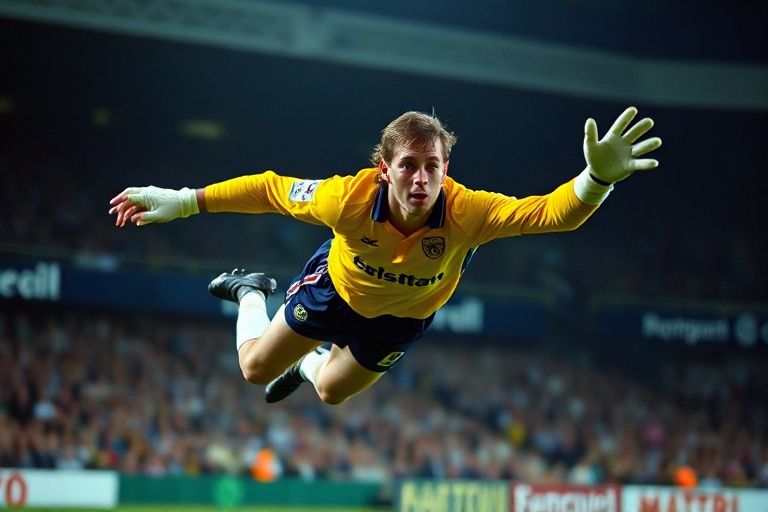
Nigel Martyn’s career in English football is defined by consistency, reliability, and an extraordinary longevity that few goalkeepers have matched. Born on August 11, 1966, in St Austell, Cornwall, Martyn rose from modest beginnings to become one of the most respected figures in the sport. His journey through the leagues—from Bristol Rovers to Crystal Palace, Leeds United, and finally Everton—painted a picture of professionalism that transcended club loyalties. More than just a shot-stopper, Martyn was a leader, a mentor, and a symbol of resilience in an era when goalkeepers were often judged by their ability to perform under pressure.
The Early Years: From Cornwall to the Football League
Martyn’s early life in Cornwall was far removed from the bright lights of top-flight football. He began his career at Bristol Rovers in 1987, a club then competing in the Third Division. His performances between the posts quickly caught the eye of scouts, and by 1989, he had secured a move to Crystal Palace in the First Division. At Palace, Martyn established himself as a first-team regular, helping the club avoid relegation and earning comparisons to established England internationals of the time. His agility, command of the penalty area, and ability to make crucial saves in tight situations made him stand out in an era when goalkeeping was becoming increasingly specialized.
By the mid-1990s, Martyn had become a household name in English football. His performances for Palace earned him a call-up to the England squad, and he made his international debut in 1992 under Graham Taylor. This period marked the beginning of a new chapter in his career, one that would see him transition to bigger clubs and greater challenges.
Leeds United: The Peak of Martyn’s Club Career
In 1996, Martyn joined Leeds United for a then-club record fee of £1 million. The move to Elland Road was a turning point. Leeds were in the midst of rebuilding under manager Howard Wilkinson, and Martyn’s arrival provided the defensive solidity they desperately needed. His first season saw Leeds qualify for the UEFA Cup, and by the 1999-2000 campaign, the club had secured a third-place finish in the Premier League, securing Champions League football for the first time in its history.
Martyn’s performances in the Champions League were particularly noteworthy. His ability to produce crucial saves in high-pressure matches—such as against Barcelona and AC Milan—earned him global recognition. He was often the last line of defense for a Leeds team that played an aggressive, attacking style of football. His partnership with defenders like Lucas Radebe and Rio Ferdinand became the backbone of one of the most exciting teams of the era.
By the time he left Leeds in 2003, Martyn had made over 200 appearances for the club and cemented his legacy as one of the greatest goalkeepers in the club’s history. His leadership and consistency were instrumental in guiding Leeds through some of their most successful years in the modern era.
Martyn’s International Career: A Faithful Servant to England
Martyn’s international career spanned over a decade, during which he earned 23 caps for England. While he never became the first-choice goalkeeper for major tournaments—David Seaman, Tim Flowers, and later David James often stood between him and regular starts—Martyn’s contributions were invaluable. He played a key role in qualifying campaigns and was a trusted deputy whenever called upon.
His most memorable moment for England came in 1998, when he played a full match against Colombia in a friendly, producing a series of crucial saves to secure a 2-0 victory. This performance, along with his consistency at club level, earned him the respect of fans and pundits alike. Many believe that Martyn’s international career was understated, a testament to his professionalism rather than his lack of ability.
The Later Years: Everton and Legacy
After leaving Leeds in 2003, Martyn joined Everton on a free transfer, reuniting with former teammate David Moyes. At Goodison Park, he provided invaluable experience to a young and developing squad. His arrival coincided with a resurgence in Everton’s fortunes, and he played a key role in their push for European qualification during the 2004-05 season.
Martyn retired from professional football in 2006, ending a career that spanned nearly two decades. His retirement was marked by tributes from across the footballing world, with many citing his professionalism, humility, and dedication as qualities that set him apart from his peers. Even after hanging up his gloves, Martyn remained involved in football, working as a goalkeeping coach and pundit, sharing his insights with a new generation of players.
Martyn’s Influence Beyond the Pitch
Nigel Martyn’s impact extended beyond his performances on the field. He was known for his work ethic, his ability to inspire teammates, and his willingness to mentor younger players. During his time at Leeds United, he was often seen as a father figure to the squad, providing guidance and support both on and off the pitch.
Martyn’s influence can also be seen in the way he conducted himself in the public eye. Unlike some of his contemporaries, he avoided controversy and maintained a dignified presence throughout his career. His professionalism earned him respect across the footballing community, and he remains a role model for aspiring goalkeepers.
The Importance of Consistency in Modern Goalkeeping
In an era when goalkeepers are often judged by their social media presence as much as their performances, Martyn’s career serves as a reminder of what truly matters in the position. His consistency over two decades is a rarity in modern football, where transfers and managerial changes often disrupt careers. Martyn’s ability to adapt to different leagues, managers, and teammates speaks volumes about his adaptability and mental strength.
For young goalkeepers, Martyn’s career offers several lessons. First, the importance of technical skill cannot be overstated, but neither can the value of mental resilience. Second, leadership is not about vocal outbursts or social media bravado—it’s about leading by example, day in and day out. Martyn embodied these principles, and his legacy is a testament to their enduring relevance.
Conclusion: A Legacy of Professionalism and Excellence
Nigel Martyn’s career is a story of perseverance, professionalism, and excellence. From his humble beginnings in Cornwall to the heights of the Premier League and European competition, he carved out a legacy that few goalkeepers can match. His performances for clubs like Leeds United and Everton, as well as his contributions to the England national team, solidify his place in football history.
Martyn’s story is also a reminder of a time when footballers were judged by their actions on the pitch rather than their off-field antics. In an era of instant fame and scrutiny, his humility and dedication stand as a model for future generations. As football continues to evolve, Nigel Martyn’s career serves as a benchmark for what it means to be a true professional.
For fans of English football, Martyn’s name will forever be associated with reliability, leadership, and class. His legacy is not just one of saves and clean sheets, but of the values he brought to the game—values that transcend generations and eras.
To learn more about the history of goalkeepers in English football, visit our Sports section. For deeper insights into the evolution of football tactics, explore our Analysis category.