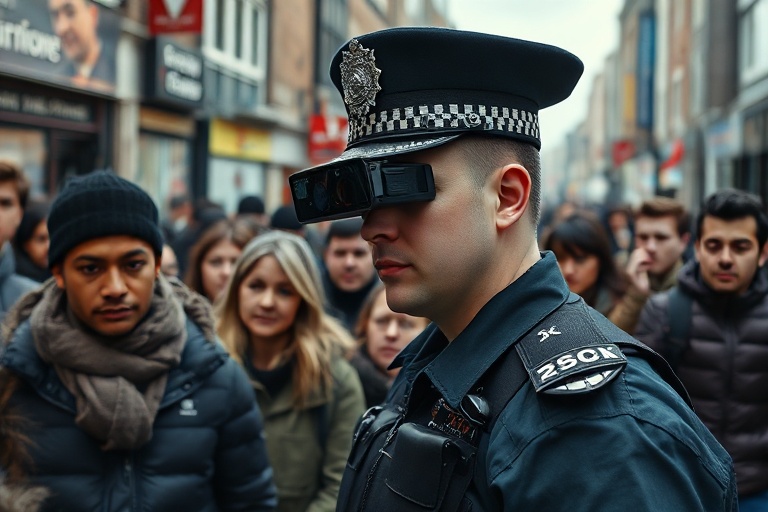
croydon facial recognition arrests
Recent arrests in Croydon following the use of facial recognition technology have intensified discussions about privacy, policing, and the rapid adoption of surveillance tools in the UK.
What Happened in Croydon
Police in Croydon, South London, made headlines after using live facial recognition (LFR) technology to identify and arrest individuals suspected of involvement in a string of burglaries. The arrests, which took place over a two-week period in late 2023, marked one of the first high-profile deployments of the technology in a London borough outside of major events like protests or sporting fixtures.
According to reports, the system flagged several individuals whose faces matched those in a database of known offenders. Officers then approached and questioned these individuals, leading to multiple arrests. While police defended the operation as a success in tackling local crime, civil liberties groups raised immediate concerns about the accuracy and legality of the technology.
One of the arrested individuals, who was later released without charge, described the experience as unsettling. “I was just walking down the street when an officer told me I was being detained under suspicion of burglary,” they said. “I had no idea my face was being scanned.” This incident underscores the opaque nature of LFR deployments and the lack of public awareness surrounding its use.
The Technology Behind the Arrests
Live facial recognition technology relies on artificial intelligence to compare faces captured in real-time against a database of images, often sourced from police records or other government databases. In Croydon, the system was deployed in public spaces, including shopping centers and transport hubs, raising questions about where and when such surveillance is permissible.
How Facial Recognition Works
The process involves several key steps:
- Detection: Cameras scan crowds in real-time, capturing faces.
- Analysis: Software extracts facial features and creates a biometric template.
- Comparison: The template is matched against a watchlist of known individuals.
- Alert: If a match is found, officers are notified to intervene.
Proponents of the technology argue that it allows police to identify suspects quickly and efficiently, reducing crime and improving public safety. However, critics point to a growing body of evidence suggesting high rates of false positives, particularly among marginalized communities. A 2023 study by the University of Essex found that LFR systems misidentified individuals of Black and Asian descent at significantly higher rates than white individuals.
In Croydon, police have not disclosed the accuracy rate of their system, nor have they provided details on how many false positives occurred during the operation. This lack of transparency is a recurring issue with LFR deployments across the UK, where oversight and accountability remain inconsistent.
Legal and Ethical Implications
The use of facial recognition in Croydon has reignited debates about the balance between security and civil liberties. While police argue that LFR is a valuable tool for fighting crime, legal experts and advocacy groups contend that its deployment violates privacy rights and disproportionately targets certain communities.
Current Legal Framework
In the UK, the use of facial recognition by police is governed by the Police and Surveillance guidelines, which require forces to conduct privacy impact assessments and obtain necessary authorizations. However, these guidelines are not legally binding, and there is no centralized oversight body to ensure compliance. This has led to a patchwork of approaches, with some police forces embracing the technology while others remain cautious or oppose it outright.
A landmark 2021 Court of Appeal ruling in R (Bridges) v South Wales Police found that the use of LFR by South Wales Police was unlawful because it lacked sufficient safeguards to protect human rights. The case set a precedent, but its impact has been limited. Many forces, including those in Croydon, continue to deploy LFR without clear legal frameworks or public consultation.
Ethical Concerns
The ethical concerns surrounding facial recognition extend beyond accuracy and legality. There are also questions about consent, proportionality, and the potential for mission creep—where surveillance tools initially used for crime-fighting are later repurposed for other purposes, such as monitoring political dissent.
In Croydon, the deployment of LFR in public spaces without prior notice or opt-out mechanisms has fueled concerns about a surveillance state in the making. “This is a slippery slope,” said a spokesperson for Digital Rights UK. “Once the public accepts this level of surveillance, it becomes much easier for authorities to expand its use without scrutiny.”
Broader Implications for the UK
The Croydon arrests are part of a larger trend in the UK, where facial recognition technology is being adopted by an increasing number of police forces. According to a 2023 report by Big Brother Watch, at least 14 police forces in the UK have used LFR since 2018, with varying degrees of success and controversy.
National Trends
Several factors are driving the adoption of facial recognition in the UK:
- Crime Reduction: Police argue that LFR helps identify suspects quickly, reducing response times and improving conviction rates.
- Public Support: Surveys suggest that a majority of the public supports the use of facial recognition for serious crimes, particularly when it leads to arrests.
- Technological Advancements: Improvements in AI and machine learning have made facial recognition more accurate and affordable, making it an attractive tool for cash-strapped police forces.
- Post-Pandemic Policing: The COVID-19 pandemic accelerated the adoption of digital surveillance tools, with facial recognition being used to enforce lockdowns and track compliance.
However, these trends are not without pushback. Civil liberties groups, including Liberty and Amnesty International, have campaigned vigorously against the use of LFR, arguing that it undermines democratic values and disproportionately affects minority communities. In 2020, the UK’s Information Commissioner’s Office (ICO) issued a warning to police forces about the risks of using facial recognition without proper safeguards.
The Path Forward
The debate over facial recognition in the UK is far from settled. While some advocate for a complete ban on the technology, others argue for stricter regulations and greater transparency. The government has so far taken a hands-off approach, leaving individual police forces to decide how and when to deploy LFR.
In Croydon, the police have defended their use of the technology, stating that it has led to tangible results in reducing crime. However, without independent oversight or public consultation, the legitimacy of these claims remains open to question. As facial recognition technology becomes more pervasive, the need for a coherent national strategy has never been greater.
Conclusion: A Call for Balance
The arrests in Croydon serve as a microcosm of the broader debates surrounding facial recognition technology in the UK. While it offers undeniable benefits in terms of crime-fighting and public safety, its unchecked adoption poses significant risks to privacy, civil liberties, and social cohesion.
For facial recognition to gain wider acceptance, police forces must prioritize transparency, accountability, and public engagement. This means conducting thorough privacy impact assessments, publishing data on accuracy rates, and providing clear opt-out mechanisms for the public. It also means recognizing that technology, while powerful, is not a panacea for complex social problems like crime.
Ultimately, the use of facial recognition should be guided by a commitment to human rights and democratic values. Without these safeguards, the technology risks becoming a tool of oppression rather than a force for good. The Croydon arrests may have made headlines, but they are just the beginning of a much larger conversation about the future of surveillance in the UK.