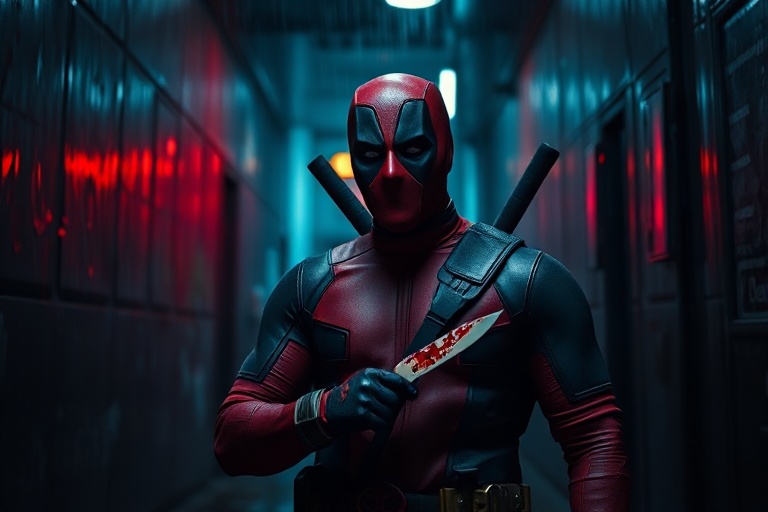
Deadpool’s Killer Legacy: How Wade Wilson Changed Global Pop Culture
Wade Wilson, better known by his merciless alias Deadpool, has transcended comic book lore to become a cultural touchstone. His fourth-wall-breaking antics and morally ambiguous heroism have sparked discussions from Tokyo to Toronto. Yet behind the red-and-black suit lies a narrative that intersects with global media, ethics in entertainment, and the evolving nature of antiheroes in pop culture.
This isn’t just about a character who breaks the fourth wall—it’s about how Deadpool reflects broader societal shifts. His unfiltered commentary mirrors the rise of cynicism in modern storytelling, where irony and self-awareness often take center stage. As audiences grow more skeptical of traditional heroism, Wilson’s killer instinct—both in combat and in satire—resonates across borders.
The Evolution of Wade Wilson: From Comics to Global Icon
Created by writer Fabian Nicieza and artist Rob Liefeld, Wade Wilson debuted in New Mutants #98 (1991) as a mercenary with a dark sense of humor. Unlike traditional superheroes, he was flawed, violent, and unapologetically crude. His transformation into Deadpool in The New Mutants #98 redefined the antihero archetype, blending action with meta-commentary that audiences hadn’t seen before.
Deadpool’s popularity exploded in the 2000s, thanks in part to the rise of online fan communities. Web forums and early social media platforms allowed fans to dissect his character in ways never before possible. By the time Ryan Reynolds took on the role in 2016, Deadpool had already cemented his place in global pop culture—a rare feat for a Marvel character not named Spider-Man or Wolverine.
His global appeal stems from more than just humor. Deadpool’s irreverence challenges cultural norms around heroism, making him a figure of fascination in both Western and Eastern markets. In Japan, where antiheroes like Berserk’s Guts and Naruto’s Sasuke thrive, Deadpool’s chaotic energy aligns with long-standing traditions of morally gray protagonists.
The Killer Appeal: Why Deadpool Resonates Worldwide
Deadpool’s lethal charm lies in his unpredictability. He’s a killer with a conscience—or at least, a warped sense of morality. This duality makes him compelling in regions where traditional heroism feels outdated. In Europe, where existential literature and absurdist humor have deep roots, Deadpool’s blend of violence and wit feels refreshingly modern.
His global fandom isn’t just about comic books. The entertainment industry has embraced Deadpool as a blueprint for rebooting franchises. His success paved the way for other R-rated comic adaptations, proving that audiences crave complexity over sanitized storytelling.
Consider the following factors that contribute to his worldwide appeal:
- Cultural Anarchy: Deadpool’s willingness to mock sacred cows aligns with the rise of satirical media in the 21st century.
- Digital Natives: His fourth-wall breaks resonate with a generation raised on memes and viral content.
- Global Antiheroes: From John Wick to Joker, audiences increasingly favor morally ambiguous protagonists.
- Adaptability: Deadpool’s humor and action translate well across languages, making him a rare global comic icon.
The Dark Side: Controversies and Ethical Dilemmas
Despite his popularity, Deadpool has sparked debates about violence in media. Critics argue that his glorification of killing—even in a satirical context—could influence younger audiences. In countries with strict media regulations, such as China, Deadpool’s films faced scrutiny over their R-rating and graphic content.
The ethical questions don’t stop there. Deadpool’s mercenary lifestyle raises concerns about glorifying freelance violence. In regions where private military contractors operate with impunity, his character can feel uncomfortably close to reality. This duality—hero or villain?—forces audiences to confront uncomfortable truths about power and morality.
Deadpool also challenges traditional gender roles in superhero narratives. While he’s often seen as a male power fantasy, his self-aware approach to sexuality and identity invites discussions about representation in media. In Latin America and parts of Asia, where LGBTQ+ themes are still gaining acceptance, Deadpool’s fluidity adds another layer of complexity.
Deadpool’s Legacy: A Blueprint for Future Antiheroes
Wade Wilson’s killer persona has left an indelible mark on global entertainment. His influence can be seen in everything from video games like Fortnite (which featured Deadpool skins) to the rise of antiheroes in Korean dramas. His success proves that audiences are hungry for characters who defy expectations.
Looking ahead, Deadpool’s legacy will likely shape how future antiheroes are written. As streaming platforms dominate global markets, characters like Deadpool—who thrive on subversion—will continue to dominate. His ability to blend humor, violence, and self-awareness makes him a template for the next generation of flawed protagonists.
Yet his story also serves as a cautionary tale. The line between satire and glorification is thin, and Deadpool’s creators have had to navigate that balance carefully. As media becomes more globalized, the responsibility of creators to consider cultural sensitivities will only grow more critical.
The Future of Wade Wilson: What’s Next?
With rumors of Deadpool 3 and potential spin-offs, Wade Wilson’s story is far from over. The character’s adaptability ensures his relevance in an ever-changing media landscape. Whether through new comic arcs, video games, or international adaptations, Deadpool will likely continue breaking boundaries.
But his greatest impact may lie in how he’s inspired a wave of antiheroes who refuse to play by the rules. In a world where traditional heroism feels increasingly out of touch, Wade Wilson’s killer instinct offers a refreshing alternative—one that challenges, provokes, and entertains in equal measure.
As audiences worldwide grow more discerning, characters like Deadpool will remain vital. They force us to question what it means to be a hero in the 21st century—and whether killing can ever truly be justified, even in fiction.