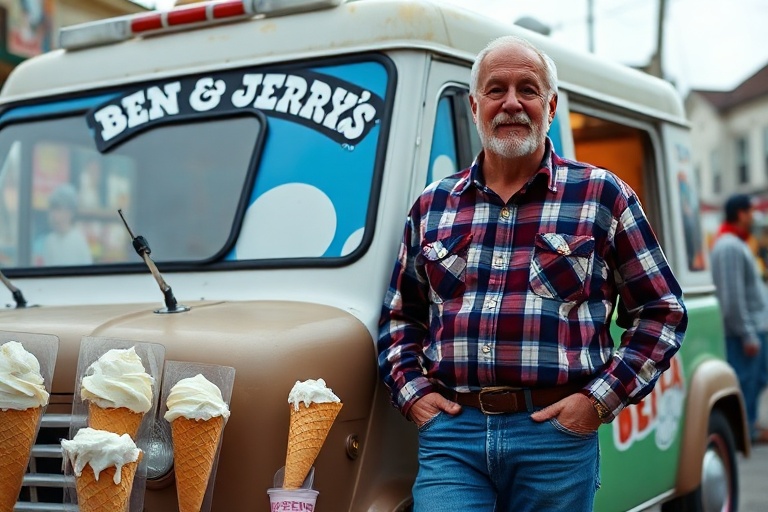
Jerry Greenfield isn’t just a name on a pint of ice cream—he’s a symbol of how two childhood friends turned a $5 correspondence course in ice cream making into one of the world’s most recognizable brands. Born in 1951 in Brooklyn, New York, Greenfield’s journey from a failed attempt at medical school to co-founding Ben & Jerry’s with Ben Cohen reads like a modern-day entrepreneurial fable. But it’s more than a story of business success; it’s a narrative about cultural values, social responsibility, and the power of authenticity in branding.
What began in a renovated gas station in Burlington, Vermont, in 1978 would grow into a global movement. Today, Ben & Jerry’s operates in over 35 countries, with flavors like Cherry Garcia and Phish Food becoming cultural touchstones. Yet behind the whimsical names and vibrant packaging lies a business philosophy rooted in progressive values—something Greenfield has championed throughout his career.
The Birth of an Ice Cream Empire
The story of Ben & Jerry’s is well-documented, but its origins remain remarkable. After being rejected from medical school, Greenfield and Cohen decided to open an ice cream parlor, despite having no prior experience. Their initial investment was minimal: $12,000, most of which went toward a used ice cream machine. The first location in Burlington was a modest space, but it quickly became a local sensation thanks to its unique, chunky textures and bold flavors.
What set Ben & Jerry’s apart wasn’t just the taste—it was the commitment to quality. The duo insisted on using Vermont’s fresh dairy, a decision that not only supported local farmers but also ensured a superior product. This focus on local sourcing would later become a cornerstone of the brand’s identity, resonating with consumers who valued transparency and sustainability.
By the mid-1980s, Ben & Jerry’s had expanded beyond Vermont, becoming a national brand. The company’s growth was fueled by a combination of clever marketing—like the infamous “Vermonster” milkshake—and a corporate culture that prioritized employee welfare. Greenfield and Cohen famously capped executive salaries and maintained a policy of open-book management, where financial information was shared with all employees.
A Business Model Built on Values
Greenfield’s approach to business was radical for its time. He and Cohen embedded social responsibility into the company’s DNA, long before corporate social responsibility (CSR) became a mainstream concept. Their commitment to progressive values manifested in several ways:
- Fair Trade Advocacy: Ben & Jerry’s became one of the first major brands to source Fair Trade-certified ingredients, ensuring fair wages and ethical labor practices for farmers around the world.
- Climate Action: The company has been vocal about climate change, implementing sustainability initiatives like reducing greenhouse gas emissions and supporting renewable energy.
- Social Justice Initiatives: From advocating for marriage equality to supporting Black Lives Matter, Ben & Jerry’s has used its platform to amplify social causes.
- Employee Benefits: The company offers generous benefits, including health insurance for full-time employees and a profit-sharing program.
This values-driven approach wasn’t just altruistic—it was strategic. Consumers today, particularly younger generations, are increasingly drawn to brands that align with their personal beliefs. Ben & Jerry’s has thrived by tapping into this demand, proving that profitability and purpose are not mutually exclusive.
Greenfield’s leadership style emphasized collaboration and humility. Unlike many corporate leaders, he shunned the spotlight, preferring to let the brand and its mission speak for themselves. His hands-on involvement in every aspect of the business—from flavor development to social campaigns—reinforced the company’s authenticity.
From Vermont to the World: Global Expansion and Cultural Impact
Ben & Jerry’s expansion beyond the U.S. in the 1990s marked a turning point for the brand. The company’s entry into international markets was met with curiosity and enthusiasm, particularly in Europe, where premium ice cream was already a cultural staple. However, Greenfield and Cohen were careful to adapt their approach to local tastes while maintaining their core values.
In the UK, for example, Ben & Jerry’s became synonymous with fun and indulgence, thanks to flavors like Cookie Dough and Cherry Garcia. In Japan, the company introduced matcha-flavored ice cream, blending American innovation with local preferences. This ability to balance global appeal with regional authenticity has been key to Ben & Jerry’s international success.
Beyond its commercial success, Ben & Jerry’s has woven itself into the fabric of global pop culture. The brand’s playful branding, from the cow mascot to the iconic packaging, has made it a favorite subject of memes, social media challenges, and even academic studies on corporate branding. It’s a testament to Greenfield’s vision that a company known for ice cream is also recognized for its cultural influence.
In 2000, Ben & Jerry’s was acquired by Unilever, a move that allowed the brand to scale globally while maintaining its independent mission. Greenfield continued to serve on the board and remained actively involved in social initiatives, demonstrating that even after a major corporate transition, the company’s values could endure.
The Legacy of Jerry Greenfield: More Than Just Ice Cream
Today, Jerry Greenfield is often celebrated as a pioneer in corporate social responsibility. His work has inspired countless entrepreneurs and business leaders to prioritize ethics and sustainability alongside profitability. But perhaps his most enduring legacy is the way Ben & Jerry’s has redefined what it means to be a global brand.
In an era where consumers are increasingly skeptical of corporate motives, Ben & Jerry’s stands out as a rare example of a company that has stayed true to its roots. Greenfield’s emphasis on authenticity, transparency, and activism has set a standard that other brands continue to aspire to.
Looking ahead, the future of Ben & Jerry’s—and its global impact—will depend on its ability to navigate challenges like climate change, supply chain disruptions, and shifting consumer preferences. Yet, with Greenfield’s values deeply embedded in the company’s culture, there’s reason to believe that the brand will continue to evolve without losing sight of its core mission.
For those interested in the intersection of business and social change, Greenfield’s journey offers valuable lessons. It’s a reminder that success isn’t just measured in profits or market share, but in the lives touched and the communities uplifted along the way.
As Ben & Jerry’s continues to expand its global footprint, one thing is certain: Jerry Greenfield’s legacy will endure, not just in the flavors we enjoy, but in the way we think about the role of business in society. Whether you’re a fan of Cherry Garcia or simply admire the brand’s commitment to social justice, there’s no denying the impact of this humble ice cream maker from Vermont.