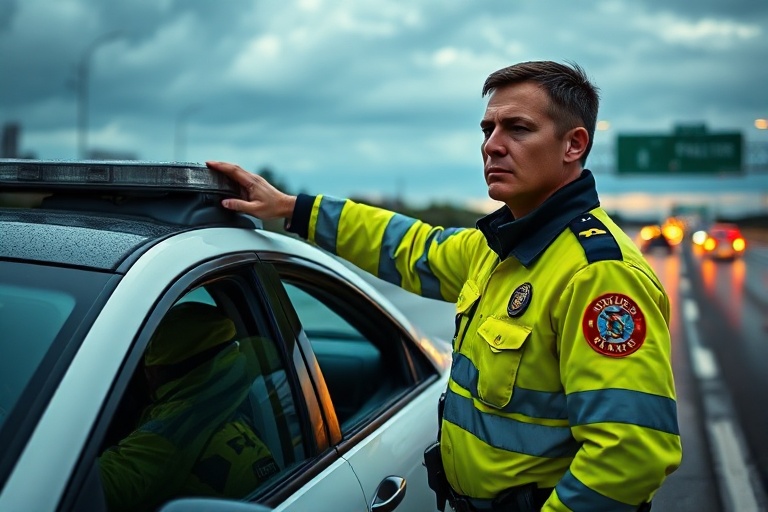
Highway patrol officers serve as the silent guardians of America’s roadways, ensuring safety through enforcement, education, and rapid response. These specialized law enforcement professionals operate under state-level agencies, though their duties often intersect with federal initiatives when crimes cross jurisdictional lines. Unlike local police, highway patrol focuses on traffic safety, vehicle inspections, and highway-related criminal activity, making them uniquely positioned to address both minor infractions and serious felonies on interstates and state routes.
Their dual role as both traffic enforcers and emergency responders sets highway patrol apart from other law enforcement branches. When a multi-vehicle collision occurs or a dangerous driver flees at high speeds, these officers are often the first on scene, coordinating with fire, EMS, and other agencies. Their presence isn’t just reactive—it’s preventive, with visibility patrols and sobriety checkpoints designed to deter reckless behavior before tragedies unfold.
The Origins and Evolution of Highway Patrol
The concept of highway patrol emerged in the early 20th century, a response to the rapid rise of automobiles and the chaos they introduced to roadways. Texas established the first official state highway patrol in 1929, followed closely by California and Pennsylvania. These early units were often small, underfunded, and equipped with little more than revolvers and basic radios. Their primary mission was simple: reduce the alarming number of traffic fatalities, which claimed over 30,000 lives annually by the 1930s.
Over the decades, highway patrol agencies expanded their scope. The 1960s and 70s brought federal funding through initiatives like the National Maximum Speed Law and the creation of the National Highway Traffic Safety Administration (NHTSA). Officers began receiving advanced training in accident reconstruction, drug interdiction, and counterterrorism. Today, many state patrol units maintain specialized divisions, including K-9 units, SWAT teams, and cybercrime investigation units that trace digital evidence from crashes caused by distracted driving.
One notable evolution is the integration of technology. Dashcams, automatic license plate readers, and real-time data sharing with other agencies have transformed how patrol officers operate. In some states, officers now use predictive analytics to identify high-risk areas during specific times of day. This data-driven approach has contributed to measurable reductions in fatal crashes, though it has also sparked debates about privacy and surveillance.
What Does Highway Patrol Do? Duties and Responsibilities
Highway patrol officers perform a wide range of duties that extend far beyond writing speeding tickets. Their responsibilities typically fall into four main categories: traffic enforcement, emergency response, criminal investigation, and public education. Each role plays a critical part in maintaining the flow of traffic and the safety of all road users.
Traffic Enforcement and Regulation
This is the most visible aspect of highway patrol work. Officers monitor speed limits, investigate crashes, and enforce seatbelt and child safety seat laws. They also conduct commercial vehicle inspections to ensure trucks and buses comply with federal safety regulations. Violations can lead to citations, license suspensions, or even felony charges in cases involving repeat offenders or severe negligence.
In states like California and Florida, patrol officers are authorized to perform DUI checkpoints, where they systematically stop vehicles to check for impaired drivers. These operations have proven effective in reducing alcohol-related fatalities, though they remain controversial due to concerns about racial profiling and civil liberties.
Emergency Response and Crisis Management
When a serious crash occurs, highway patrol officers are often the first responders. They secure the scene, direct traffic around hazards, and assist injured motorists until EMS arrives. In large-scale incidents, such as bridge collapses or hazardous material spills, these officers coordinate with multiple agencies to manage evacuations and contain threats.
Some patrol units also respond to non-traffic emergencies, such as natural disasters or active shooter situations on highways. Their vehicles are equipped with emergency lights, rescue tools, and in many cases, medical supplies, allowing them to provide immediate aid when every second counts.
Criminal Investigation and Interdiction
Highway patrol officers are trained to detect and investigate crimes that occur on or near highways. This includes drug trafficking, human smuggling, and stolen vehicle recovery. The vast, unobstructed spaces of interstates make them ideal corridors for illegal activity, and patrol officers work closely with federal agencies like the DEA and ICE to disrupt these operations.
One increasingly common tactic is the use of undercover vehicles and informant networks to infiltrate criminal organizations. In Texas, for example, the Highway Patrol’s Criminal Interdiction Unit has seized millions of dollars in cash and drugs over the past five years, often from vehicles traveling at high speeds to evade detection.
Public Education and Community Engagement
Highway patrol agencies invest heavily in educational programs aimed at reducing preventable accidents. Initiatives like “Click It or Ticket” and “Drive Sober or Get Pulled Over” have become cultural touchstones, reminding drivers of the consequences of reckless behavior. Officers frequently visit schools, community centers, and senior living facilities to teach defensive driving, share real-life crash stories, and distribute safety materials.
Some agencies also offer advanced driving courses for teens and new drivers, partnering with organizations like AAA to promote safe driving habits. These efforts have contributed to a steady decline in traffic-related fatalities over the past decade, though challenges remain, particularly with distracted driving.
The Challenges Facing Modern Highway Patrol
Despite their critical role, highway patrol officers face a growing list of challenges that threaten their effectiveness and well-being. From staffing shortages to evolving criminal tactics, the demands on these agencies continue to escalate.
One of the most pressing issues is officer recruitment and retention. Many states struggle to fill patrol positions due to low pay, high stress, and public scrutiny. In California, for instance, the Highway Patrol has seen a 15% decline in applications over the past three years, forcing some units to rely on overtime and temporary hires. This shortage not only stretches resources thin but also increases response times in emergencies.
Another challenge is the rise of distracted driving, particularly from smartphone use. Despite laws banning handheld devices, enforcement remains difficult. Officers report that drivers often hide phones when approached, making it hard to gather evidence for citations. Some agencies have turned to automated camera systems to capture violations, but these technologies face legal and ethical hurdles.
Highway patrol also grapples with the opioid epidemic and the increasing prevalence of fentanyl-laced drugs. Many crashes that were once attributed to impaired driving are now linked to opioid use, requiring officers to carry naloxone and receive advanced training in overdose response. This shift has added another layer of complexity to their already demanding roles.
The political climate further complicates their work. Highway patrol officers are often caught in the middle of debates over police reform, racial profiling, and the militarization of law enforcement. Agencies have responded by implementing body-worn cameras, bias training, and community policing initiatives, but skepticism persists among advocacy groups.
The Future of Highway Patrol: Innovation and Adaptation
To meet these challenges, highway patrol agencies are embracing innovation. Artificial intelligence, autonomous vehicles, and advanced forensic tools are reshaping how officers operate. In some states, patrol cars are equipped with AI-powered dashcams that can detect erratic driving patterns and alert officers to potential hazards before they escalate.
Autonomous highway patrol vehicles are also being tested in controlled environments. These vehicles could one day patrol high-risk areas, using sensors to detect crashes or stalled vehicles and automatically dispatching assistance. While fully autonomous units are still years away, semi-autonomous systems are already in use for traffic monitoring and accident reconstruction.
Another promising development is the use of data analytics to predict and prevent crashes. By analyzing historical crash data, weather patterns, and traffic volumes, agencies can identify high-risk locations and times. For example, the Ohio State Highway Patrol recently reduced nighttime crashes by 22% in targeted areas after deploying predictive analytics to guide patrol schedules.
Community partnerships are also evolving. Many agencies now collaborate with ride-sharing companies like Uber and Lyft to offer free or discounted rides during holidays and high-risk periods. These initiatives aim to reduce impaired driving by providing safe alternatives for those who might otherwise get behind the wheel.
Looking Ahead: A Balanced Approach
The future of highway patrol will likely hinge on balancing enforcement with education and technology. Officers will need to adapt to new forms of criminal activity, such as cybercrimes involving connected vehicles, while maintaining their core mission of keeping roads safe. Public trust will remain a critical factor, requiring transparency, accountability, and a commitment to fairness.
As America’s infrastructure continues to age and vehicle technology advances, highway patrol will play an even more vital role in ensuring safety. From electric vehicle charging corridors to smart highways, officers will need to stay ahead of the curve, ready to respond to the challenges of tomorrow.
One thing is certain: the men and women of highway patrol will continue to serve as the backbone of roadway safety, day in and day out. Their work may go unnoticed by most drivers, but it is their vigilance that prevents countless tragedies each year.
How to Support Highway Patrol and Roadway Safety
Highway patrol agencies rely on public support to fulfill their missions. There are several ways individuals can contribute to safer roads:
- Report dangerous behavior: If you witness reckless driving, impaired operation, or suspicious activity, call your local highway patrol or 911. Provide as many details as possible, including license plate numbers and vehicle descriptions.
- Follow traffic laws: Simple actions like obeying speed limits, wearing seatbelts, and avoiding distractions save lives. Remember that traffic laws exist to protect everyone, not just to issue citations.
- Participate in safety campaigns: Support initiatives like “Click It or Ticket” and “Drive Sober or Get Pulled Over” by sharing their messages on social media and encouraging others to do the same.
- Advocate for funding: Contact your state representatives to voice support for highway patrol funding, particularly for recruitment, training, and technology upgrades.
- Educate new drivers: If you have a teen driver in your household, ensure they complete a defensive driving course. Many highway patrol agencies offer free resources for parents and students.
For those interested in learning more about traffic safety initiatives, visit the Automotive Safety