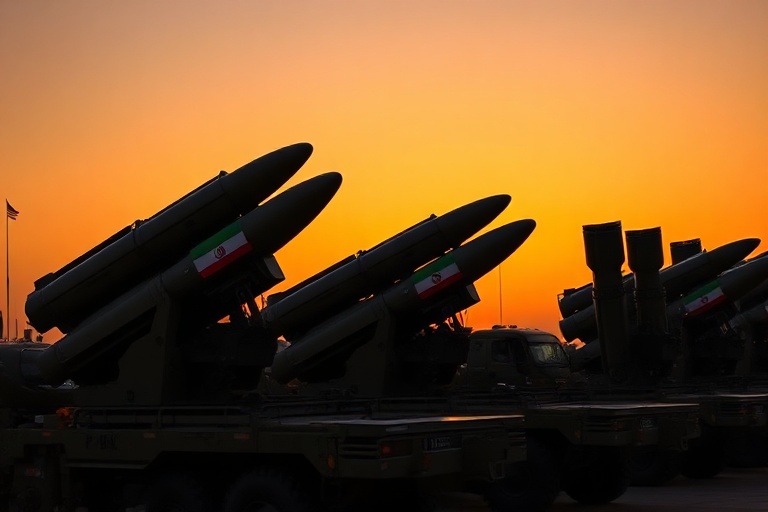
Iran’s Ballistic Missiles: Capabilities, Threats, and Global Impact
The development of ballistic missiles has been a cornerstone of Iran’s military strategy for decades. From early Soviet-era Scud missiles to today’s precision-guided weapons, Tehran’s program reflects a complex interplay of regional security concerns, technological ambition, and geopolitical maneuvering. Understanding this evolution requires examining both the hardware and the broader strategic context driving Iran’s missile pursuits.
The Evolution of Iran’s Ballistic Missile Arsenal
Iran’s missile program traces its roots to the Iran-Iraq War of the 1980s, when Saddam Hussein’s regime subjected Iranian cities to devastating Scud missile attacks. Facing this vulnerability, Tehran turned to foreign suppliers for its own deterrent capability. In a rare Cold War collaboration, Iran purchased Scud missiles from Libya and North Korea, establishing the foundation for what would become a self-sufficient domestic industry.
By the 1990s, Iran had begun reverse-engineering these missiles and developing indigenous variants. The Shahab-1, -2, and -3 series emerged as direct descendants of the Scud technology, with ranges extending from 300 to 1,300 kilometers. These systems demonstrated Iran’s growing technical sophistication, though their accuracy and payload capacity remained limited by 1990s standards.
Today, Iran fields one of the largest ballistic missile arsenals in the Middle East, with estimates suggesting between 3,000 and 5,000 missiles of varying ranges. The most advanced systems include the Emad, a 1,700-kilometer range missile with precision guidance, and the recently unveiled Fattah-1 and -2 hypersonic missiles. These weapons represent a qualitative leap in Iran’s military capabilities, combining greater accuracy with longer ranges that can reach targets throughout the region and beyond.
Key Developments in Iran’s Missile Program
- 1980s: Acquisition of Scud missiles from North Korea and Libya during the Iran-Iraq War
- 1990s: Development of Shahab-1, -2, and -3 series through reverse engineering
- 2000s: Expansion into space launch technology, dual-use applications for missile development
- 2010s: Introduction of precision-guided missiles like Emad and Sejjil
- 2020s: Deployment of hypersonic missiles (Fattah series) and continued expansion of missile production capacity
Military Doctrine and Strategic Implications
Iran’s missile program is not merely about acquiring weapons—it serves as the backbone of a broader deterrence strategy known as “forward defense.” This doctrine prioritizes long-range strike capabilities to counter perceived threats from regional adversaries and external powers. Unlike traditional nuclear deterrence strategies, Iran’s approach relies on a mix of conventional missiles, asymmetric warfare tactics, and proxy networks to create what analysts describe as a “layered deterrence” posture.
The doctrine emerged in response to several strategic realities. First, Iran’s conventional military remains outmatched by regional powers like Israel and Saudi Arabia, particularly in air power and advanced technology. Second, Iran’s nuclear program has faced international isolation and sanctions, making ballistic missiles a more viable path to maintaining strategic leverage. Third, the U.S. military presence in Iraq and Afghanistan throughout the 2000s and 2010s created a persistent threat to Iranian security, necessitating long-range strike options.
This strategy has several important implications. Most critically, it allows Iran to project power beyond its immediate borders while avoiding direct conventional confrontation. The ability to target military bases, energy infrastructure, and population centers in neighboring countries provides Tehran with a form of strategic parity that would otherwise be unattainable given the conventional military balance in the region.
Regional Tensions and International Responses
Iran’s missile program has become a flashpoint in regional geopolitics, drawing condemnation from Western powers and regional rivals alike. The United Nations Security Council has repeatedly addressed Iran’s missile activities, though enforcement has been inconsistent. Resolution 2231, which accompanied the 2015 nuclear deal, called upon Iran to refrain from developing ballistic missiles capable of delivering nuclear weapons for eight years—though Iran has consistently maintained that its missiles are not designed for nuclear delivery.
Israel has been particularly vocal in its opposition, conducting covert operations to disrupt Iran’s missile supply chains and development programs. A 2020 explosion at Iran’s Parchin military complex, widely attributed to Israeli sabotage, reportedly destroyed a facility used for missile warhead development. Similarly, a series of mysterious explosions at missile production sites and storage facilities have raised speculation about ongoing covert campaigns against Iran’s program.
Saudi Arabia has also invested heavily in missile defense systems, including the Terminal High Altitude Area Defense (THAAD) system purchased from the United States. These efforts reflect Riyadh’s growing concern about Iran’s expanding missile arsenal, particularly following several high-profile missile and drone attacks against Saudi oil infrastructure in 2019 and 2022.
International Responses to Iran’s Missile Program
- United Nations: Multiple resolutions condemning missile development, though enforcement remains inconsistent
- United States: Imposed extensive sanctions targeting missile-related entities and individuals
- European Union: Maintained arms embargoes and imposed targeted sanctions on missile program officials
- Israel: Conducted covert operations to disrupt missile development and supply chains
- Regional States: Saudi Arabia and UAE have invested in missile defense systems and strengthened security partnerships with the U.S.
Technological Advancements and Future Trajectories
The most significant recent development in Iran’s missile program has been the introduction of hypersonic technology. The Fattah-1, unveiled in June 2023, represents Iran’s first operational hypersonic missile, capable of speeds exceeding Mach 5 and maneuvering during flight to evade missile defenses. This technology places Iran among a select group of nations with hypersonic capabilities, joining the United States, Russia, and China.
Beyond hypersonic missiles, Iran has made steady progress in improving the accuracy and range of its conventional ballistic missiles. The Emad missile, first tested in 2015, features a maneuvering re-entry vehicle that significantly improves accuracy. Similarly, the Sejjil series of solid-fuel missiles offers improved mobility and reduced launch preparation times compared to liquid-fueled predecessors.
Perhaps most concerning is Iran’s expanding production capacity. Satellite imagery has revealed the construction of new underground missile production facilities, including one near the city of Karaj that appears to be a replica of the Parchin complex destroyed in 2020. These facilities suggest that Iran is preparing for sustained production even in the face of continued international pressure.
The broader implications of these developments are profound. Hypersonic missiles, in particular, could fundamentally alter the strategic calculus in the Middle East. Their speed and maneuverability make them extremely difficult to intercept, potentially rendering existing missile defense systems obsolete. For regional states, this creates a new arms race dynamic, with Saudi Arabia, Israel, and others likely to accelerate their own hypersonic development programs.
Technological Capabilities and Future Threats
- Hypersonic Missiles: Fattah-1 and Fattah-2 capable of speeds exceeding Mach 5
- Precision Guidance: Emad and other systems with maneuvering re-entry vehicles
- Solid-Fuel Technology: Sejjil series offers improved mobility and reduced launch times
- Production Capacity: New underground facilities indicate sustained production capability
- Space Launch Technology: Dual-use applications continue to advance missile capabilities
Conclusion: Navigating a Complex Security Landscape
Iran’s ballistic missile program represents a paradox of modern security dilemmas. On one hand, these weapons serve as a legitimate deterrent against external aggression, protecting Iran from potential military strikes. On the other hand, their expansion fuels regional arms races and undermines diplomatic efforts to reduce tensions. The challenge for policymakers lies in addressing the legitimate security concerns that drive Iran’s missile development while preventing a destabilizing arms buildup.
For the United States and its regional allies, the path forward requires a nuanced approach that balances deterrence with diplomacy. Continued pressure through sanctions and covert operations may slow Iran’s missile development, but it is unlikely to halt it entirely. Meanwhile, regional states must invest in missile defense systems while exploring diplomatic avenues to reduce tensions.
Ultimately, the story of Iran’s missile program is not just about technology—it’s about the enduring struggle for security in a volatile region. As Iran continues to advance its capabilities, the international community faces difficult choices about how to respond. The goal should not be to eliminate Iran’s missile program entirely, but to ensure that its development proceeds in a manner that does not escalate regional tensions beyond control. In this complex equation, technology is only one variable—political will and diplomatic creativity will determine whether the region finds a path to stability.
For further reading on related military and geopolitical topics, visit Dave’s Locker News and Dave’s Locker Analysis.