How Sony PlayStation Changed Gaming Forever: A 30-Year Legacy
Sony PlayStation: A Four-Decade Legacy of Gaming Innovation
The Sony PlayStation brand has become synonymous with gaming excellence since its debut in 1994. What began as a bold partnership between Sony and Nintendo—before evolving into an independent force—has reshaped entertainment, technology, and global pop culture. Today, PlayStation stands as one of the most influential gaming ecosystems in the world, shaping how millions experience interactive media across generations.
From the living rooms of Tokyo to the esports arenas of Seoul and the streaming platforms of Los Angeles, PlayStation’s impact is undeniable. It didn’t just launch consoles; it redefined what a gaming platform could be—merging cutting-edge hardware, immersive storytelling, and a thriving digital community. As we look back on four decades of evolution, it’s clear that PlayStation is more than a product line—it’s a cultural institution.
The Genesis: How a Failed Nintendo Project Became a Revolution
Few gaming stories are as unlikely as the origin of the PlayStation. In the early 1990s, Sony was primarily known for audio equipment and electronics. That changed when Nintendo approached the company to develop a CD-ROM add-on for the Super Nintendo Entertainment System (SNES). The partnership was ambitious: a hybrid cartridge-CD system that promised richer games with cinematic cutscenes.
But the deal collapsed in 1991 after a public dispute at the Consumer Electronics Show. Sony, however, refused to walk away. Engineers led by Ken Kutaragi pivoted quickly, transforming the abandoned prototype into a standalone console. By December 1994, the original PlayStation (officially the PS1) launched in Japan, priced at ¥39,800—roughly $300 at the time. It was a risky bet, but one that paid off almost immediately.
The PS1 introduced 3D graphics to mainstream audiences through groundbreaking titles like Final Fantasy VII and Metal Gear Solid. These weren’t just games—they were interactive narratives that rivaled Hollywood in emotional depth. By 2005, the PS1 had sold over 100 million units worldwide, cementing Sony’s place as a leader in gaming.
Evolution Through Generations: From PS2 to PS5
Each PlayStation generation has pushed technological boundaries while responding to the cultural moment. The PlayStation 2 (2000), for instance, wasn’t just a console—it became a multimedia hub. With DVD playback built-in and a library of over 3,800 games, the PS2 outsold every other console in history, reaching over 155 million units sold. It was the first console to truly function as a family entertainment system, blurring lines between gaming and home media.
The PlayStation 3 (2006), though slower to gain traction due to its high price and complex architecture, eventually found its footing with exclusives like The Last of Us and Uncharted. The PS4 (2013) marked a return to dominance, emphasizing accessibility, social features, and a focus on indie development. Its “share” button became a cultural touchstone, reflecting how gaming had evolved into a shared experience online.
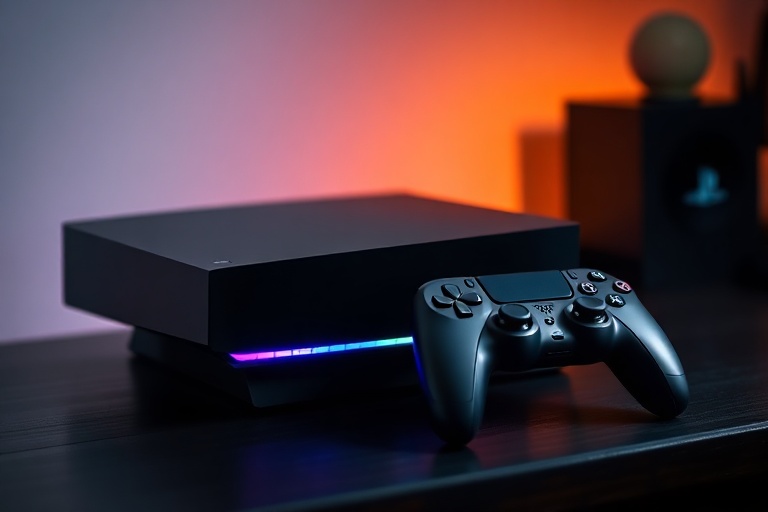
Now, the PlayStation 5 (2020) represents the next leap: lightning-fast SSD load times, haptic feedback controllers, and 4K/120Hz visuals. But more importantly, it reflects a global shift toward digital ownership and cloud gaming. The PS5 isn’t just a machine—it’s a gateway to a vast ecosystem of games, services, and communities that span continents.
Global Reach: How PlayStation Connected the World
PlayStation’s success is deeply tied to its international appeal. In Japan, it remains a cultural icon, with arcade-style games and anime tie-ins like Persona and Kingdom Hearts resonating deeply. In Europe, the PS4 became the console of choice for families, thanks to its strong lineup of sports titles and educational games. Meanwhile, in North America, PlayStation carved out a niche in narrative-driven experiences and competitive gaming.
Sony has also embraced regional content. The 2018 launch of Ghost of Tsushima, developed by Sucker Punch Productions, was a love letter to Japanese history and aesthetics. Games like Dreams and Astro’s Playroom have celebrated global creativity, allowing players to create and share their own worlds.
PlayStation’s global strategy extends beyond hardware. The PlayStation Plus service now offers a curated library spanning Japanese RPGs, Western blockbusters, and indie gems. This diversity ensures that whether you’re in Berlin, Bangkok, or Buenos Aires, there’s a PlayStation game that feels like it was made for you.
Beyond Gaming: PlayStation’s Cultural and Economic Impact
PlayStation’s influence extends far beyond the screen. The franchise has shaped fashion, music, and even language. Iconic characters like Kratos from God of War and Ellie from The Last of Us have appeared on clothing lines, in art exhibits, and even in academic discussions about narrative design. The 2023 film adaptation of The Last of Us, a co-production between HBO and Sony Pictures Television, reached 30 million viewers in its first month—proving that PlayStation’s stories can thrive across mediums.
Economically, PlayStation is a powerhouse. In fiscal year 2023, Sony Interactive Entertainment reported revenues of over $27 billion, driven largely by software sales and PlayStation Plus subscriptions. The company’s investment in cloud gaming and remote play has also positioned it at the forefront of the industry’s next evolution.
Even in competitive spaces like sports gaming, PlayStation maintains a strong presence. Titles like FIFA (now EA Sports FC) and NBA 2K have loyal followings, and PlayStation’s DualSense controller has become a favorite among sim racers and fighting game enthusiasts alike.
The Future: What’s Next for PlayStation?
As we look ahead, PlayStation faces both opportunity and challenge. The rise of cloud gaming platforms like Xbox Cloud and Nvidia GeForce Now has intensified competition. Yet, Sony’s focus on exclusives—titles like Final Fantasy XVI, Marvel’s Spider-Man 2, and the upcoming Death Stranding 2—keeps players invested in the ecosystem.
The company is also expanding into new markets. Sony has invested in VR2, a next-generation virtual reality headset, and continues to explore AI-driven game design. There’s even speculation about subscription tiers that could offer tiered access to libraries, similar to streaming models.
What remains clear is that PlayStation’s strength has always been its ability to adapt. Whether through hardware innovation, storytelling, or community-building, Sony has consistently redefined what a gaming platform can be. As long as there are players seeking unforgettable experiences, PlayStation will be there to deliver them.
From a failed Nintendo partnership to a global entertainment empire, the PlayStation journey is a testament to vision, resilience, and the power of play. It’s not just about pixels and polygons—it’s about the moments they create, the stories they tell, and the people they bring together. And that legacy is only beginning.