Iran’s Missile Program: How Ballistic Missiles Shape Global Security
Iran’s Missile Program: A Global Perspective on Ambitions and Implications
The development of ballistic missiles has long been a cornerstone of Iran’s military strategy. These weapons serve as both a deterrent and a tool of influence across the Middle East and beyond. While Iran frames its program as defensive, international observers often highlight its potential to destabilize regional security. The evolution of these missiles reflects broader geopolitical tensions, technological advancements, and shifting alliances.
Iran’s missile program traces its roots to the Iran-Iraq War in the 1980s. During that conflict, the country faced relentless attacks from Saddam Hussein’s forces, which were backed by Western and Gulf state support. The need for a credible deterrent led to the rapid expansion of Iran’s domestic missile production. Today, the program has grown into one of the most sophisticated in the region, with capabilities that extend beyond short-range rockets to medium- and long-range ballistic missiles.
The Technological Leap: From Scud Missiles to Precision Strikes
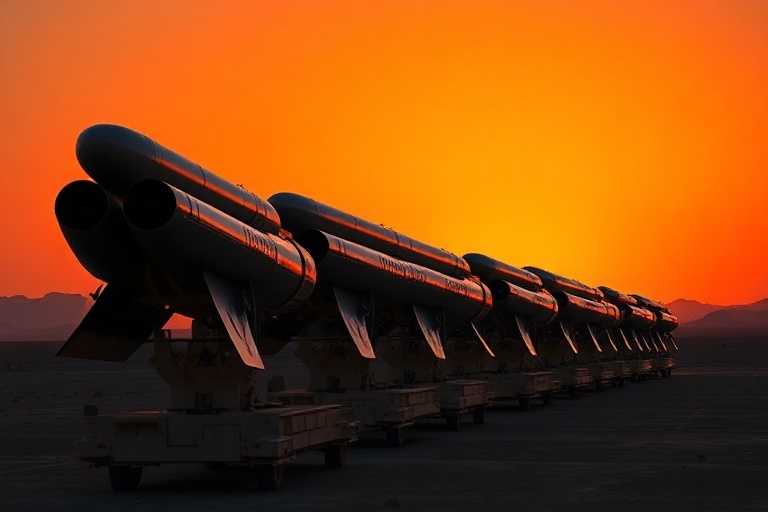
The technological journey of Iran’s missile program is marked by incremental yet significant advancements. Initially reliant on Soviet-era Scud missiles, Iran quickly sought to indigenize production and enhance range and accuracy. By the 1990s, the country had reverse-engineered Scud missiles and began developing its own variants, such as the Shahab series. These early models laid the groundwork for more advanced systems like the Sejjil and Emad, which boast solid-fuel propulsion and greater precision.
Solid-fuel missiles represent a critical milestone. Unlike liquid-fuel systems, which require lengthy preparation before launch, solid-fuel missiles can be deployed rapidly. This capability reduces vulnerability to preemptive strikes and enhances Iran’s ability to respond quickly to perceived threats. The Emad missile, for instance, is believed to have a range of 1,700 kilometers and incorporates guidance systems designed to evade missile defenses. Such features underscore Iran’s focus on survivability and effectiveness in contested environments.
International sanctions have not stifled this progress. Instead, Iran has leveraged smuggling networks, dual-use technologies, and indigenous innovation to circumvent restrictions. The country’s aerospace industry, often linked to the Islamic Revolutionary Guard Corps (IRGC), has become a symbol of defiance against Western pressure. This resilience has allowed Iran to export missile technology to allied groups in Lebanon, Yemen, and Iraq, further embedding its strategic footprint in the region.
Regional Security: A Double-Edged Sword for Middle Eastern Stability
The proliferation of Iranian missiles has reshaped security dynamics across the Middle East. For Gulf states like Saudi Arabia and the United Arab Emirates, the threat of Iranian ballistic missiles is a daily concern. These countries have invested heavily in missile defense systems, such as the U.S.-supplied THAAD and Patriot batteries, to mitigate risks. The 2019 attacks on Saudi oil facilities, widely attributed to Iranian-backed Houthi forces in Yemen, demonstrated the real-world consequences of missile proliferation.
Israel, too, views Iran’s missile program as an existential threat. The Islamic Republic’s stated goal of eliminating Israel, combined with its missile capabilities, has prompted repeated calls for preemptive action from Israeli leadership. The 2020 assassination of Iranian nuclear scientist Mohsen Fakhrizadeh, widely linked to Israeli operatives, underscored the covert war being waged over Iran’s military ambitions. Meanwhile, Iran’s support for proxy groups such as Hezbollah in Lebanon and the Houthis in Yemen has extended its missile reach without direct confrontation.
Yet, the narrative is not one-sided. Iran argues that its missile program is a response to U.S. military presence in the region and the perceived threat posed by regional rivals. The 2015 nuclear deal, which temporarily curbed Iran’s nuclear activities in exchange for sanctions relief, included restrictions on missile development. However, Tehran maintained that these limitations were non-binding, and it resumed missile tests shortly after the U.S. withdrew from the agreement in 2018. This defiance highlights the missile program’s symbolic and strategic importance to Iran’s leadership.
Global Reactions: Diplomacy, Sanctions, and the Role of Major Powers
The international community has responded to Iran’s missile program with a mix of diplomacy and coercive measures. The United Nations Security Council’s Resolution 2231, which endorsed the 2015 nuclear deal, called upon Iran to refrain from activities related to ballistic missiles capable of delivering nuclear weapons. However, the resolution’s language has been a subject of contention, with Iran arguing that its missiles do not violate the agreement’s terms.
The United States has taken a more aggressive stance, imposing sanctions on Iranian individuals, entities, and sectors linked to the missile program. These measures have targeted the IRGC’s aerospace division, as well as foreign companies accused of supplying components. The Trump administration’s “maximum pressure” campaign sought to cripple Iran’s economy and force concessions, but it also heightened tensions and accelerated Iran’s missile development as a form of resistance.
Europe has pursued a more nuanced approach, balancing condemnation of Iran’s missile tests with efforts to salvage the nuclear deal. The European Union has imposed its own sanctions on Iranian entities involved in missile proliferation, while also exploring diplomatic channels to de-escalate tensions. However, the failure to revive the nuclear agreement has left Europe’s strategy in limbo, with limited leverage over Iran’s missile ambitions.
The role of Russia and China adds another layer of complexity. Both countries have maintained economic ties with Iran, despite international sanctions. Russia, in particular, has been accused of providing technical assistance to Iran’s missile program, including the transfer of advanced technologies. China, meanwhile, has engaged in trade with Iran while also participating in diplomatic initiatives to ease tensions. This dynamic reflects the broader struggle for influence in the Middle East, where great powers often prioritize strategic interests over non-proliferation goals.
The Path Forward: Challenges and Opportunities for De-escalation
The future of Iran’s missile program hinges on a delicate balance of deterrence, diplomacy, and domestic politics. For Iran, missiles remain a symbol of sovereignty and resistance against what it perceives as Western hegemony. For its adversaries, these weapons represent an unacceptable threat that demands a robust response. Bridging this divide will require more than temporary agreements or incremental concessions; it will necessitate a fundamental shift in regional security architecture.
One potential avenue for de-escalation is the revival of the 2015 nuclear deal, though prospects appear dim in the current geopolitical climate. A comprehensive agreement that addresses both nuclear and missile concerns could pave the way for broader confidence-building measures. However, the deep mistrust between Iran and the West, compounded by regional proxy conflicts, makes such an outcome uncertain.
Another possibility is the establishment of regional arms control initiatives. The Middle East has long lacked a dedicated framework for limiting missile proliferation, despite its status as a hotspot for such weapons. Initiatives modeled after the Treaty on the Non-Proliferation of Nuclear Weapons (NPT) or the Missile Technology Control Regime (MTCR) could provide a starting point. However, the absence of key regional players, such as Israel, from such agreements would limit their effectiveness.
Ultimately, the trajectory of Iran’s missile program will be shaped by internal and external forces. Domestically, Iran’s leadership must balance the demands of hardliners who prioritize military strength with the economic needs of a population grappling with sanctions and inflation. Externally, the shifting alliances of the U.S., China, Russia, and regional powers will determine the extent to which Iran feels compelled to pursue missile development as a strategic imperative.
For now, the world remains caught between the realities of Iran’s missile capabilities and the hope for a more stable regional order. Whether this tension leads to further conflict or eventual compromise will depend on the choices made in Tehran, Washington, Riyadh, and beyond.
To understand how missile technology intersects with global security trends, explore our Analysis section. For more on regional conflicts and their broader implications, visit our Politics category.