Jeremy McWilliams: The Northern Irish Racer Who Defied Expectations
Jeremy McWilliams is a name that resonates in the world of motorcycle racing, not because of a single dominant victory or a record-breaking career, but because of his relentless pursuit of excellence in a sport that often favors youth and raw speed. Born in 1964 in Belfast, Northern Ireland, McWilliams carved out a niche in Grand Prix motorcycle racing during an era when the competition was fierce and the margins for error were razor-thin. His career spanned over two decades, during which he became known for his tactical brilliance, resilience, and an uncanny ability to extract performance from machinery that often lagged behind the frontrunners.
While McWilliams never claimed a premier-class world championship, his contributions to the sport left an indelible mark, particularly in the 250cc and 500cc classes. He was a privateer who punched above his weight, proving that determination and experience could sometimes outweigh the advantages of factory-backed teams. His rivalry with some of the sport’s greatest names—such as Valentino Rossi and Mick Doohan—added to his legacy, showcasing his ability to hold his own against the best in the business.
A Career Built on Grit and Determination
McWilliams’ journey to the top of motorcycle racing was anything but conventional. Unlike many of his peers who came through the ranks of junior championships or were signed by major manufacturers early in their careers, McWilliams took a more circuitous route. He began racing in the late 1970s, competing in local and national events across the United Kingdom and Ireland before making the leap to international competition in the 1980s. His breakthrough came in the 250cc class, where he quickly established himself as a rider to watch.
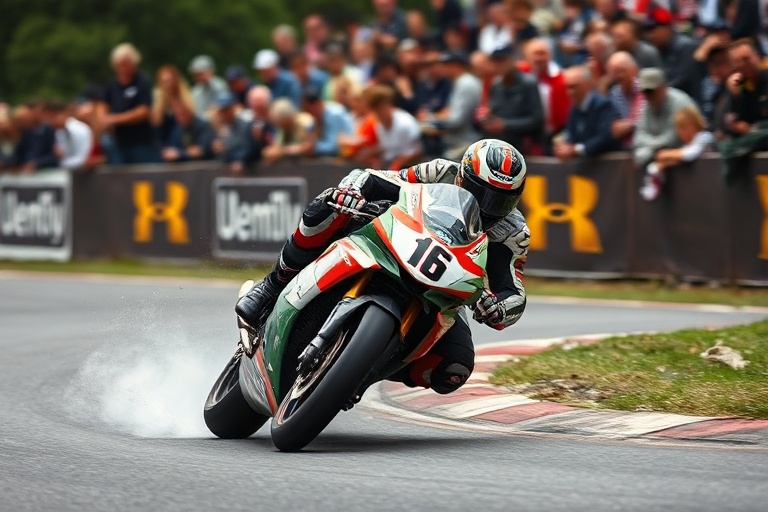
By the mid-1990s, McWilliams had transitioned to the 500cc class, the premier category of Grand Prix motorcycle racing. This was a period dominated by legends like Doohan, Rossi, and Àlex Crivillé, yet McWilliams managed to secure several podium finishes, including a memorable victory at the 1996 Dutch TT. His performance at Assen that year was a masterclass in racecraft, demonstrating his ability to navigate the treacherous conditions of the track while managing the demands of a high-powered machine. That win remains one of the most celebrated moments of his career and a testament to his skill as a rider.
McWilliams’ career also coincided with a period of significant change in motorcycle racing. The introduction of the four-stroke MotoGP class in 2002 marked the end of an era for the 500cc two-stroke bikes he had ridden for much of his career. While he continued to compete in the new MotoGP class, his opportunities diminished as teams prioritized younger talent. Despite this, McWilliams remained a respected figure in the paddock, known for his willingness to mentor younger riders and share his wealth of experience.
The Northern Irish Influence on Global Racing
McWilliams’ success was not just a personal achievement; it was a reflection of the broader motorcycle racing culture in Northern Ireland and the United Kingdom. The region has produced a remarkable number of talented riders over the years, including John McGuinness, Ian Hutchinson, and Michael Dunlop, all of whom have left their mark on the sport. McWilliams played a pivotal role in this tradition, serving as an inspiration for generations of racers from the region.
His career also highlighted the challenges faced by privateers in a sport increasingly dominated by factory-backed teams. Unlike riders who had the backing of manufacturers like Honda, Yamaha, or Ducati, McWilliams often had to make do with second-tier machinery. His ability to extract competitive performances from these bikes underscored the importance of rider skill over sheer horsepower—a lesson that continues to resonate in motorcycle racing today.
Beyond his on-track achievements, McWilliams was also known for his sportsmanship and humility. He was respected by his peers for his professionalism and his willingness to engage with fans and media alike. In an era where the personalities of riders often overshadowed their achievements, McWilliams remained a grounded figure, focused on the task at hand rather than the trappings of fame.
A Legacy That Transcends the Track
Jeremy McWilliams retired from full-time competition in 2007, but his influence on the sport has endured. He has remained involved in motorcycle racing in various capacities, including as a commentator, ambassador, and mentor. His insights into the technical and tactical aspects of racing have made him a sought-after figure in the paddock, and his experiences provide valuable lessons for riders and fans alike.
In Northern Ireland, McWilliams is celebrated not just as a racing legend but as a cultural icon. His success on the global stage brought attention to the region’s rich racing heritage and inspired countless young riders to take up the sport. Today, the Northern Ireland Road Races—a series of events held on public roads—continue to attract top talent from around the world, a testament to the enduring appeal of motorcycle racing in the region.
McWilliams’ story is also a reminder of the broader appeal of motorcycle racing. While the sport is often associated with high-speed circuits and cutting-edge technology, it is ultimately a human endeavor, driven by passion, perseverance, and the pursuit of excellence. McWilliams embodied these values, proving that greatness is not solely determined by trophies or titles but by the impact one has on the sport and the people who love it.
The Global Perspective: Motorcycle Racing as a Cultural Bridge
McWilliams’ career unfolded during a transformative period for motorcycle racing. The sport evolved from a collection of national and regional competitions into a global spectacle, with races held in Europe, Asia, the Americas, and beyond. This globalization brought new challenges and opportunities for riders, teams, and fans alike. McWilliams’ ability to adapt to these changes—whether it was adjusting to new tracks, different climates, or evolving regulations—demonstrated his versatility and resilience as a rider.
Motorcycle racing has always been more than just a sport; it is a cultural phenomenon that transcends borders and languages. In Europe, it is a passion that unites communities, while in countries like Japan and Australia, it is a source of national pride. McWilliams’ success in this global arena highlighted the universal appeal of the sport and the role it plays in connecting people across different cultures and backgrounds.
For aspiring riders, McWilliams’ career offers a roadmap to success in a highly competitive field. His story underscores the importance of perseverance, adaptability, and a willingness to learn. It also serves as a reminder that greatness can be achieved outside the traditional pathways, provided one is willing to put in the work and seize the opportunities that come their way.
Conclusion: The Enduring Spirit of Jeremy McWilliams
Jeremy McWilliams may not have achieved the same level of fame as some of his contemporaries, but his legacy in motorcycle racing is secure. He was a rider who defied expectations, proving that skill and determination could overcome the limitations of machinery and circumstance. His career is a testament to the enduring spirit of motorcycle racing—a sport where the thrill of competition is matched only by the camaraderie and passion of its participants.
As the sport continues to evolve, McWilliams’ story serves as a reminder of the values that have always defined motorcycle racing: respect for the machine, reverence for the track, and a relentless pursuit of excellence. Whether on the roads of Northern Ireland or the circuits of Europe, his legacy lives on in the riders who follow in his footsteps and the fans who continue to celebrate his achievements.
For those interested in exploring the rich history of motorcycle racing, Sports offers a wealth of articles and features on legendary riders, iconic races, and the cultural impact of the sport. Whether you’re a lifelong fan or a newcomer to the world of racing, there’s always more to discover about the athletes who have shaped the sport into what it is today.