Julio César Chávez: Mexico’s Boxing Legend and Global Icon
Julio César Chávez González, known simply as Julio César Chávez, stands as one of the greatest boxers in history. Born on July 12, 1962, in Ciudad Obregón, Sonora, Mexico, Chávez rose from humble beginnings to become a national hero and a global ambassador for the sport. His career spanned nearly three decades, during which he dominated multiple weight classes and left an indelible mark on boxing.
The Early Years: A Prodigy is Born
Chávez began boxing at the age of 12, training under the watchful eye of his father, Rodolfo Chávez. His amateur career was nothing short of spectacular, amassing a record of 112 wins and 7 losses before turning professional at 17. His transition to the professional ranks was seamless, thanks to his exceptional hand speed, relentless body punching, and unshakable confidence.
By 1984, Chávez had already captured his first world title, the WBC Super Featherweight championship, with a victory over Mario Martínez. This win marked the beginning of an unprecedented reign that would see him become one of the most feared fighters in boxing history. His style was a blend of precision, aggression, and stamina, which allowed him to outlast opponents in grueling battles.
The Prime Years: Dominance Across Weight Classes
Chávez’s prime years were defined by his ability to conquer multiple weight divisions. He moved up to lightweight and claimed the WBC title in 1987 with a unanimous decision over Edwin Rosario. His reign at lightweight was marked by legendary performances, including a thrilling victory over José Luis Ramírez in 1990, a fight many consider one of the greatest in boxing history.
In 1990, Chávez made history by becoming the first boxer to win world titles in three weight classes—super featherweight, lightweight, and light welterweight—after defeating Meldrick Taylor in a fight that would later be named “Fight of the Year” by Ring Magazine. This victory solidified his status as a global icon and a symbol of Mexican pride.
Chávez’s resume includes victories over some of the greatest fighters of his era, including Pernell Whitaker, Hector Camacho, and Oscar De La Hoya. His rivalry with Whitaker in 1993 was a technical masterclass, with Chávez earning a majority decision in a fight that many critics scored as a draw. Despite the controversy, the fight showcased Chávez’s ability to compete with the best, regardless of the weight class.
A Legacy of Resilience
Chávez’s career was not without its challenges. He faced setbacks, including a rare defeat to Frankie Randall in 1994, which ended his 91-fight unbeaten streak. However, Chávez’s resilience was on full display when he rebounded with a victory over Randall in the rematch, reclaiming the WBC Light Welterweight title. This tenacity became a hallmark of his career, earning him the nickname “El Gran Campeón Mexicano.”
Beyond the Ring: Chávez’s Impact on Boxing and Culture
Chávez’s influence extended far beyond the confines of the boxing ring. He became a cultural icon in Mexico, inspiring generations of fighters and fans alike. His fights were not just sporting events; they were national celebrations, broadcast to millions and watched with pride by Mexicans around the world.
In the United States, Chávez’s rivalry with Oscar De La Hoya in 1996 drew massive pay-per-view numbers, further cementing his status as a global superstar. The fight, which Chávez won by a sixth-round knockout, was a testament to his enduring appeal and the respect he commanded in the boxing world.
Chávez’s legacy is also evident in the success of his family. His sons, Julio César Chávez Jr. and Omar Chávez, followed in his footsteps, pursuing careers in boxing. While their careers have not reached the heights of their father’s, they serve as a reminder of the Chávez name’s enduring impact on the sport.
The Later Years: A Legend’s Farewell
Chávez’s retirement from boxing in 2005 marked the end of an era. He left the sport with a record of 107 wins (85 by knockout), 6 losses, and 2 draws, cementing his place among the all-time greats. His final fight, a victory over Grover Wiley in 2005, was a fitting tribute to a career that had spanned nearly three decades.
In retirement, Chávez has remained a beloved figure in Mexico and the boxing world. He has worked as a trainer and commentator, sharing his vast knowledge and experience with the next generation of fighters. His contributions to the sport have been recognized with numerous honors, including induction into the International Boxing Hall of Fame in 2011.
Chávez’s Enduring Influence
Julio César Chávez’s legacy is one of perseverance, skill, and pride. He transcended the sport of boxing, becoming a symbol of Mexican pride and a global ambassador for the game. His fights were not just about winning titles; they were about representing a nation and inspiring millions.
For those interested in exploring more about boxing legends and their impact on the sport, you can visit Dave’s Locker Sports for in-depth analysis and coverage of legendary fighters.
The Chávez Style: What Made Him Great
Chávez’s success was built on a foundation of discipline, hard work, and an unrelenting work ethic. His training regimen was legendary, often involving grueling sessions that prepared him for the demands of professional boxing. His ability to adapt to different opponents and weight classes was a testament to his versatility and intelligence as a fighter.
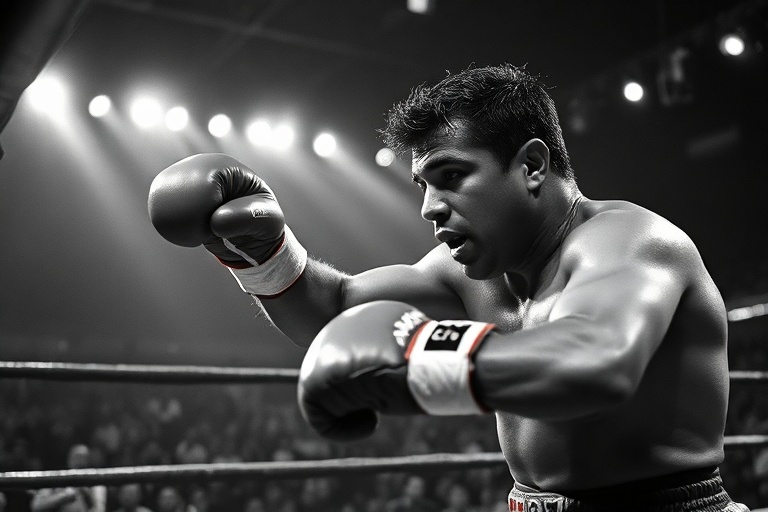
His fighting style was a blend of aggression and precision. Chávez was known for his body punching, which wore down opponents over the course of a fight. His left hook to the body was particularly devastating, often leading to early stoppages. Additionally, his ability to cut off the ring and control the pace of a fight made him a formidable opponent in any weight class.
Chávez’s mental toughness was another key component of his success. He was known for his ability to stay calm under pressure and make adjustments mid-fight. This mental resilience allowed him to overcome adversity and emerge victorious in some of the toughest battles of his career.
A Lasting Legacy
Julio César Chávez’s impact on boxing is immeasurable. He inspired countless fighters, both in Mexico and around the world, to pursue their dreams with passion and determination. His legacy lives on in the hearts of fans and the careers of the fighters he influenced.
For those looking to delve deeper into the world of boxing and its greatest legends, Dave’s Locker Entertainment offers a wealth of content on the sport and its cultural significance.
Conclusion: The Legend Lives On
Julio César Chávez’s career was a masterclass in boxing excellence. From his humble beginnings in Ciudad Obregón to his rise as a global icon, Chávez’s journey is a testament to the power of perseverance and hard work. His legacy extends beyond the ring, influencing generations of fighters and inspiring millions around the world.
As we reflect on his career, it’s clear that Julio César Chávez is not just a boxing legend; he is a cultural icon whose impact will be felt for generations to come. His story serves as a reminder that greatness is not just about talent but also about heart, determination, and the willingness to fight for what you believe in.