NIO Stock: China’s EV Disruptor Faces Global Challenges
NIO Stock: China’s EV Pioneer Faces Global Scrutiny
NIO, often described as China’s answer to Tesla, has become a focal point in the global electric vehicle (EV) market. Founded in 2014, the Shanghai-based automaker has rapidly expanded, capturing attention with its premium EV lineup and innovative battery-swapping technology. Yet, its stock price has been a rollercoaster, reflecting both the promise and volatility of the EV sector.
As of mid-2024, NIO’s stock performance continues to draw comparisons with Western automakers and tech-driven disruptors. Investors worldwide watch closely, weighing the company’s growth potential against macroeconomic headwinds and competitive pressures. This analysis explores NIO’s trajectory, challenges, and what the future might hold for one of China’s most ambitious automotive ventures.
The Rise of NIO: From Startup to Industry Disruptor
NIO’s ascent has been nothing short of meteoric in automotive terms. Within a decade, it has established itself as a serious contender in the luxury EV segment, competing directly with Tesla, BMW, and Mercedes-Benz. The company’s initial public offering (IPO) on the New York Stock Exchange in 2018 raised $1 billion, a landmark moment that signaled its ambitions beyond China’s borders.
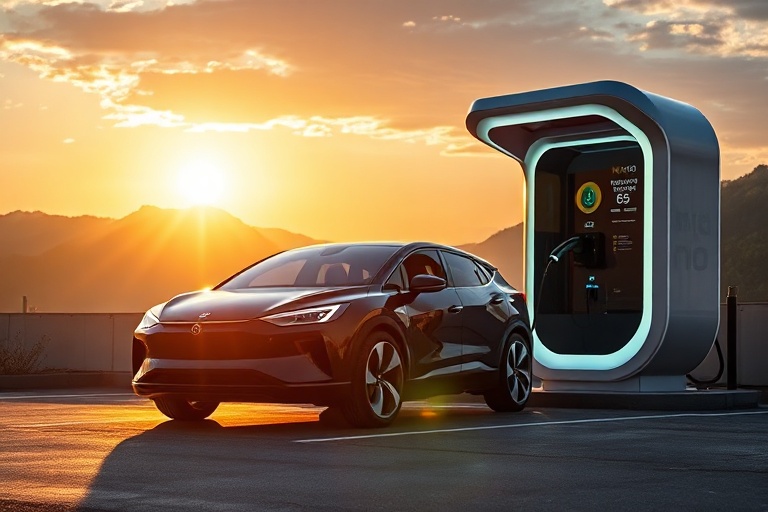
Key milestones in NIO’s growth include the launch of its ES8 SUV in 2018, followed by the EC6 coupe and ET7 sedan. These models, equipped with advanced autonomous driving features and battery-swapping capabilities, positioned NIO as a technological innovator. The battery-swapping stations, in particular, set NIO apart from competitors who rely solely on charging infrastructure. This system allows drivers to swap a depleted battery for a fully charged one in under five minutes, addressing one of the biggest pain points for EV adoption.
Culturally, NIO has also carved out a niche. Its sleek, minimalist design language resonates with urban professionals in China’s megacities like Shanghai and Shenzhen, where car ownership is often a status symbol. The company’s branding—emphasizing sustainability and cutting-edge technology—aligns with the aspirations of a generation increasingly prioritizing environmental consciousness.
Stock Performance: Volatility and Investor Sentiment
NIO’s stock, traded under the ticker NIO on the NYSE, has experienced dramatic fluctuations. In 2020, shares surged over 1,100% as retail investors piled in, driven by enthusiasm for EVs and China’s post-pandemic recovery. However, this rally was followed by sharp corrections, with the stock losing ground in 2021 and 2022 amid rising interest rates and supply chain disruptions.
As of June 2024, NIO’s stock remains highly sensitive to both domestic and global factors. Investor sentiment is influenced by:
- Macroeconomic conditions: Interest rate hikes by the U.S. Federal Reserve and China’s monetary policy adjustments impact growth stocks like NIO.
- Competition: Domestic rivals such as BYD and XPeng, as well as Tesla’s aggressive pricing strategies, pressure NIO’s market share.
- Regulatory environment: China’s evolving policies on EV subsidies and foreign investment can create uncertainty.
- Delivery numbers: Quarterly vehicle deliveries serve as a key barometer for investor confidence. Missed targets often trigger sell-offs.
Despite these challenges, NIO has maintained a loyal following. The company’s second-quarter 2024 deliveries reached 23,500 units, a 14.8% year-over-year increase. While this growth is modest compared to some competitors, it underscores NIO’s ability to retain a core customer base in a crowded market.
Global Expansion: Can NIO Break Into New Markets?
NIO’s international ambitions are a critical component of its long-term strategy. The company has made significant inroads in Europe, particularly in Norway, where it launched sales in 2021. Norway’s strong EV adoption rates and government incentives make it an ideal testing ground for NIO’s global expansion.
In 2023, NIO announced plans to enter the German market, a move that could signal broader European ambitions. However, competing with established automakers like Volkswagen and BMW will require more than just technological innovation—it will demand a robust dealership network, customer service infrastructure, and brand recognition. So far, NIO’s European operations have been met with cautious optimism, with deliveries in Norway exceeding 1,000 units by the end of 2023.
Beyond Europe, NIO has explored opportunities in Southeast Asia and Australia, though these markets present their own set of challenges. Infrastructure gaps, regulatory hurdles, and cultural preferences for internal combustion engines could slow progress. Yet, NIO’s battery-swapping model may offer a unique advantage in regions where charging stations are sparse.
Culturally, NIO’s global expansion is also a reflection of China’s broader geopolitical and economic ambitions. As the world’s largest EV market, China views its automotive industry as a key driver of technological leadership. NIO’s overseas ventures are not just about sales—they’re about projecting China’s soft power through innovation and sustainability.
Challenges and Criticisms: What’s Holding NIO Back?
Despite its progress, NIO faces a litany of challenges that threaten its long-term viability. One of the most pressing is its financial health. NIO has yet to turn a profit on a consistent basis, with losses mounting due to high research and development costs, expanding production capacity, and aggressive marketing campaigns. While the company has secured significant funding from investors like Tencent and Temasek, sustaining growth without profitability remains a concern.
Another issue is brand perception. While NIO is often lauded for its technology, some consumers and analysts question its value proposition. The company’s vehicles are priced at a premium, yet they compete directly with Tesla’s more affordable Model Y and Model 3. Additionally, NIO’s battery-swapping technology, while innovative, requires substantial infrastructure investment. As of 2024, NIO operates over 2,300 battery-swapping stations globally, but scaling this network further will be costly and time-consuming.
Geopolitical tensions also pose a risk. NIO’s reliance on the U.S. stock market for capital makes it vulnerable to regulatory scrutiny and potential delisting risks. Meanwhile, its operations in China are subject to government policies that can shift rapidly. The recent emphasis on “common prosperity” in China has led to increased scrutiny of tech-driven companies, raising questions about future support for the EV sector.
Finally, there’s the issue of consumer trust. NIO has faced criticism over quality control and customer service, particularly regarding software glitches and after-sales support. In a market where word-of-mouth and online reviews heavily influence purchasing decisions, these issues can have an outsized impact on NIO’s reputation.
What’s Next for NIO and Its Investors?
The road ahead for NIO is uncertain but not without opportunity. The company’s focus on premium EVs and battery-swapping technology could pay off in markets where charging infrastructure is underdeveloped. However, achieving profitability will require a delicate balance between innovation and cost control.
For investors, NIO remains a high-risk, high-reward proposition. Those betting on the stock must be prepared for volatility, driven by everything from quarterly delivery reports to global economic trends. Yet, the potential upside is substantial. If NIO can successfully expand into Europe and other markets while improving its financial performance, it could emerge as a dominant player in the global EV industry.
Culturally, NIO’s story is emblematic of China’s broader ambitions in the automotive sector. As the world shifts toward electrification, companies like NIO are not just competing for market share—they’re shaping the future of transportation. Whether NIO can fulfill that promise remains to be seen, but its journey is one worth watching.
For those interested in the intersection of technology and culture, NIO’s evolution offers a compelling case study. It’s a reminder that in the fast-moving world of EVs, innovation alone isn’t enough—execution, adaptability, and resilience are equally critical.