NIO Stock: The Rising Star in China’s EV Revolution
China’s electric vehicle (EV) market continues to defy global economic headwinds, and NIO stands at the forefront of this transformation. Founded in 2014, the Shanghai-based automaker has rapidly evolved from a niche startup into one of the world’s most closely watched EV manufacturers. Unlike legacy automakers playing catch-up in the EV space, NIO was built from the ground up to compete with Tesla—both in technology and brand perception.
Investors have taken notice. NIO’s stock, listed on the New York Stock Exchange under the ticker NIO, has become a barometer for global confidence in China’s EV sector. Its journey reflects broader shifts in consumer behavior, government policy, and technological innovation across Asia and beyond. Understanding NIO requires more than just financial analysis; it demands a look at the cultural and geopolitical currents shaping the future of mobility.
The Cultural Significance of NIO in China’s EV Movement
NIO is not just a car company—it’s a lifestyle brand deeply embedded in China’s digital-first consumer culture. Its vehicles are designed with a strong emphasis on connectivity, community, and cutting-edge user experience. The company’s “BaaS” (Battery as a Service) model, for instance, reflects a subscription-based mindset that resonates with younger, tech-savvy Chinese consumers who prioritize flexibility over ownership.
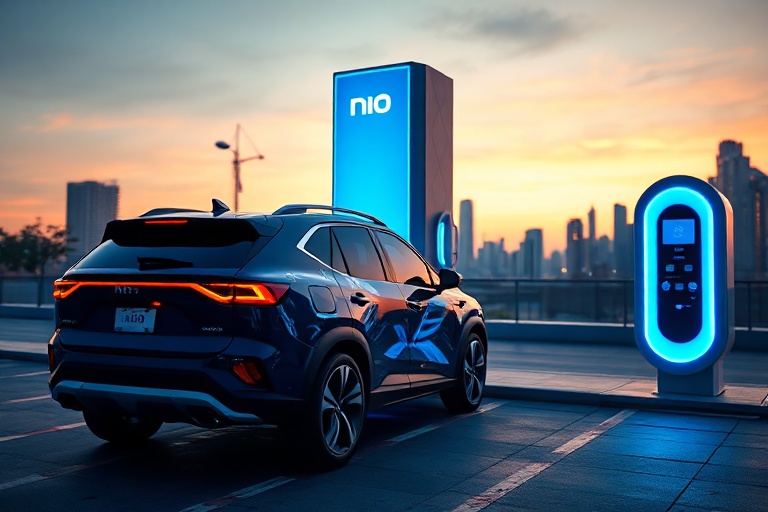
In cities like Shanghai, Shenzhen, and Beijing, NIO’s orange-and-white service centers have become modern-day tech hubs. Customers don’t just buy cars—they join a club. The company hosts frequent “NIO Days” events, blending product launches with concerts, fashion shows, and even art exhibitions. This fusion of automotive innovation with pop culture has helped NIO cultivate a cult-like following, especially among millennials and Gen Z buyers who view EVs as status symbols and lifestyle choices.
This cultural branding strategy has paid dividends. While traditional automakers struggle to connect emotionally with younger consumers, NIO has successfully positioned itself as a pioneer in China’s “new energy” lifestyle movement. Its success underscores a broader trend: in the world’s largest auto market, cars are no longer just transportation—they’re statements.
Financial Performance: Growth, Challenges, and Market Sentiment
NIO’s stock performance has been anything but linear. After a meteoric rise in 2020 and 2021, the company faced a sharp correction in 2022 amid broader market downturns, regulatory crackdowns in China, and global supply chain disruptions. By early 2023, NIO’s stock had fallen over 80% from its peak. Yet, by late 2023 and into 2024, the tide began to turn.
Several key factors underpinned this recovery:
- Deliveries Surge: NIO delivered 126,711 vehicles in 2023, a 34% year-over-year increase. Its ES6, ES8, and ET7 models have gained traction among affluent urban buyers.
- Strategic Partnerships: Collaborations with state-backed automakers like Changan and GAC have expanded NIO’s manufacturing footprint and reduced costs.
- Product Innovation: The launch of the ET5 and ET5 Touring models, featuring advanced autonomous driving systems and premium interiors, has helped NIO compete directly with Tesla’s Model 3 and Model Y.
- Government Support: China’s push for “new energy vehicles” (NEVs) continues unabated. Subsidies, tax breaks, and infrastructure investments remain in place, giving domestic brands like NIO a structural advantage over foreign competitors.
Despite these positives, challenges persist. Profitability remains elusive. NIO reported its first quarterly profit in Q4 2023, but margins remain thin due to high R&D and battery costs. Global expansion has also been slow, with limited presence outside China. Meanwhile, competition is intensifying, with BYD, XPeng, and Li Auto all vying for market share in the premium EV segment.
Analysts remain divided. Some view NIO as a high-risk, high-reward play on China’s EV dominance. Others caution that its valuation—often trading at a premium to peers—may be unsustainable without sustained profitability. As of mid-2024, NIO’s market capitalization hovers around $25 billion, a far cry from Tesla’s $600 billion, but a significant rebound from its 2022 lows.
Global Implications: Can NIO Compete Beyond China?
NIO’s long-term success may hinge on its ability to break into international markets. Europe, with its stringent emissions regulations and strong demand for premium EVs, presents a natural opportunity. The company has already made inroads in Norway, Germany, and the Netherlands, leveraging its advanced battery-swap technology and over-the-air software updates.
However, global expansion is fraught with hurdles. Regulatory barriers, supply chain complexities, and brand recognition outside Asia remain obstacles. European consumers, for instance, are deeply loyal to German automakers like BMW and Mercedes-Benz. Convincing them to switch to a Chinese brand will require more than just competitive pricing—it will demand a compelling narrative around sustainability, innovation, and luxury.
There’s also the question of geopolitics. U.S.-China tensions have cast a shadow over Chinese tech companies, with some analysts warning of potential export restrictions or investment barriers. While NIO’s NYSE listing provides a degree of insulation, the specter of decoupling looms large in sectors tied to national security and advanced manufacturing.
Yet, NIO’s story is also one of resilience. The company has repeatedly reinvented itself—from a battery-swap pioneer to a full-stack EV manufacturer, and now as a global brand with ambitions beyond China’s borders. Its ability to adapt may well determine whether it becomes a footnote in automotive history or a defining force in the EV revolution.
What’s Next for NIO Investors?
For investors eyeing NIO, the road ahead is likely to be volatile. Short-term swings driven by delivery numbers, earnings reports, and macroeconomic trends will continue. But the long-term thesis rests on two pillars: China’s continued dominance in the EV market and NIO’s ability to execute on its global ambitions.
If NIO can achieve consistent profitability, expand into new markets, and solidify its reputation for innovation, its stock could emerge as a long-term winner. Conversely, if competition intensifies or geopolitical risks escalate, the company may struggle to justify its current valuation.
One thing is clear: NIO is no longer an outsider in the EV race. It’s a key player—and its next moves will be watched closely by automakers, investors, and policymakers worldwide.
For those interested in the broader trends shaping the automotive industry, explore our Technology and Business sections for deeper insights into the forces driving the EV revolution.