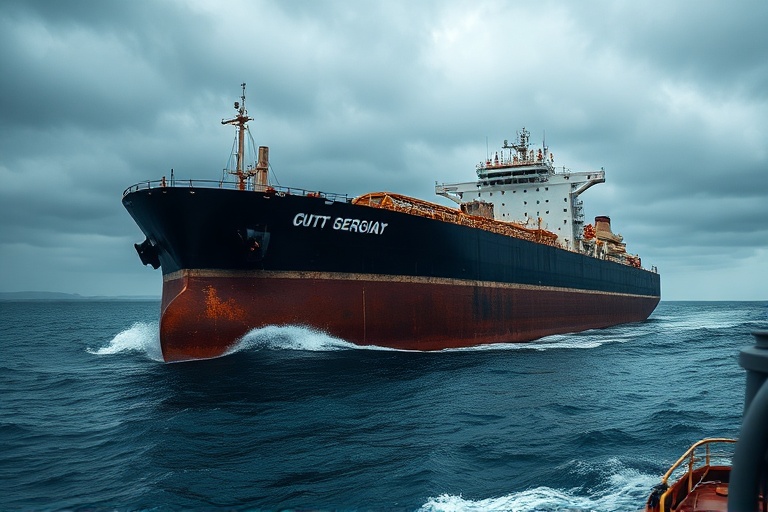
oil tanker
The vast oceans of the world serve as the arteries of modern civilization, carrying not just goods but the very energy that powers industries, heats homes, and fuels transportation. Among the most critical vessels traversing these waters are oil tankers—massive, unassuming ships that move nearly two billion barrels of crude oil annually. Their journey is invisible to most, yet their impact is felt in every corner of the globe, from the skyscrapers of New York to the villages of rural Africa.
What makes oil tankers so essential, and how have they shaped the geopolitical and economic landscape of the 21st century? Their story is one of engineering marvels, environmental challenges, and the complex interplay between energy demand and global stability.
The Anatomy of an Oil Tanker
Oil tankers are not uniform; they vary in size, function, and design, each adapted to specific roles within the energy supply chain. The classification system for these ships is based primarily on their deadweight tonnage (DWT), which measures how much weight a vessel can carry.
At the smaller end of the spectrum are handysize tankers, typically under 45,000 DWT. These vessels are versatile, capable of navigating narrow waterways and docking at smaller ports. They often transport refined petroleum products like gasoline and diesel rather than crude oil. Their agility makes them indispensable in regions with fragmented port infrastructure.
Moving up the scale, aframax tankers—named after the Average Freight Rate Assessment (AFRA) system—range from 80,000 to 120,000 DWT. These ships are the workhorses of medium-haul routes, frequently seen in the Mediterranean, Black Sea, and Caribbean. Their size strikes a balance between capacity and accessibility, allowing them to serve a wide array of markets.
For the largest volumes of crude oil, vloc (very large crude carriers) and ulcc (ultra-large crude carriers) dominate the seas. VLCCs, typically between 200,000 and 320,000 DWT, are the backbone of global oil transport, moving millions of barrels from the Middle East to Asia and beyond. ULCCs, exceeding 320,000 DWT, are rarer and operate on specific routes where port infrastructure can accommodate their massive dimensions.
The design of these tankers prioritizes safety and efficiency. Modern vessels feature double hulls to reduce the risk of oil spills, advanced navigation systems to avoid collisions, and segregated ballast tanks to maintain stability. Despite these innovations, the sheer scale of these ships—some stretching over 400 meters long—makes them a formidable sight and a constant reminder of humanity’s reliance on fossil fuels.
The Geopolitical Chessboard of Oil Transportation
The routes taken by oil tankers are not arbitrary; they are dictated by geopolitical realities, economic incentives, and historical alliances. The world’s most critical chokepoints—narrow waterways that constrain the flow of oil—are flashpoints of tension and negotiation.
- Strait of Hormuz: Connecting the Persian Gulf to the Gulf of Oman, this strait sees the passage of roughly 20% of the world’s oil. Its strategic importance has made it a focal point of regional conflicts, from the Iran-Iraq War to modern tensions between Iran and Western powers.
- Strait of Malacca: The primary route between the Middle East and East Asia, this 800-kilometer waterway handles nearly 40% of global seaborne oil trade. Piracy and territorial disputes in the region add layers of complexity to its operation.
- Suez Canal: A vital shortcut between Europe and Asia, the Suez Canal reduces the journey for tankers traveling from the Atlantic to the Indian Ocean by thousands of miles. Its closure, as seen during the 2021 blockage by the Ever Given container ship, can send shockwaves through global oil markets.
Beyond these chokepoints, the relationships between oil-producing and oil-consuming nations shape tanker routes. The rise of China as the world’s largest oil importer has led to a surge in tanker traffic to its ports, particularly in the South China Sea, where territorial disputes with neighboring countries create additional risks. Meanwhile, the United States, once the world’s largest oil importer, has become a net exporter, altering the dynamics of transatlantic tanker routes.
These geopolitical factors are not static. Sanctions, trade wars, and diplomatic crises can reroute tankers overnight, forcing energy companies to adapt to sudden changes in supply chains. For instance, the imposition of sanctions on Venezuela in 2019 led to a surge in tankers carrying Venezuelan oil under flags of convenience, often with obscured ownership to evade detection.
Environmental Costs and the Push for Sustainability
The environmental impact of oil tankers is a paradox of modern energy consumption. These ships enable the global economy to function, yet their operation contributes to pollution, oil spills, and greenhouse gas emissions. The industry has faced growing scrutiny, particularly as the world shifts toward renewable energy sources.
The most visible environmental disasters involving tankers are oil spills, which can devastate marine ecosystems and coastal communities. Notable spills, such as the Exxon Valdez disaster in 1989 and the Prestige spill off the coast of Spain in 2002, have led to stricter regulations and improved safety measures. The International Maritime Organization (IMO) now mandates double hulls for new tankers and has phased out single-hull vessels, which were more prone to rupturing in collisions.
Beyond spills, the carbon footprint of oil tankers is significant. The global shipping industry accounts for nearly 3% of all greenhouse gas emissions, with tankers contributing a substantial portion. In response, the IMO has set ambitious targets to reduce emissions by at least 50% by 2050 compared to 2008 levels. This has spurred innovation in alternative fuels, such as liquefied natural gas (LNG) and hydrogen, as well as the development of wind-assisted propulsion systems.
However, the transition is slow. The majority of the world’s tanker fleet still relies on heavy fuel oil, a byproduct of refining that is high in sulfur and other pollutants. Retrofitting existing ships to use cleaner fuels is costly, and many operators are hesitant to make the investment without clear regulatory incentives. Meanwhile, the demand for oil continues to grow, particularly in developing economies where industrialization and urbanization drive energy consumption.
Environmental groups argue that the long-term viability of oil tankers is incompatible with global climate goals. Some advocate for a rapid phase-out of fossil fuel transport, while others push for stricter enforcement of existing regulations. The debate highlights the tension between economic necessity and environmental responsibility—a tension that will define the future of the tanker industry.
The Future of Oil Tankers in a Changing World
The oil tanker industry stands at a crossroads. On one hand, the global push for decarbonization threatens to reduce demand for oil, potentially rendering many tankers obsolete. On the other hand, the world’s energy needs are far from met, and oil remains a cornerstone of the global economy. The future of tankers will depend on how the industry adapts to these competing pressures.
One possible future lies in the diversification of cargo. Some tanker operators are exploring the transport of biofuels, ammonia, or even hydrogen, which could serve as transitional fuels in a low-carbon economy. These alternatives require significant investment in infrastructure and technology, but they offer a pathway to keep tankers relevant in a changing energy landscape.
Another factor is the rise of renewable energy itself. As solar and wind power become more prevalent, the demand for oil may plateau or decline, particularly in sectors like transportation where electric vehicles are gaining traction. However, oil will likely remain essential for industries like aviation, shipping, and petrochemicals for decades to come.
The geopolitical landscape will also play a critical role. Conflicts in oil-producing regions, shifts in trade alliances, and the emergence of new energy superpowers like India will all influence the routes and volumes of oil transported by tankers. The industry must navigate these uncertainties while preparing for a potential decline in oil demand.
Ultimately, the fate of oil tankers will be determined by a combination of technological innovation, regulatory pressure, and market forces. Their continued operation will depend on whether the world can balance the need for energy with the imperative to protect the planet. For now, these massive ships remain the silent giants of global trade, carrying the lifeblood of modern civilization across the world’s oceans.
As the energy transition unfolds, the story of oil tankers may become a cautionary tale—a reminder of the environmental and geopolitical costs of fossil fuel dependence. Or, it may evolve into a testament to human ingenuity, as these vessels adapt to serve a greener, more sustainable future. Only time will tell.
Explore more about global trade and energy in our Business and Politics sections.