The Legend of Zelda: Ocarina of Time – A Timeless Masterpiece Across Continents
The Legend of Zelda: Ocarina of Time, released in 1998 for the Nintendo 64, is more than a game—it’s a cultural touchstone that reshaped interactive storytelling. Developed by Nintendo’s EAD division under the direction of Shigeru Miyamoto and Yoshiaki Koizawa, the game blended technical innovation with mythic storytelling. Nearly three decades later, its influence persists across continents, from Tokyo’s Akihabara arcades to Berlin’s retro gaming conventions.
Ocarina of Time arrived at a pivotal moment in gaming history. The late 1990s saw the transition from 2D to 3D, and Nintendo seized the opportunity with groundbreaking mechanics. The Z-targeting system, which allowed players to lock onto enemies and objects, became a standard feature in action-adventure games. This innovation didn’t just simplify combat—it redefined spatial awareness in virtual worlds, influencing titles across genres and platforms.
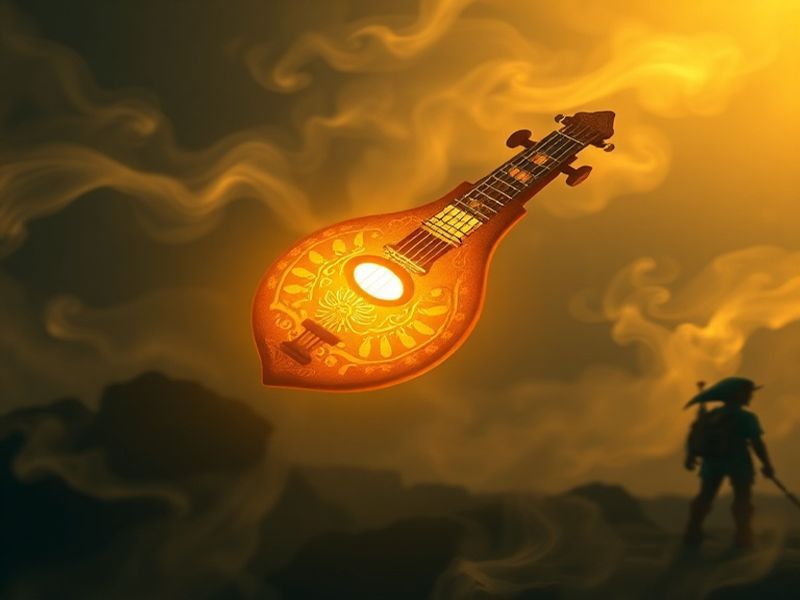
Its narrative framework drew deeply from global mythologies. The game’s structure mirrors Joseph Campbell’s monomyth, with Link’s journey from humble origins to heroic destiny. The ocarina itself, a wind instrument central to gameplay and lore, echoes shamanic traditions found in Native American, Celtic, and Japanese cultures. These universal themes helped the game resonate with diverse audiences, transcending language barriers and cultural boundaries.
The Global Reception: A Game That United Players Worldwide
Upon release, Ocarina of Time became a global phenomenon, but its impact varied by region. In Japan, it was celebrated as a showcase of Nintendo’s technical prowess, with gaming magazines praising its seamless integration of audio and visuals. Famitsu awarded it a near-perfect score of 39/40, a rare achievement that cemented its legacy in the Japanese gaming canon.
In North America, the game’s release coincided with the holiday season, and it became a must-have title for the Nintendo 64. Retailers struggled to keep up with demand, and secondary markets saw cartridges resold for double the retail price. Meanwhile, in Europe, where the console had a smaller but growing user base, Ocarina of Time introduced many players to 3D adventure gaming for the first time.
Its success wasn’t limited to commercial metrics. In South Korea, the game fostered a burgeoning esports culture, with speedrunning communities emerging in the early 2000s. Players in Australia and New Zealand, though geographically distant, formed tight-knit groups to share strategies and glitch discoveries. Ocarina of Time became a shared language among gamers, a digital artifact that bridged vast distances.
Cultural Echoes: Myth, Music, and Modern Media
The ocarina’s role in the game extended beyond mechanics—it became a symbol of musical storytelling. The instrument’s design was inspired by traditional Japanese shakuhachi flutes, yet its in-game sound was synthesized to evoke a mystical, otherworldly quality. This fusion of cultural elements made the ocarina instantly recognizable, even to players with no prior knowledge of Japanese instruments.
The game’s soundtrack, composed by Koji Kondo, remains one of the most iconic in gaming history. Tracks like “Zelda’s Lullaby” and “Gerudo Valley” blend Western orchestral styles with Japanese melodic structures. These compositions have been performed at orchestral concerts worldwide, including the Tokyo Philharmonic and London Symphony Orchestra. In 2018, a symphonic tribute album titled The Legend of Zelda: Symphony of the Goddesses celebrated the game’s 20th anniversary, proving its musical legacy extends far beyond the screen.
Ocarina of Time also left a mark on popular culture. References to the game appear in films, TV shows, and music. The 2016 animated film Kubo and the Two Strings features a character who plays a three-stringed lute, a design clearly influenced by the ocarina. Even in fashion, the game’s aesthetic—particularly the Hylian Shield and Triforce emblem—has inspired streetwear and accessory designs in cities like New York and Paris.
Legacy and Lessons: What Modern Games Can Learn
More than two decades after its release, Ocarina of Time’s design principles remain relevant. Its world-building is meticulous, with each region—Hyrule Field, Kokiri Forest, Gerudo Desert—feeling distinct and lived-in. This attention to environmental detail is a lesson for modern open-world games, many of which prioritize scale over substance.
The game’s use of time as a narrative device was particularly innovative. By allowing players to travel between childhood and adulthood, the game introduced a dynamic that few titles have replicated with such emotional weight. This mechanic influenced later games like Final Fantasy VIII and Chrono Trigger, but none have matched the poignant simplicity of Link’s journey across time.
Ocarina of Time also demonstrated the power of player agency. While the main quest is linear, side quests like the ocarina minigame and the Happy Mask Shop offer meaningful distractions. These optional challenges reward curiosity and experimentation, a philosophy that modern games like The Legend of Zelda: Breath of the Wild have embraced with open worlds that encourage exploration.
Its impact on the gaming industry is undeniable. Ocarina of Time set a benchmark for 3D adventure games, inspiring titles like Shadow of the Colossus and Dark Souls. It also helped establish the Zelda franchise as a cornerstone of Nintendo’s identity, a legacy that continues with each new installment.
A Lasting Beacon in Gaming’s Evolution
As gaming continues to evolve, Ocarina of Time remains a touchstone for both developers and players. Its blend of technical innovation, mythic storytelling, and emotional depth is rare in any medium. Whether played on a CRT monitor in 1998 or a modern emulator in 2024, the game retains its magic.
For new generations of players, Ocarina of Time offers more than nostalgia—it’s an invitation to explore a world where adventure and music intertwine. Its legacy is a reminder that great games are more than code and graphics; they are vessels for shared experiences, cultural exchange, and timeless artistry.
In an industry often fixated on the next technological leap, Ocarina of Time endures because it understands what truly matters: the journey, the music, and the connections we make along the way.