The annual Victory Day parade in Moscow has long served as a cornerstone of Russian state propaganda, a carefully choreographed spectacle meant to reinforce narratives of national resilience and military prowess. This year’s event, held on May 9, unfolded against the backdrop of Russia’s ongoing war in Ukraine, a conflict that has stretched into its third year with no clear resolution in sight. For Western observers, the parade offered a window into the Kremlin’s messaging—and what it reveals may not be as reassuring as Moscow hopes.
Symbolism Over Substance: The Parade’s Core Messages
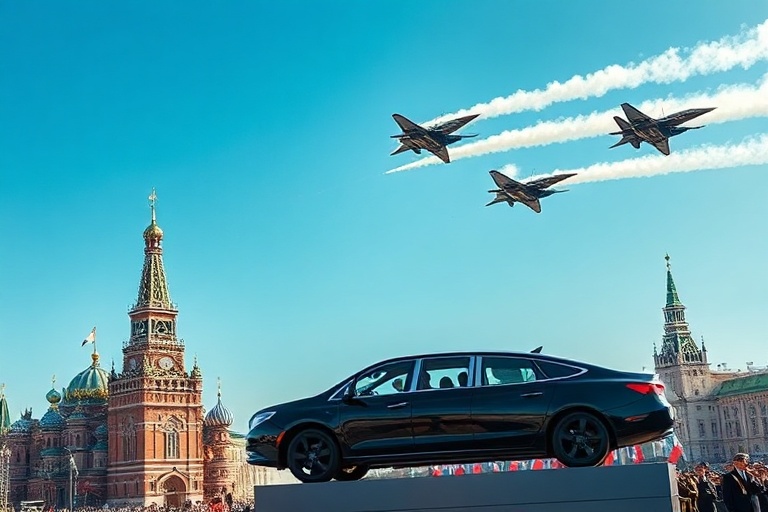
The 2024 Victory Day parade was meticulously designed to project an image of unshaken resolve. At the center of the display was the usual procession of troops, military hardware, and patriotic speeches, all timed to coincide with the anniversary of Nazi Germany’s surrender in 1945. Yet this year, the symbolism carried an added layer of desperation, particularly as the war in Ukraine grinds on with mounting casualties and stalled advances.
President Vladimir Putin’s address to the nation underscored this tension. Standing beneath the towering banners of the Soviet victory over fascism, he framed the conflict in Ukraine as a continuation of Russia’s historic struggle against Western aggression. The message was clear: Russia remains locked in a existential battle, not just with Ukraine, but with the collective West. Yet the absence of any new military announcements—despite months of speculation about potential escalations—left analysts questioning whether the parade was meant to bolster domestic morale or mask deeper vulnerabilities.
Key Takeaways from the 2024 Parade
- Military Hardware as Propaganda: The parade featured an array of advanced weaponry, including the latest models of drones, missiles, and tanks. While impressive in scale, many of these systems have already been deployed in Ukraine, raising questions about their operational effectiveness.
- Absence of New Commitments: Unlike previous years, there were no major announcements about troop mobilizations or new offensives. This suggests a cautious approach, likely driven by the Kremlin’s desire to avoid further domestic unrest.
- Focus on Nuclear Deterrence: Putin’s speech reiterated Russia’s nuclear doctrine, framing its arsenal as a deterrent against NATO involvement. The emphasis on nuclear readiness serves as a reminder of Moscow’s willingness to escalate if cornered.
- Domestic vs. International Audience: The parade was as much about reassuring Russian citizens as it was about deterring foreign adversaries. The heavy emphasis on historical victory narratives reflects a government keen to maintain public support amid economic strain and war fatigue.
The War in Ukraine: A Conflict Without End in Sight
The timing of the parade—amid Ukraine’s stalled counteroffensive and Russia’s incremental gains—added a layer of irony to the proceedings. While Moscow celebrated its military might, the reality on the ground tells a different story. Ukrainian forces, bolstered by Western aid, continue to resist Russian advances, particularly in the embattled regions of Donbas and Kharkiv. Meanwhile, Russian casualties mount, and economic sanctions have begun to bite, forcing the Kremlin to rely increasingly on domestic propaganda to sustain its narrative.
This disconnect between spectacle and reality was not lost on international observers. The parade’s heavy reliance on historical symbolism—invoking the Soviet Union’s triumph over Nazi Germany—serves as a reminder of how deeply Putin’s regime has tied its legitimacy to the legacy of World War II. Yet as the war drags on, the parallels to 1945 grow increasingly strained. Unlike the Soviet Union, which fought a total war against a clear enemy, Russia today faces a fragmented opposition and a Ukrainian nation that refuses to capitulate.
Broader Implications: What the Parade Reveals About Putin’s Strategy
The 2024 Victory Day parade was not just a military display; it was a political maneuver. By focusing on historical triumphs and nuclear deterrence, Putin sought to project an image of invincibility, even as his forces struggle to make decisive gains in Ukraine. This strategy serves a dual purpose: it reinforces his authority at home while deterring Western intervention.
Yet the limitations of this approach are becoming increasingly apparent. Russia’s economy, though resilient, is showing signs of strain under the weight of sanctions and wartime spending. Domestic dissent, while suppressed, continues to simmer beneath the surface. And Ukraine, despite its challenges, remains defiant, buoyed by Western support and a growing sense of national identity.
For observers outside Russia, the parade offered a reminder of the fragility of authoritarian power. No amount of military parades or patriotic rhetoric can mask the fundamental weaknesses of a system built on propaganda and repression. As the war in Ukraine enters its third year, the Kremlin’s reliance on spectacle over substance may ultimately prove unsustainable.
Conclusion: A Parade That Speaks Volumes
The 2024 Victory Day parade was a masterclass in state propaganda, blending historical nostalgia with modern military posturing. Yet beneath the spectacle, the event revealed the cracks in Putin’s carefully constructed narrative. With no clear path to victory in Ukraine and mounting domestic pressures, the Kremlin’s reliance on symbolism over strategy may soon face its reckoning.
For those watching closely, the parade was less a celebration of strength and more a testament to desperation—a final attempt to rally a nation around a war that grows increasingly unwinnable. As the conflict in Ukraine continues to evolve, the true measure of Russia’s resilience will not be found in its parades, but in the reality of its battlefield performance and the resilience of its people.
For further analysis on Russia’s military strategies and their global implications, explore our Analysis and Politics sections.