tarkov
Escape from Tarkov: How a Niche Russian Shooter Became a Global Gaming Sensation
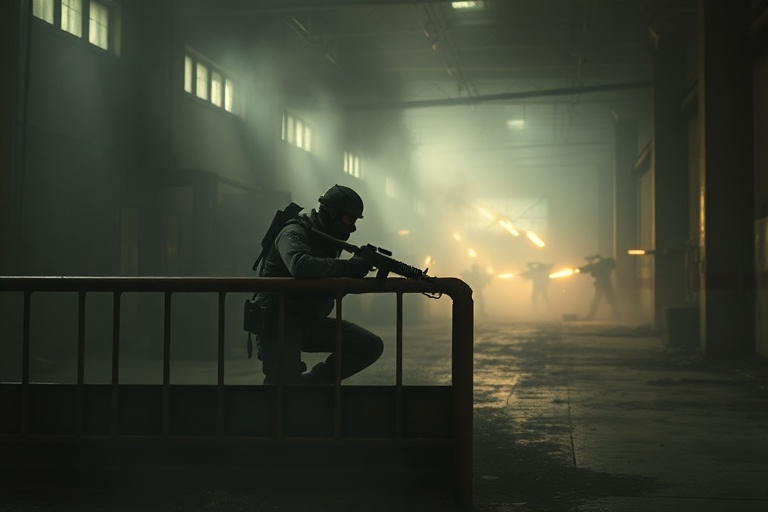
In the dense forests of the Norovinsk region, where the air carries the weight of gunpowder and the ground is littered with spent casings, a virtual war rages without end. This is the world of Escape from Tarkov, a first-person shooter that has quietly evolved from a Russian indie project into one of the most demanding and immersive experiences in modern gaming.
The game’s developer, Battlestate Games, launched it in 2017 after years of development in near obscurity. Based in the city of Petrozavodsk, a place far from the neon-lit studios of Los Angeles or Tokyo, Battlestate forged a title that would redefine hardcore simulation shooters. Unlike its more accessible contemporaries, Escape from Tarkov demands mastery of ballistics, inventory management, and tactical movement—every bullet counts, and every decision echoes through the server.
While many games chase mass appeal through flashy graphics or streamer-friendly mechanics, Escape from Tarkov
thrives on deprivation and consequence. Players spawn with minimal gear, must scavenge for supplies, and face real consequences for death: loss of equipment, progress, and hours of investment. This relentless difficulty has not deterred players—it has cultivated a fiercely loyal community that spans continents.
The Birth of a Hardcore Legend in a Remote Corner of Russia
Battlestate Games was founded in 2012 by a group of developers with backgrounds in military simulation software. Their goal was not to build a blockbuster, but to create a realistic combat environment rooted in actual tactics, physics, and survival mechanics. The setting—a war-torn fictional region called the Norovinsk Industrial Zone—was inspired by the rugged landscapes of Karelia, a remote Russian republic bordering Finland.
This regional inspiration is more than atmospheric. It reflects a cultural shift in game development: the rise of independent studios outside traditional gaming hubs. While Western and Japanese developers dominated the AAA landscape, smaller teams in Eastern Europe, Russia, and Scandinavia began crafting experiences that prioritized depth over spectacle. Escape from Tarkov emerged as a leader in this movement, blending meticulous realism with unforgiving gameplay.
Its initial release was rough. Bugs plagued early versions, and server stability was inconsistent. Yet these flaws became part of the game’s mythos—a shared struggle among players who accepted the chaos as part of the challenge. The Russian gaming community, often overlooked in global conversations, rallied behind the title, turning it into a cornerstone of the country’s growing indie game scene.
A Global Community United by Survival and Skill
Escape from Tarkov has cultivated a global following that transcends language and culture. Players from North America, Europe, the Middle East, and Southeast Asia log in daily, drawn not only by the thrill of combat but by the game’s intricate economy and social dynamics. The community operates like a living organism—traders, scavengers, and raiders form loose alliances, barter for gear, and betray one another in the blink of an eye.
One of the game’s most unique features is its player-driven economy. In-game currency, “roubles,” can be earned through raids or traded on the Flea Market, a player-run auction house. This system has given rise to a secondary market where real-world money is exchanged for in-game items—sparking debates about gambling, addiction, and the ethics of virtual economies. Despite controversies, the market thrives, supported by a global network of third-party sites and middlemen.
The game’s appeal is global but uneven. In Russia and former Soviet states, it resonates with a cultural familiarity toward military themes and survival narratives. In the West, it attracts tactical gamers, content creators, and those who crave a challenge in an era dominated by easy wins. Streaming platforms like Twitch have amplified its reach, with top players like “Killa” and “Frosty” becoming minor celebrities in the FPS community.
Interestingly, the game’s difficulty has become a badge of honor. Players often share “gear fear” stories—moments when they hesitated under fire because they couldn’t afford to lose their expensive loadout. This psychological tension is rare in gaming and speaks to the game’s power to immerse players not just visually, but emotionally.
Challenges and Controversies: The Cost of Realism
Despite its success, Escape from Tarkov has faced persistent challenges. Server stability remains a major issue during peak hours, with queues often exceeding an hour. Battlestate has acknowledged these problems but has struggled to scale its infrastructure to match demand. The game’s reliance on PvPvE (player versus player versus environment) mechanics also means that new players can be gunned down within minutes, leading to frustration and churn.
Another layer of complexity comes from the game’s real-world ties. The fictional conflict in Tarkov mirrors real geopolitical tensions, and some players have drawn parallels to the Russia-Ukraine war. While Battlestate has kept the narrative neutral, the game’s setting—a warzone in a disputed region—has inevitably invited real-world interpretation. The studio has avoided direct commentary, focusing instead on technical updates and bug fixes.
There are also ethical concerns. The game’s intense realism has led to accusations of glorifying war. Some critics argue that the hyper-violent, high-stakes environment could desensitize players to real combat. Others counter that the game’s brutality serves as a critique of war’s futility. Whatever the interpretation, Escape from Tarkov forces players to confront the cost of survival—both in pixels and in thought.
What’s Next for Tarkov? Expansion, Esports, and the Future of Hardcore Gaming
Battlestate Games has not rested on its laurels. Since launch, the studio has released major updates that expand the game’s world, add new weapons, and refine mechanics. The upcoming “Left Behind” update is expected to introduce a new map, new weapons, and further improvements to the game’s AI and physics systems. The community eagerly anticipates these changes, many of which are shaped by player feedback gathered through forums and Discord.
Rumors of an official esports league have circulated for years. While no formal announcement has been made, the game’s tactical depth and spectator-friendly raids (via replay systems) make it a strong candidate for competitive play. Imagine a league where teams compete not just in skill, but in loadout strategy, inventory efficiency, and psychological resilience—this could redefine what esports looks like in the 2020s.
As virtual reality technology advances, speculation grows about a potential VR version of Escape from Tarkov. The immersion of moving through a forest, shouldering a rifle, and feeling recoil could elevate the experience to unprecedented levels. Though no confirmed plans exist, the possibility has fueled fan art, mods, and endless forum threads.
Meanwhile, the game continues to grow its player base through word-of-mouth and organic discovery. Unlike titles that rely on aggressive marketing, Escape from Tarkov has thrived through authenticity. Its community is self-policed, self-teaching, and deeply invested. Players share guides, craft maps, and even develop strategies for surviving against AI bosses like Reshala or Killa.
This organic growth mirrors the rise of other niche but powerful gaming communities, such as those around retro simulation games or indie survival titles. It proves that in an era of algorithm-driven content, passion and authenticity still matter.
Why Tarkov Matters Beyond the Screen
Escape from Tarkov is more than a game. It is a cultural artifact—a testament to what happens when developers prioritize depth over accessibility, realism over flash, and consequence over convenience. It reflects a global shift toward gaming as a serious, even meditative experience, where failure is part of the journey and mastery is earned, not granted.
In a world where most games are designed for instant gratification, Tarkov asks players to slow down, think, and adapt. It bridges cultures by uniting players across borders in a shared struggle for survival. It challenges assumptions about what games can do—blurring the line between entertainment and simulation, fun and frustration.
As gaming continues to evolve, titles like Escape from Tarkov remind us that the most enduring experiences are not those that cater to the lowest common denominator, but those that dare to be difficult, demanding, and deeply immersive. In the forests of Norovinsk, where every bullet has a cost and every raid could be your last, the player is not just a participant—they are a survivor.
And that, perhaps, is why the world keeps coming back.