The Punisher: How Frank Castle Became a Cultural Icon
The Punisher stands as one of Marvel’s most enduring and complex antiheroes. Unlike traditional superheroes who adhere to moral codes, Frank Castle operates outside the law, using lethal force to punish criminals. His brutal methods have sparked decades of debate among fans, creators, and critics alike. What began as a supporting character in 1974 has evolved into a franchise that spans comics, television, and film, cementing his place in pop culture.
Castle’s origins trace back to a tragic event. After his family is murdered by the mob in New York City, he emerges as a vigilante determined to dismantle organized crime. His skull emblem and military background set him apart from other Marvel heroes, making him an immediate standout. Over the years, his story has been reimagined across multiple mediums, each adaptation adding new layers to his character.
The Evolution of a Reluctant Hero
Frank Castle’s transformation from grieving father to ruthless enforcer didn’t happen overnight. His debut in The Amazing Spider-Man #129 (1974) introduced him as the original Punisher, a deadly opponent for Spider-Man. However, his solo series in 1986, written by Mike Baron, redefined him as a darker, more methodical figure. This era emphasized his tactical approach to crime-fighting, blending military precision with unrelenting vengeance.
Later writers expanded Castle’s backstory, exploring his time as a Marine and the psychological toll of war. Stories like Punisher: Welcome Back, Frank (2004) by Garth Ennis delved into his moral ambiguity, portraying him as both a hero and a villain. His relationships with allies like Microchip and Rachel Cole-Alves further humanized him, revealing vulnerabilities beneath his hardened exterior.
The Punisher’s evolution reflects broader shifts in superhero storytelling. As audiences grew tired of traditional heroics, Castle’s willingness to cross moral lines resonated with readers seeking raw, unfiltered justice. His stories often serve as critiques of systemic failure, where the legal system proves inadequate against corruption and violence.
Adaptations That Shaped His Legacy
Frank Castle’s journey across different media has been marked by both triumphs and controversies. The 1989 film The Punisher, starring Dolph Lundgren, remains a cult favorite despite its low budget and dated effects. It introduced audiences to Castle’s single-minded pursuit of vengeance, setting the tone for future adaptations.
Thomas Jane’s portrayal in The Punisher (2004) and Punisher: War Zone (2008) brought a more nuanced take, emphasizing Castle’s humanity. Jane’s performance highlighted the character’s internal struggle, making him more than just a killing machine. Unfortunately, the films underperformed commercially, but they developed a dedicated fanbase.
Jon Bernthal’s portrayal in Netflix’s Marvel’s The Punisher (2017–2019) redefined the character for a modern audience. Bernthal’s performance balanced brutality with deep emotional trauma, earning critical acclaim. The series explored PTSD, family loss, and the cyclical nature of violence, making Castle’s mission feel tragically relevant.
Beyond live-action, animated series like Marvel’s The Punisher (2018) and video games, particularly Marvel’s Punisher (2005) and Marvel’s Punisher (2012), expanded his reach. These adaptations highlighted his tactical genius, offering interactive experiences that immersed players in his world of relentless justice.
Key Adaptations and Their Impact
- 1989 Film: Introduced Castle’s core premise but struggled with execution.
- Thomas Jane’s Films: Focused on his humanity but faced commercial challenges.
- Netflix Series: Elevated the character with psychological depth and critical praise.
- Video Games: Showcased his strategic mind in immersive gameplay.
The Moral Dilemma: Hero or Villain?
The Punisher’s greatest strength—and controversy—lies in his refusal to adhere to heroism as traditionally defined. While heroes like Spider-Man and Captain America operate within moral boundaries, Castle rejects those constraints. His methods raise ethical questions: Is his violence justified if it dismantles greater evil? Can a killer ever be a force for good?
Critics argue that Castle’s actions glorify vigilantism, potentially inspiring real-world violence. Others counter that he exposes the failures of institutions meant to protect citizens. His stories often force readers to confront uncomfortable truths about justice, accountability, and the cost of vengeance.
This moral ambiguity has made him a favorite among writers exploring antihero narratives. Characters like Batman grapple with similar dilemmas, but Castle’s outright rejection of heroism sets him apart. His stories serve as cautionary tales, warning of the dangers of unchecked retribution.
Yet, for all his brutality, Castle remains a sympathetic figure. His love for his family and desire for a better world drive his actions, even as they become increasingly extreme. This duality ensures that audiences continue to debate his role in the superhero landscape.
The Punisher’s Enduring Influence
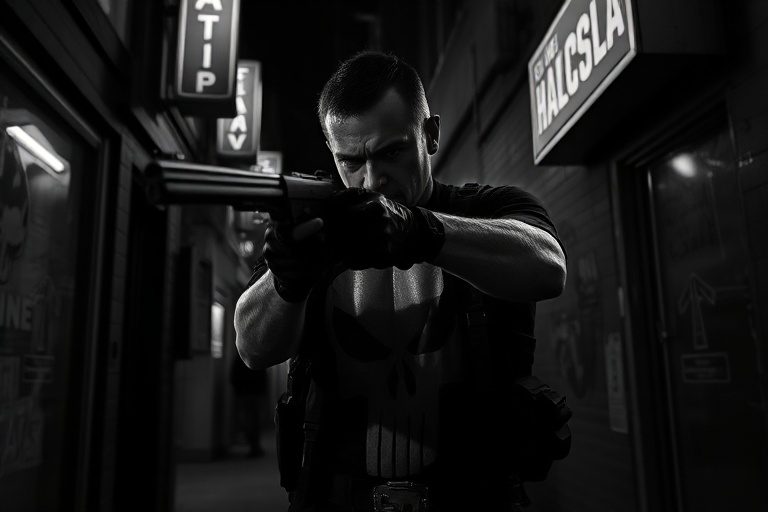
Frank Castle’s impact extends beyond comics and screen. His aesthetic—black tactical gear, skull emblem, and arsenal of weapons—has become iconic. The Punisher logo, in particular, has been co-opted by real-world groups, blurring the line between fiction and reality. This unintended consequence highlights the character’s cultural penetrance.
His influence is also evident in the rise of antiheroes across media. Shows like Daredevil and Watchmen embrace moral complexity, much like Castle does. Even in gaming, characters like Max Payne and Hotline Miami’s protagonist share his relentless, violent approach to justice.
Moreover, Castle’s stories often reflect societal anxieties. From the War on Crime in the 1980s to modern discussions on police brutality and systemic injustice, his narratives remain eerily relevant. This timelessness ensures that new generations continue to discover and debate his legacy.
Why the Punisher Still Matters
- Cultural Icon: His imagery and themes permeate beyond comics.
- Moral Complexity: He challenges traditional notions of heroism.
- Relevance: His stories mirror real-world issues of justice and violence.
- Influence: He paved the way for modern antiheroes in media.
The Punisher’s journey from a one-off villain to a cultural touchstone is a testament to his complexity. He embodies the darker side of justice, forcing audiences to confront uncomfortable questions. Whether viewed as a hero, a villain, or something in between, Frank Castle’s story endures because it refuses to offer easy answers.
As long as societies grapple with crime, corruption, and the limits of justice, the Punisher will remain a compelling figure. His legacy is not just in the skull he wears, but in the questions he forces us to ask—about morality, vengeance, and the true cost of heroism.
“You killed my family. Prepare to die.” — Frank Castle
This line, repeated across adaptations, encapsulates the Punisher’s essence. It’s a promise, a threat, and a cry of pain all at once. Frank Castle may never find peace, but his struggle continues to captivate audiences worldwide.