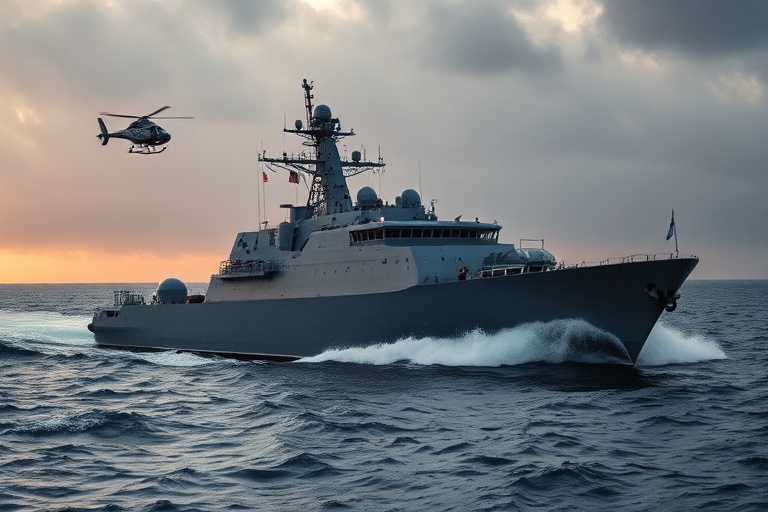
The Type 31 Frigate: A New Chapter for Global Naval Power
The Royal Navy’s Type 31 frigate represents more than just a new class of warship. It embodies a strategic shift in how modern navies balance cost, capability, and adaptability. Designed to replace the aging Type 23 frigates, the Type 31 is intended to deliver a versatile platform capable of supporting a wide range of missions—from anti-piracy operations to high-intensity warfare.
At a time when geopolitical tensions are reshaping maritime security, the Type 31’s introduction arrives with significant implications. Nations from Europe to the Indo-Pacific are closely watching its development, as it could set a new standard for next-generation frigates. The ship’s modular design and emphasis on affordability make it particularly relevant in an era where defense budgets face increasing scrutiny.
A Cost-Effective Solution for Modern Navies
The Type 31 program was born out of necessity. The UK Ministry of Defence sought a frigate that could be built faster and at lower cost than traditional warships, without sacrificing operational effectiveness. The result is a £250 million (approximately $320 million) per-unit price tag, significantly less than the £600 million estimated for the more advanced Type 26 frigates.
This affordability stems from several key design choices. The ship’s construction leverages commercial off-the-shelf (COTS) technology, reducing development risks and streamlining production. For example, its propulsion system draws from existing marine diesel engines, while its combat management system is based on proven civilian-grade software. These decisions reflect a broader trend in naval engineering, where militaries are turning to civilian innovations to cut costs.
Yet, affordability does not come at the expense of capability. The Type 31 is designed to accommodate a 30mm main gun, anti-ship missiles, and a flexible mission bay for drones or special forces operations. Its length of 149 meters and crew complement of 100 personnel strike a balance between operational reach and manpower efficiency.
Global Implications: A Frigate for the 21st Century
The Type 31’s potential extends far beyond the Royal Navy. Several nations have expressed interest in acquiring similar vessels, drawn by its modular architecture and proven commercial technologies. Denmark, for instance, has explored adapting the Type 31’s design for its own fleet upgrades. Meanwhile, Australia and Canada—both of which operate frigates—have monitored the program as they plan their own naval modernization efforts.
This international interest underscores a broader shift in naval procurement. Many countries can no longer justify the expense of large, multi-role destroyers or cruisers. Instead, they are opting for smaller, more adaptable frigates that can be rapidly deployed for a variety of missions. The Type 31’s success could influence future designs in Europe, Asia, and beyond, particularly in regions where coastal defense and expeditionary operations are priorities.
In the Indo-Pacific, where maritime disputes and piracy pose persistent challenges, the Type 31’s flexibility makes it an attractive option. Its ability to integrate with allied naval forces—such as those of the Five Eyes intelligence alliance—could enhance collective security efforts in the region. Meanwhile, in the Arctic, where melting ice is opening new shipping lanes, the Type 31’s ice-strengthened hull and endurance could prove invaluable.
The Human Element: Crewing the Type 31
Behind every warship is a crew tasked with bringing it to life. The Royal Navy’s approach to crewing the Type 31 reflects a modern understanding of naval operations. With a smaller crew than its predecessors, the frigate relies on automation and digital systems to reduce the workload on sailors. This is part of a wider trend in naval design, where technology is leveraged to address recruitment and retention challenges.
Training for Type 31 crews will emphasize adaptability. Sailors will need to master not only traditional naval warfare but also emerging domains like cybersecurity and unmanned systems. The frigate’s integration with drones and autonomous vehicles means that future crews will operate in a hybrid environment, blending manned and unmanned assets.
For the British naval community, the Type 31 also carries cultural significance. The Royal Navy has long been a symbol of global maritime power, and the Type 31 represents its commitment to maintaining that status. Yet, the ship’s modular design allows for future upgrades, ensuring that it remains relevant as new threats emerge. This adaptability is a testament to the ingenuity of its designers and the resilience of the naval tradition.
A Broader Shift in Naval Warfare
The Type 31 frigate is more than just a ship; it is a reflection of the evolving nature of naval warfare. In an era where conflicts are increasingly fought in the electromagnetic spectrum and cyberspace, the Type 31’s emphasis on modularity and adaptability positions it at the forefront of modern naval innovation.
For defense analysts, the Type 31 offers a case study in how cost constraints can drive creative solutions. Its reliance on commercial technology and streamlined production processes challenges the traditional model of naval shipbuilding, where complexity often leads to delays and cost overruns. By demonstrating that affordability and capability can coexist, the Type 31 sets a new benchmark for future frigate designs.
The ship’s introduction also highlights the growing importance of international collaboration in naval defense. The Royal Navy’s partnership with Babcock International, the prime contractor, and other suppliers—including companies from Canada and the United States—underscores the interconnected nature of modern defense industries. As nations seek to enhance their maritime security, such collaborations will likely become even more critical.
Conclusion: Charting the Future of Naval Power
The Type 31 frigate represents a bold step forward for the Royal Navy and a potential model for navies around the world. Its blend of affordability, adaptability, and advanced technology positions it as a key asset in an era of shifting geopolitical dynamics. As the first of five planned Type 31 frigates prepares for sea trials, the world will be watching to see how this new class of warship performs.
For the Royal Navy, the Type 31 is a symbol of resilience and innovation. In a time of constrained budgets and evolving threats, it offers a path forward that balances cost with capability. For other nations, it provides a blueprint for how to modernize their fleets without breaking the bank. And for the broader naval community, it serves as a reminder that even in an era of high-tech warfare, the fundamentals of adaptability and ingenuity remain as important as ever.