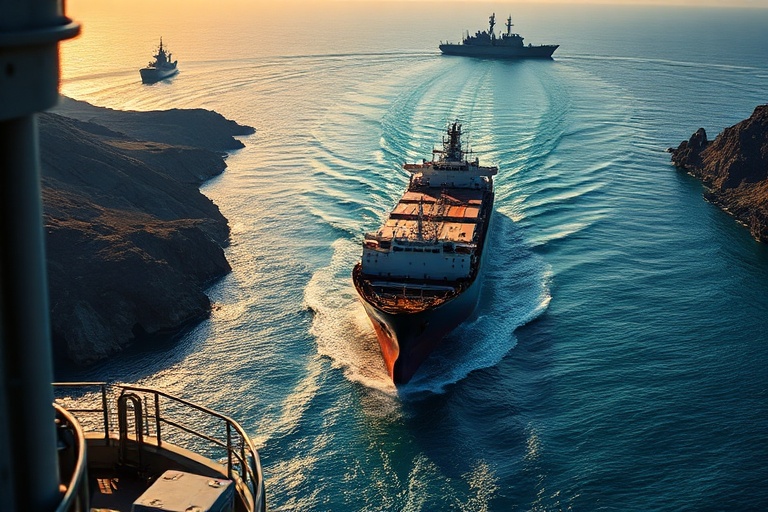
Why the Strait of Hormuz Remains a Global Energy Flashpoint
The Strait of Hormuz: A Global Chokepoint Shaping Geopolitical Tensions
The Strait of Hormuz is more than a narrow waterway connecting the Persian Gulf to the Gulf of Oman—it is a critical artery of global energy trade and a flashpoint for international diplomacy. Situated between Iran and Oman, this 21-mile-wide passage handles roughly one-third of the world’s seaborne oil shipments. Its strategic importance has made it a focal point in discussions about energy security, military strategy, and regional stability.
Understanding the Strait of Hormuz requires looking beyond its geographic constraints. It is a symbol of how geography and power intersect, influencing everything from oil prices to military alliances. The strait’s history is marked by conflicts, diplomatic crises, and ongoing efforts to manage its volatile waters. For nations dependent on Middle Eastern oil, the strait is not just a transit route but a potential vulnerability.
The Strategic Importance of the Strait
The Strait of Hormuz’s significance stems from its role as the sole maritime route for oil exports from several Gulf states, including Saudi Arabia, Iraq, the UAE, and Kuwait. An estimated 20-30% of the world’s oil passes through this narrow passage daily. Even temporary disruptions here can send shockwaves through global energy markets, driving up prices and destabilizing economies.
This choke point is not just about oil. It also serves as a critical transit route for liquefied natural gas (LNG), making it vital for both energy security and economic stability. The strait’s depth and narrowness restrict large vessels to specific shipping lanes, making it easier for nations with military presence—such as Iran—to monitor and control traffic. This control has turned the strait into a geopolitical tool.
Historically, the strait has been a flashpoint during periods of heightened tension. During the Iran-Iraq War in the 1980s, both sides targeted oil tankers in the strait, leading to international interventions. More recently, incidents such as the 2019 attacks on oil tankers and the 2021 drone seizure of a South Korean vessel have underscored the strait’s volatility. These events highlight how quickly maritime trade can be disrupted in this narrow corridor.
Geopolitical Players and Their Interests
The Strait of Hormuz is a stage where global and regional powers play out their competing interests. The United States maintains a strong military presence in the region, including the Fifth Fleet, to ensure the free flow of oil and deter aggression. Meanwhile, Iran has repeatedly threatened to close the strait in response to sanctions or perceived threats, using its naval forces to assert control.
Other key players include:
- Saudi Arabia and the UAE: These Gulf states rely heavily on the strait for oil exports and have invested in alternative routes, such as pipelines, to reduce dependency on Hormuz. However, these alternatives are not yet sufficient to offset the strait’s importance.
- China: As the world’s largest oil importer, China depends on the strait for nearly half of its oil supply. Its growing economic ties with Iran have further complicated its role in the region’s geopolitics.
- Russia: Moscow has expanded its influence in the Middle East, including through military cooperation with Iran. Its presence adds another layer of complexity to the strait’s security dynamics.
- European Union: While Europe imports less oil from the Gulf than Asia, disruptions in the strait can still impact global prices, affecting EU economies. The bloc has sought to diversify energy sources to mitigate risks.
The interplay between these actors creates a delicate balance. Military exercises, sanctions, and diplomatic maneuvers all shape the strait’s security environment. For instance, the U.S. withdrawal from the Iran nuclear deal in 2018 and the subsequent reimposition of sanctions intensified tensions, raising fears of a military confrontation in the strait.
Environmental and Economic Risks
Beyond geopolitics, the Strait of Hormuz faces environmental and economic challenges. The region’s fragile ecosystem is vulnerable to oil spills, which could devastate marine life and coastal communities. Past incidents, such as the 1983 Nowruz oil spill during the Iran-Iraq War, demonstrated the potential for long-term environmental damage.
Economically, the strait’s instability creates uncertainty for global markets. Oil price volatility often correlates with tensions in the region. For example, when Iran threatened to block the strait in 2012, oil prices surged by nearly 10% in a single day. Such reactions underscore how deeply the strait’s security is tied to economic stability worldwide.
Efforts to mitigate these risks have included international naval patrols, such as the U.S.-led Operation Sentinel, which aims to protect commercial shipping. However, these measures are not foolproof. The strait’s narrow lanes and shallow waters make it difficult to respond quickly to threats, whether from state actors or non-state groups like pirates.
The Future of the Strait: Cooperation or Conflict?
The future of the Strait of Hormuz hinges on whether regional and global powers can find common ground. Diplomatic initiatives, such as the 2022 nuclear talks in Vienna, offered a glimmer of hope for easing tensions. However, the failure to revive the Iran nuclear deal has left the strait in a precarious state.
One potential path forward is the establishment of a regional security framework, similar to the 2001 Code of Conduct for the Persian Gulf. Such an agreement could include confidence-building measures, joint naval exercises, and mechanisms for resolving disputes. However, deep mistrust between Iran and its Gulf neighbors, as well as the U.S., complicates these efforts.
Technological advancements may also play a role in reducing risks. Satellite monitoring, autonomous vessels, and AI-driven threat detection could enhance security in the strait. Yet, these solutions require investment and international cooperation, which are not guaranteed in today’s polarized geopolitical landscape.
For now, the Strait of Hormuz remains a critical but fragile link in the global energy supply chain. Its fate will be determined by the interplay of military power, economic interests, and diplomatic efforts. One thing is certain: the world cannot afford to ignore this chokepoint.