Why Tunnels Are the Unsung Heroes of Modern Infrastructure
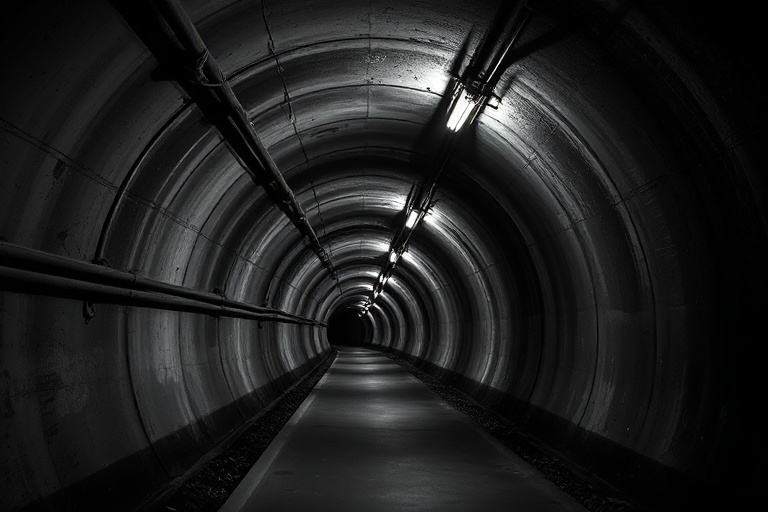
Tunnels have long served as silent witnesses to human ingenuity, carving pathways through mountains, under rivers, and beneath bustling cities. These subterranean structures are more than just architectural feats; they are lifelines connecting distant places, safeguarding critical infrastructure, and even shaping the economies of entire regions. From ancient aqueducts to modern high-speed rail tunnels, their evolution reflects humanity’s relentless drive to overcome natural barriers.
In densely populated urban areas, tunnels alleviate congestion by redirecting traffic away from surface roads. They enable efficient public transportation systems, such as subways, which move thousands of commuters daily without adding to street-level gridlock. Meanwhile, in rural and mountainous regions, tunnels cut travel times dramatically, turning what were once days-long journeys into mere hours. Their impact stretches beyond convenience, often becoming symbols of progress and modernization.
The Engineering Marvels Behind Tunnel Construction
Building a tunnel is a complex dance of precision, technology, and sheer endurance. Engineers must account for geological instability, groundwater pressure, and ventilation needs, all while ensuring the structure’s long-term stability. The methods used vary widely depending on the environment. For example, tunnel boring machines (TBMs) dominate modern soft-ground tunneling, using rotating cutter heads to excavate soil while immediately lining the tunnel with pre-cast concrete segments.
In rock-heavy terrains, drill-and-blast techniques remain prevalent. This method involves drilling holes into the rock face, filling them with explosives, and detonating them in sequence to fracture the stone. The rubble is then cleared, and the process repeats. While slower than TBMs, drill-and-blast allows for greater flexibility in navigating unpredictable geological formations. Meanwhile, underwater tunnels pose unique challenges, often requiring immersed tube construction—a process where prefabricated tunnel segments are sunk into a dredged trench and joined together underwater.
Safety is paramount in tunnel construction. Ventilation systems must be robust enough to handle smoke and fumes in case of fire, while emergency exits are spaced strategically to ensure rapid evacuation. Advanced monitoring systems track air quality, structural stress, and even seismic activity in earthquake-prone zones. These precautions aren’t just theoretical; they’re born from past disasters that have highlighted the catastrophic potential of tunnel failures.
The Longest and Most Ambitious Tunnels in the World
The title of the world’s longest tunnel belongs to the Gotthard Base Tunnel in Switzerland, stretching 57.1 kilometers (35.5 miles) beneath the Alps. Opened in 2016 after two decades of construction, it shaved an hour off the travel time between Zurich and Milan, transforming cross-border transit. The tunnel’s depth—up to 2,300 meters (7,500 feet) below the surface—required innovative techniques to manage heat and pressure, including massive cooling systems to keep the concrete from degrading.
Other notable mentions include:
- Seikan Tunnel (Japan): A 53.9-kilometer (33.5-mile) underwater marvel connecting the islands of Honshu and Hokkaido. Completed in 1988, it remains the longest underwater tunnel globally and a testament to Japan’s earthquake-resistant engineering.
- Channel Tunnel (UK-France): The 50.45-kilometer (31.35-mile) link between England and France, including 39 kilometers (24 miles) underwater. Its construction faced immense challenges, from unstable chalk marl to political disputes over funding.
- Laerdal Tunnel (Norway): The world’s longest road tunnel at 24.5 kilometers (15.2 miles). Norway’s rugged terrain necessitated such a project, but its designers prioritized driver safety by incorporating illuminated caves every 6 kilometers to break the monotony and reduce fatigue-related accidents.
These tunnels aren’t just feats of engineering; they’re economic engines. The Gotthard Base Tunnel alone is expected to generate billions in trade benefits for Europe, while the Channel Tunnel has become a vital artery for freight and passenger travel, reducing reliance on air routes.
Tunnels in Pop Culture: From Myth to Modern Symbolism
Tunnels have long held a place in human mythology and storytelling. In ancient lore, they often symbolized journeys into the unknown—think of the Greek myth of Orpheus descending into Hades or the biblical tale of Jonah swallowed by a great fish, emerging from a dark passage. These narratives tapped into a primal fear of the subterranean, where light is scarce and dangers lurk unseen.
In modern fiction, tunnels frequently serve as metaphors for transition, secrecy, or rebirth. Consider the labyrinthine sewers of Paris in Victor Hugo’s Les Misérables, where Jean Valjean navigates a shadowy underworld to escape his pursuers. Or the claustrophobic subway tunnels in Stephen King’s The Mist, where survivors find temporary refuge from an otherworldly threat. Even in video games, tunnels are recurring motifs—whether it’s the eerie, flickering corridors of Silent Hill or the sprawling underground networks of Metro 2033.
Beyond horror and fantasy, tunnels have also become symbols of resilience and hope. The Berlin Wall’s escape tunnels, dug by those desperate to flee East Germany, represent the human spirit’s refusal to be confined. These clandestine passages, often no taller than a person, became lifelines for over 70 successful escapes between 1961 and 1989. Their stories have been immortalized in documentaries and films, cementing tunnels as enduring icons of perseverance.
The Future of Tunneling: Sustainability and Innovation
The next frontier of tunneling lies in sustainability and smart technology. As climate change intensifies, cities are turning to underground solutions to mitigate urban heat islands and flooding. For instance, Rotterdam’s Waterplein Benthemplein is a public square that doubles as a water storage basin during heavy rainfall, with its underground tunnels channeling excess water away from streets. Similarly, Singapore’s Deep Tunnel Sewerage System uses gravity to transport wastewater to treatment plants, reducing energy consumption and land use.
Innovation is also reshaping how tunnels are designed and maintained. The use of Building Information Modeling (BIM) allows engineers to create digital twins of tunnels, simulating everything from traffic flow to structural stress before construction even begins. Sensors embedded in tunnel walls can detect minute shifts in pressure or temperature, alerting maintenance teams to potential issues before they escalate. Even robotics are entering the fray—autonomous drones now inspect hard-to-reach areas, reducing the need for human workers in hazardous conditions.
Another exciting development is the concept of hyperloop tunnels, proposed by Elon Musk in 2013. These near-vacuum tubes would enable passenger pods to travel at speeds exceeding 700 mph, drastically cutting intercity travel times. While still in experimental phases, companies like Virgin Hyperloop have already conducted successful test runs, suggesting a future where tunnels aren’t just for cars and trains but for high-speed transit pods gliding through frictionless tubes.
Why Tunnels Matter More Than Ever
Tunnels are the unsung heroes of modern infrastructure, quietly enabling the flow of people, goods, and ideas across continents. They are testaments to human perseverance, adapting to everything from shifting political landscapes to the challenges of climate change. As urbanization accelerates and technological advancements continue, the role of tunnels will only grow in importance.
Yet, their construction isn’t without controversy. Environmentalists often raise concerns about the ecological disruption caused by tunneling, from habitat fragmentation to groundwater depletion. Indigenous communities have protested projects that threaten sacred sites, as seen in the opposition to the Mountain Valley Pipeline in the U.S., which included tunnel-like sections. Balancing progress with preservation will remain a critical challenge in the decades ahead.
For now, tunnels continue to push the boundaries of what’s possible. They are more than just holes in the ground—they are lifelines, symbols, and testaments to human ambition. As we dig deeper, both literally and metaphorically, these subterranean pathways will remain at the heart of our most ambitious projects, connecting us in ways we’re only beginning to imagine.