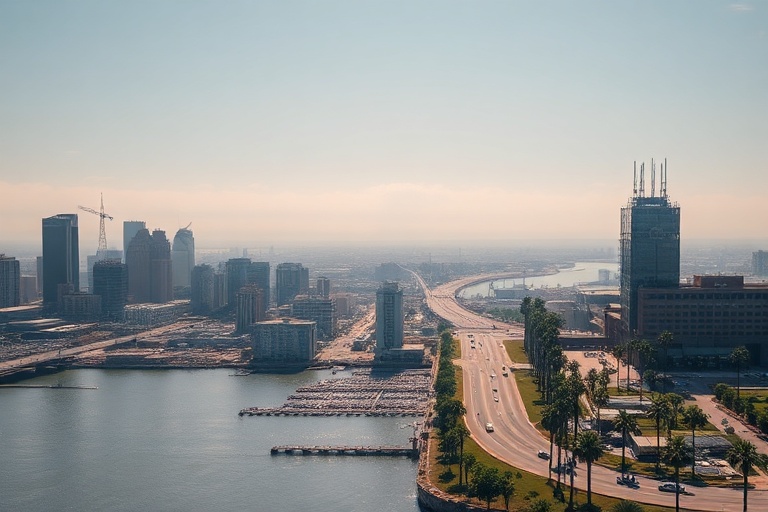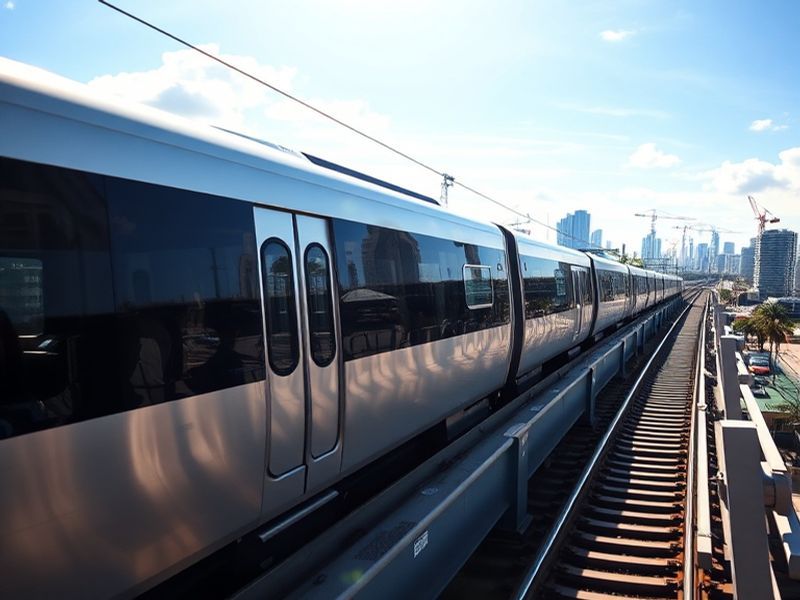
Brightline is transforming intercity travel in Florida, blending speed, luxury, and sustainability to redefine how people move between major urban hubs. Since launching in 2018, the privately funded passenger rail service has become a model for modern rail infrastructure in the United States, challenging conventional notions of rail travel with its sleek design, punctual service, and ambitious expansion plans.
From Concept to Reality: The Birth of Brightline
Brightline’s origins trace back to a 2012 vision by Fortress Investment Group, which sought to revive passenger rail in a state dominated by highways and airports. The company acquired the rights to Florida East Coast Railway’s freight corridor, a critical asset that provided the foundation for a new kind of intercity service. Unlike traditional Amtrak routes, Brightline was designed from the ground up as a premium, high-frequency option aimed at business travelers, tourists, and commuters.
Construction began in 2014, with a focus on creating a rail system that could compete with airlines in terms of speed while offering the convenience of door-to-door travel. The first phase connected Miami to West Palm Beach, covering 67 miles in just under 70 minutes—a journey that typically takes over an hour by car during peak traffic. The project cost approximately $3 billion, funded entirely by private investors, a rarity in U.S. infrastructure development.
Brightline’s debut in January 2018 marked a turning point for passenger rail in America. The service introduced features like free Wi-Fi, power outlets at every seat, and sleek, modern trainsets built by Siemens. These elements, combined with a focus on customer experience, set a new standard for intercity rail travel in the U.S.
Expanding Horizons: Brightline’s Growing Network
Brightline’s initial success spurred rapid expansion. In 2022, the company extended its service to Orlando, adding a 170-mile route that connects Florida’s two largest metropolitan areas. The Orlando extension included a dedicated station at the airport, emphasizing Brightline’s commitment to seamless multi-modal travel. Ridership on the Miami-Orlando route has steadily increased, with over 1.5 million passengers in its first year of operation.
Looking ahead, Brightline has even grander plans. The company is currently constructing a 235-mile extension to Tampa, which will create a continuous high-speed rail corridor from Miami to the Gulf Coast. This project, slated for completion in 2025, is expected to further boost ridership and solidify Brightline’s role as a backbone of Florida’s transportation network.
Brightline is also exploring opportunities beyond Florida. Reports indicate potential interest in projects in Nevada, Texas, and California, where high-speed rail has faced delays and cost overruns. By leveraging its proven business model, Brightline could play a key role in bringing faster, more reliable rail service to other regions.
Key Milestones in Brightline’s Expansion
- 2018: Launch of Miami to West Palm Beach route.
- 2022: Extension to Orlando with airport connectivity.
- 2025 (planned): Completion of Miami to Tampa route.
- Future: Potential expansion to other states.
Innovation and Sustainability: The Brightline Difference
Brightline stands out not just for its speed, but for its commitment to sustainability and innovation. The trainsets, powered by electricity, produce significantly lower emissions per passenger mile than cars or planes. This aligns with Florida’s growing focus on environmental responsibility, particularly in tourist-heavy regions where air and water quality are critical.
The company has also invested in smart technology to enhance the passenger experience. Real-time tracking, mobile ticketing, and dynamic pricing are just a few of the features that set Brightline apart. Stations are designed to be vibrant, multi-use spaces, with retail shops, restaurants, and public art installations integrated into the architecture. For example, the MiamiCentral station features a 50,000-square-foot food hall and a rooftop park, transforming transit hubs into destinations in their own right.
Brightline’s approach to station design reflects a broader trend in urban development, where transit-oriented projects are seen as catalysts for economic growth. Cities like Miami and Orlando have seen increased investment in surrounding areas, with developers capitalizing on the connectivity Brightline provides.
Challenges and Criticisms: Can Brightline Sustain Its Momentum?
Despite its successes, Brightline has not been without controversy. Critics argue that the service primarily benefits affluent travelers, with ticket prices often exceeding those of budget airlines. A one-way ticket from Miami to Orlando, for instance, can cost upwards of $70, a price point that may limit accessibility for some passengers.
There have also been concerns about the project’s reliance on private funding. While this model allows for faster implementation and innovation, it also places the financial burden on investors rather than taxpayers. Some transportation experts question whether such a model is scalable, particularly in regions with less economic dynamism than Florida.
Brightline has addressed these concerns by introducing discounts for students, seniors, and off-peak travelers. Additionally, the company has partnered with local governments to subsidize fares in certain markets, ensuring that the service remains inclusive. However, the debate over private vs. public funding for infrastructure projects continues to loom large in discussions about Brightline’s future.
Brightline’s Responses to Key Challenges
- Affordability: Introduced discounted fares for students, seniors, and off-peak travel.
- Accessibility: Partnered with local governments to subsidize fares in underserved areas.
- Transparency: Published detailed ridership and financial reports to build trust with stakeholders.
- Scalability: Demonstrated the viability of private funding models to encourage similar projects nationwide.
Brightline’s Impact on Florida’s Economy and Culture
Brightline’s influence extends beyond transportation, shaping Florida’s economic and cultural landscape. The rail service has created thousands of jobs, from construction and engineering to hospitality and retail. Local businesses along the Brightline corridor have reported increased foot traffic and revenue, particularly in downtown areas where stations are located.
Culturally, Brightline has become a symbol of Florida’s ambition and progress. The sleek, futuristic trainsets have been featured in films, advertisements, and social media, cementing Brightline’s place in the state’s identity. Events like music festivals and pop-up markets held at stations have further integrated Brightline into Florida’s social fabric.
For tourists, Brightline offers a convenient way to explore the state’s diverse attractions. Travelers can easily hop between Miami’s beaches, Orlando’s theme parks, and Tampa’s cultural landmarks without the hassle of driving or flying. This connectivity has made Florida more accessible, attracting visitors who might otherwise have overlooked the state’s inland destinations.
Brightline’s success has also inspired other states to reconsider their approach to passenger rail. Projects in California, Texas, and the Northeast are now looking to Brightline as a blueprint for high-speed rail development, proving that private investment can play a crucial role in modernizing America’s transportation infrastructure.
Conclusion: A Model for the Future of Rail Travel
Brightline represents more than just a train service; it is a case study in how innovation, investment, and customer focus can transform an industry. By prioritizing speed, sustainability, and passenger experience, Brightline has set a new benchmark for intercity travel in the United States. Its expansion plans and potential influence on other regions underscore its significance as a catalyst for economic and cultural growth.
As Brightline continues to grow, its ability to address affordability and accessibility will be critical to its long-term success. If it succeeds, it could pave the way for a new era of high-speed rail in America—one where private enterprise and public benefit align to create a more connected, sustainable future. For now, Brightline stands as a testament to what’s possible when vision meets execution.
To learn more about the latest developments in transportation technology, visit our Technology section. For deeper analysis on infrastructure projects, check out our Analysis category.