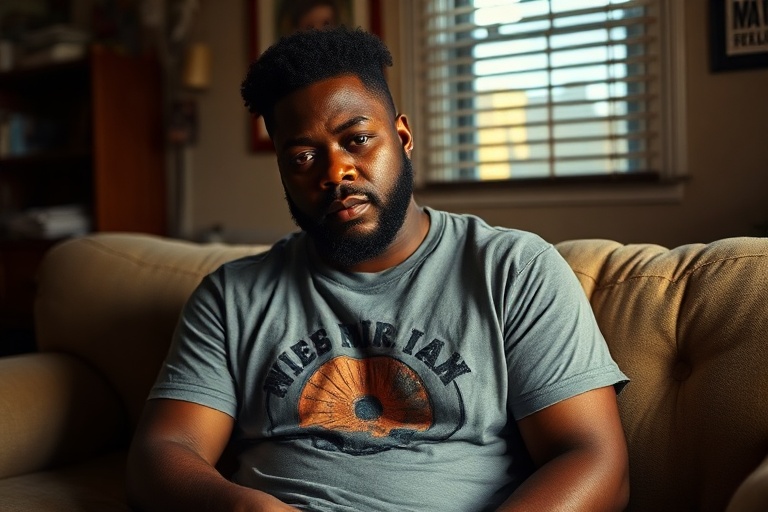
Brian Tyree Henry’s rise from Atlanta’s underground theater scene to Hollywood’s A-list represents more than just an acting career—it’s a study in artistic integrity meeting industry evolution. Over the past decade, Henry has transformed from a working-class actor taking odd jobs to support his craft into one of the most sought-after performers of his generation. His journey reflects broader shifts in how talent from marginalized communities gains visibility in mainstream entertainment.
Born in Fayetteville, North Carolina, and raised in Washington, D.C., before settling in Atlanta, Henry’s connection to the South has remained a defining element of his work. Even as he navigates roles in major studio films, he consistently returns to projects that explore Black identity, family dynamics, and Southern culture. This balance between commercial appeal and personal authenticity has made him a rare figure in an industry often criticized for typecasting or erasing nuance.
Breaking Through: Early Career and Struggles
Henry’s path to success was anything but linear. After graduating from Morehouse College, he moved to New York to pursue acting, only to face the familiar cycle of rejection and financial instability. For years, he worked odd jobs—including as a telemarketer and a temp at a law firm—while auditioning and performing in off-Broadway productions. His persistence paid off in 2016 when he landed a recurring role as Alfred “Paper Boi” Miles on Donald Glover’s Atlanta.
The role was a turning point. Atlanta, with its surreal storytelling and sharp social commentary, gave Henry a platform to showcase his range. His portrayal of Paper Boi—a flawed but magnetic character—earned him critical acclaim and an Emmy nomination in 2018. Yet, even as his profile grew, Henry remained selective about his projects, avoiding the temptation to take on roles purely for exposure.
His early career is a testament to the importance of patience in creative fields. In interviews, Henry has spoken about the value of “falling in love with the craft, not the applause.” This mindset has allowed him to avoid the pitfalls of chasing fleeting fame, instead building a body of work rooted in depth and intention.
Critical Acclaim and Industry Impact
Henry’s breakthrough in mainstream cinema came with 2018’s Widows, where he played Jamal Manning, a ruthless but charismatic crime boss. The role demonstrated his ability to command attention in high-stakes narratives, earning praise from both audiences and critics. But it was his performance in 2021’s King Richard—as a supporting player opposite Will Smith—that solidified his status as a performer who elevates every scene he’s in.
His most recent role in Joker: Folie à Deux (2024) further cements his place in the industry. Playing the Joker opposite Lady Gaga, Henry brought a vulnerability to the character that contrasted with the traditional interpretation. The film’s bold, experimental approach to mental health and love stories sparked conversations about the boundaries of comic book adaptations, and Henry’s performance was a key driver of that discourse.
Beyond acting, Henry has used his platform to advocate for better representation in Hollywood. He has spoken openly about the challenges Black actors face in securing diverse roles, particularly in genres traditionally dominated by white leads. His presence in projects like Bullet Train and The Eternals shows that he can thrive in both indie films and blockbusters, a rarity for actors of color.
Key Contributions to Modern Cinema
- Diverse Representation: Henry has consistently chosen roles that challenge stereotypes, from the complex Paper Boi to the nuanced Jamal Manning.
- Genre Versatility: His filmography spans indie dramas (If Beale Street Could Talk), action films (Godzilla vs. Kong), and musicals (Summertime), proving his adaptability.
- Cultural Commentary: Projects like Atlanta and Joker: Folie à Deux use his performances to explore societal issues, from gentrification to mental health.
- Industry Advocacy: Henry has used his influence to push for more opportunities for Black actors, both in front of and behind the camera.
The Broader Implications of His Career
Henry’s success is part of a larger trend in Hollywood, where actors of color are increasingly given the space to play multidimensional roles. However, his career also highlights the pressures of being a trailblazer. Unlike actors who are content with steady work, Henry has taken on roles that demand emotional and physical transformation, often at personal cost.
For example, his preparation for Joker: Folie à Deux
reportedly involved deep psychological research to understand the nuances of his character’s mental state. This level of commitment is not sustainable for everyone, raising questions about the industry’s expectations of actors of color to “earn” their place by overperforming.
Yet, Henry’s career also offers a counterpoint to the narrative that success in Hollywood requires assimilation. He has maintained his Southern roots, often incorporating Atlanta’s dialect and mannerisms into his characters without caricature. This authenticity has resonated with audiences who see their own experiences reflected on screen—a rarity in an industry historically dominated by homogenized storytelling.
What’s Next for Brian Tyree Henry
With several high-profile projects in development, including a rumored return to Atlanta and potential collaborations with directors like Barry Jenkins, Henry’s future looks as dynamic as his past. Fans can also expect to see him in the entertainment section of Dave’s Locker, where we’ll continue to cover his evolving career.
His next chapter may also include more behind-the-scenes work. Henry has expressed interest in producing and potentially directing, which could further diversify his impact on the industry. Given his track record, it’s likely that whatever he chooses, it will be done with the same level of thoughtfulness and intention that has defined his career so far.
In an era where celebrity culture often prioritizes scandal over substance, Brian Tyree Henry stands out as an artist who values craft over clout. His story is a reminder that success in creative fields isn’t just about talent—it’s about resilience, authenticity, and the courage to say no to roles that don’t align with your values. As Hollywood continues to evolve, figures like Henry will play a crucial role in shaping its future.