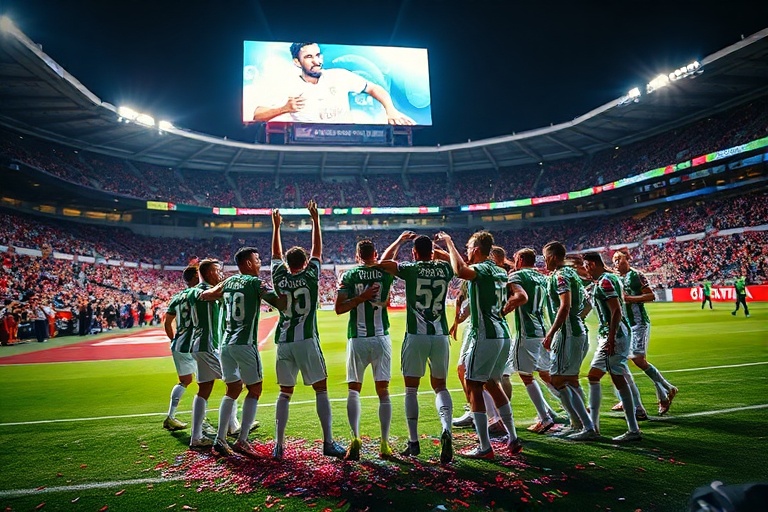
FC Dallas: A Rising Force in American Soccer’s Global Context
FC Dallas stands as one of Major League Soccer’s most consistent franchises, blending youth development with competitive ambition since its inception in 1996. Based in Frisco, Texas, the club has grown from a regional powerhouse into a club with international recognition, shaping the future of soccer in the United States. Unlike many American teams that rely heavily on imported talent, FC Dallas has built a reputation on homegrown players—many of whom have gone on to represent the U.S. Men’s National Team and compete in Europe.
The club’s identity is deeply tied to its academy system, which has become a model for youth development in North America. This focus reflects a broader shift in global soccer, where academies are increasingly seen as the foundation of long-term success. While European giants like La Masia and Ajax’s youth system dominate headlines, FC Dallas’ approach offers a compelling case study in how smaller markets can cultivate world-class talent.
The Origins and Evolution of FC Dallas
FC Dallas entered MLS as one of the league’s original ten teams, originally playing under the name Dallas Burn. The rebranding to FC Dallas in 2004 marked a turning point, signaling a new era of ambition and identity. The club’s early years were marked by steady progress rather than instant success, a journey that mirrored the growth of MLS itself during the late 1990s and early 2000s.
The arrival of head coach Schellas Hyndman in 2005 brought tactical discipline and a focus on youth integration. Under his leadership, the team won the U.S. Open Cup in 2016—a victory that underscored the club’s resilience. Hyndman’s philosophy emphasized possession-based soccer, a style increasingly adopted across MLS as teams sought to emulate European standards.
In recent years, FC Dallas has continued to evolve under new leadership, including the appointment of Nico Estévez in 2023. Estévez, a protégé of Pep Guardiola, has brought a more dynamic, pressing style to the team. His arrival reflects a global trend in soccer management, where coaches trained in elite European academies are reshaping the tactical landscape of North American soccer.
Youth Development: The Heart of FC Dallas’ Philosophy
FC Dallas’ academy system is widely regarded as the best in MLS. Since its establishment in 2008, the academy has produced over 50 players who have signed professional contracts, with several earning call-ups to the U.S. Men’s National Team. Players like Weston McKennie, Chris Richards, and Tanner Tessmann have transitioned from FC Dallas’ youth ranks to European clubs, demonstrating the academy’s ability to compete with the world’s best youth systems.
The academy’s success is not just about producing elite players—it’s also about fostering a culture of professionalism and ambition. The facility in Frisco, known as The Star, is a state-of-the-art training complex that rivals top European academies. It houses not only soccer fields but also sports science labs, classrooms, and residential accommodations for young players from outside the region.
This holistic approach reflects a global shift in youth development. In Europe, clubs like Bayern Munich and Manchester City have invested heavily in academies as a way to reduce reliance on expensive transfers. FC Dallas has adopted a similar mindset, proving that even in a market with less financial clout, strategic investment can yield world-class results.
- Weston McKennie – Currently plays for Juventus in Serie A and is a regular for the U.S. Men’s National Team. McKennie joined FC Dallas’ academy at 16 before moving to Schalke 04 in Germany.
- Chris Richards – A defender who progressed through FC Dallas’ academy before joining Bayern Munich’s second team and now plays in the Bundesliga. He has also represented the U.S. at youth and senior levels.
- Tanner Tessmann – A midfielder who made his MLS debut with FC Dallas before moving to Venezia in Italy’s Serie A. He has since earned caps for the U.S. Men’s National Team.
FC Dallas in the Global Soccer Landscape
While FC Dallas may not command the global fanbase of European giants like Real Madrid or Manchester United, its influence extends far beyond the pitch. The club’s success in developing talent has caught the attention of scouts and analysts worldwide, particularly in Europe, where American players are increasingly in demand.
One of the most notable examples is Weston McKennie, who rose through FC Dallas’ academy before becoming a key player for Juventus. His journey from Frisco to Turin highlights how MLS clubs are now seen as viable stepping stones to European soccer. This shift is part of a broader trend where smaller European clubs scout MLS academies for affordable talent, blending financial pragmatism with sporting ambition.
FC Dallas’ participation in the CONCACAF Champions Cup also places it in a competitive environment that bridges North and Central America. The club’s performances in this tournament have reinforced its standing as a regional powerhouse, capable of competing with clubs from Mexico and Central America—regions with deep soccer traditions and passionate fanbases.
Moreover, FC Dallas’ fan culture reflects a global trend where soccer fandom is increasingly tied to community and identity. The club’s supporters, known as the “FCD Nation,” create an atmosphere that blends American enthusiasm with the passion seen in Latin American stadiums. This cultural fusion is a microcosm of how soccer in the U.S. is evolving, drawing from diverse traditions while forging its own identity.
The Future: Ambition, Challenges, and Global Aspirations
Looking ahead, FC Dallas faces both opportunities and challenges. The club’s commitment to youth development positions it well for sustained success, but the competitive landscape of MLS is intensifying. Rivalries with clubs like the LA Galaxy and Austin FC are driving innovation in tactics, scouting, and fan engagement.
Internationally, FC Dallas is well-positioned to capitalize on the growing interest in American soccer. The club’s academy has already proven its ability to produce players who can compete at the highest levels, and with the 2026 FIFA World Cup co-hosted by the U.S., Canada, and Mexico, the spotlight on MLS will only intensify. FC Dallas, with its strong youth program and modern facilities, is poised to play a key role in this global moment.
However, the club must also navigate the financial realities of MLS. While European clubs benefit from lucrative broadcasting deals and sponsorships, MLS clubs operate in a more constrained financial environment. FC Dallas’ ability to balance ambition with fiscal responsibility will be critical to its long-term success.
One potential pathway is through strategic partnerships with international clubs. FC Dallas already has affiliations with clubs like CD Guadalajara in Mexico, a collaboration that reflects the growing interconnectedness of North American soccer. Such partnerships could provide the club with additional resources, scouting networks, and competitive opportunities.
Conclusion: More Than Just a Soccer Club
FC Dallas represents a new model of soccer success—one built on youth development, strategic ambition, and a deep connection to its community. While the club may not yet be a global household name, its influence is undeniable. From producing players who compete in Europe’s top leagues to fostering a fan culture that blends American enthusiasm with global passion, FC Dallas embodies the future of soccer in North America.
As MLS continues to grow and the world’s attention turns to the 2026 World Cup, clubs like FC Dallas will play a pivotal role in shaping the sport’s next chapter. With a foundation built on talent development and a commitment to innovation, FC Dallas is not just a soccer team—it’s a blueprint for how smaller markets can thrive in the global soccer ecosystem.
For fans of sports and soccer enthusiasts alike, FC Dallas offers a compelling story of ambition, resilience, and the power of investing in the next generation. As the club continues to evolve, it stands as a testament to the fact that success in soccer is not just about spending money—it’s about building a vision and sticking to it.