giro d’italia
Giro d’Italia: A Race That Blends Sport, History, and Italian Identity
The Giro d’Italia is more than a cycling race—it is a three-week odyssey through Italy’s soul. First held in 1909, the race has grown from a national event into one of the sport’s most prestigious Grand Tours, alongside the Tour de France and Vuelta a España. With its iconic pink jersey, treacherous mountain passes, and passionate fans, the Giro captures the essence of both athletic endurance and cultural heritage.
Unlike other major races that span multiple countries, the Giro remains deeply rooted in Italy’s geography and history. Each year, the route winds through medieval villages, coastal roads, and alpine peaks, offering a living map of the nation’s diversity. For Italians, the race is a point of national pride. For global fans, it’s a chance to experience Italy’s landscapes and culture through the lens of elite sport.
The Origins and Evolution of the Giro
The Giro d’Italia was born from a rivalry between two Milanese newspapers, La Gazzetta dello Sport and Corriere della Sera. In 1908, La Gazzetta, printed on pink paper, launched the race as a way to boost circulation. The first edition in 1909 covered 2,448 kilometers over eight stages, a grueling test for riders navigating unpaved roads and limited support. Luigi Ganna won the opening stage from Milan to Bologna, becoming the race’s first champion.
Over the decades, the Giro has mirrored Italy’s own transformation. The post-World War II era saw the rise of legends like Fausto Coppi, whose 1949 victory—winning by over 23 minutes—remains one of the most dominant performances in Grand Tour history. The 1980s introduced modern doping scandals, while the 1990s and 2000s brought a new generation of climbers and tactical racing. Today, the Giro is a global spectacle, broadcast to millions and followed by fans from Tokyo to Toronto.
The race’s signature feature—the maglia rosa, or pink jersey—pays homage to La Gazzetta’s pink pages. Worn by the overall leader, the jersey symbolizes both competition and continuity. It’s a visual link between past and present, reminding fans that every pedal stroke is part of a larger story.
The Route: A Journey Through Italy’s Heart
The Giro’s route changes annually but always reflects a balance of challenge and spectacle. The modern edition typically includes around 20 stages, covering approximately 3,500 kilometers. Stages are categorized as flat, hilly, or mountain, with the most feared climbs earning nicknames like the Stelvio, Gavia, or Mortirolo—each steeped in legend.
An average Giro route might include:
- Grand Départs: The race often begins outside Italy, in cities like Jerusalem (2018), London (2014), or Copenhagen (2022), showcasing cycling’s global appeal.
- Classic Climbs: The Dolomites, Apennines, and Alps dominate, with finishes at iconic peaks such as the Passo dello Stelvio (2,757 meters) or the Blockhaus in the Abruzzo region.
- Sprinters’ Battles: Flat stages in Tuscany, Veneto, or Puglia allow sprinters like Mark Cavendish or Fabio Jakobsen to shine.
- Time Trials: Short, technical courses test precision and aerodynamics, often determining the final podium.
The 2023 Giro featured a rare nighttime finish in the Florence city center, a nod to both tradition and innovation. Such moments highlight how the race adapts while staying true to its core: a relentless test of human endurance set against Italy’s breathtaking backdrop.
Cultural Significance: More Than Just a Race
The Giro is woven into Italy’s cultural fabric. For many Italians, it’s a summer ritual—gathering with friends to watch stages on television, cheering local heroes, and debating tactics over espresso. Regional pride runs deep; a rider from Trentino or Sicily often becomes a symbol of their community’s aspirations.
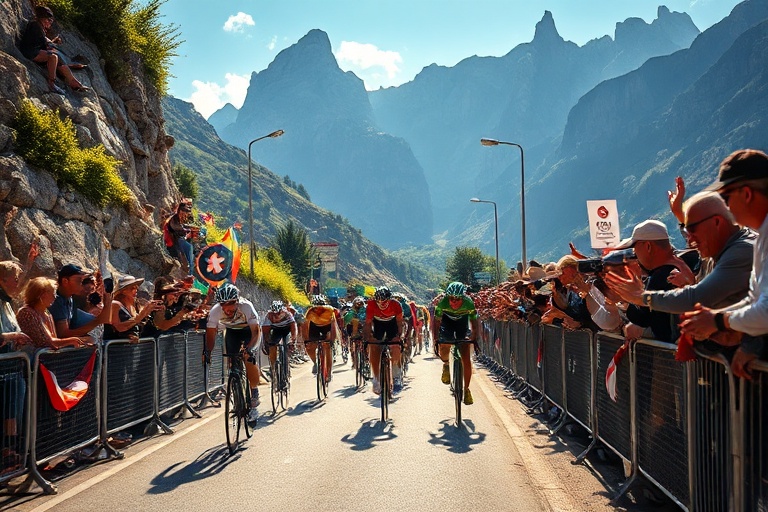
Italian cycling culture is also shaped by the Giro’s fans. Known for their fervor, supporters line the roads hours before the peloton arrives, waving flags, offering food, and chanting encouragement. The atmosphere in the final kilometers of a mountain stage is electric, a blend of tradition and spontaneity that’s rare in modern sports.
Beyond Italy, the Giro has played a role in the globalization of cycling. African riders like Eritrea’s Biniam Girmay, who won a stage in 2022, have inspired new generations. The race’s international reach is further amplified by teams like Team Ineos Grenadiers and Jumbo-Visma, which bring a global audience to Italy’s roads.
For sports enthusiasts worldwide, the Giro offers a unique narrative. It’s not just about who wins—it’s about the journey: the suffering, the strategy, and the sheer beauty of a country seen from the saddle.
The Future of the Giro: Innovation and Tradition
The Giro d’Italia continues to evolve. Recent editions have introduced shorter stages, more rest days, and a focus on sustainability, reflecting broader trends in professional cycling. The race has also embraced digital engagement, with interactive maps, live tracking, and behind-the-scenes content for global fans.
Yet, the Giro remains steadfast in its traditions. The pink jersey endures. The tifosi—Italy’s most passionate fans—still gather in the thousands. And the route still seeks out the most challenging climbs, ensuring that the race remains a true test of character.
As cycling’s calendar becomes more crowded, the Giro’s ability to balance spectacle with authenticity will determine its future. For now, it stands as a testament to the power of sport to unite, inspire, and endure.
The next edition promises another chapter in this storied race. Whether you’re a die-hard fan or a casual observer, the Giro d’Italia invites you to experience Italy in motion—one pedal stroke at a time.