Hawaiian Monk Seals: Why Hawaii’s Endangered Seals Need Our Help
The Hawaiian monk seal, one of the most endangered marine mammals in the United States, faces an uncertain future despite its critical ecological role. With fewer than 1,500 individuals remaining, this species is more than just a symbol of Hawaii’s marine biodiversity—it is a living barometer of ocean health and human impact. Unlike their more charismatic cetacean cousins, monk seals often operate in silence, their struggles unfolding beneath the waves and along remote shorelines.
This solitary species is endemic to Hawaii, meaning it exists nowhere else on Earth. Its survival hinges on a delicate balance between habitat preservation, climate stability, and human awareness. Recent conservation efforts have shown promise, but challenges persist. Understanding the Hawaiian monk seal requires looking beyond its photogenic presence on beaches and into the complex web of oceanic and terrestrial threats it faces daily.
Ecology and Behavior: The Hidden Life of a Solitary Seal
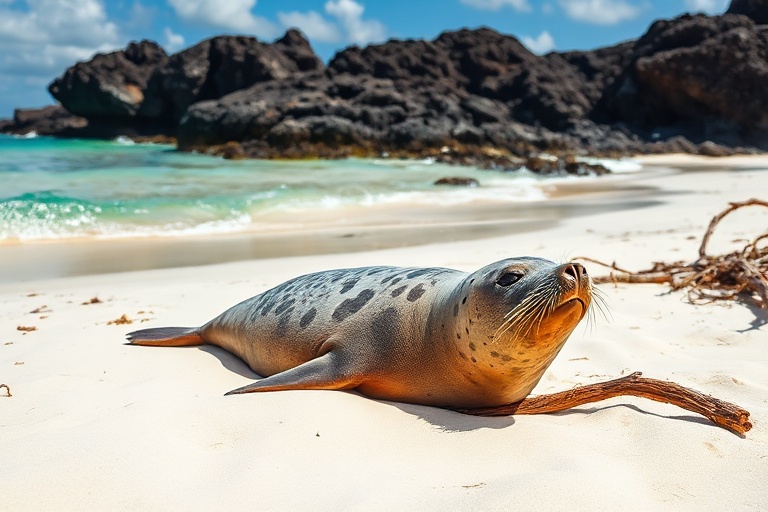
The Hawaiian monk seal, scientifically known as Neomonachus schauinslandi, is one of only two surviving species in the Monachus genus. Its name derives from the thick folds of skin around its neck, resembling a monk’s cowl, and its historical presence in the Hawaiian Islands. Unlike other seals that gather in large colonies, monk seals are often seen alone or in small groups, especially during molting or breeding seasons.
These seals are generalist predators with a diet that shifts based on availability. They primarily feed on reef fish, eels, and cephalopods, foraging at depths of up to 300 meters. Their diving physiology allows them to hold their breath for up to 20 minutes, enabling them to exploit resources across diverse ocean zones. Pupping and nursing typically occur on sandy beaches or shallow coastal areas, where mothers fast while nursing their pups for about six weeks. This period is critical—any disturbance can lead to abandonment or pup mortality.
Monk seals are also known for their distinctive behaviors, including “jugging,” where they rest with their heads above water, and “bottling,” where they float vertically in the water. These behaviors are not just quirks; they reflect the seal’s adaptation to Hawaii’s warm, often murky coastal waters. Yet, their reliance on specific habitats makes them particularly vulnerable to environmental changes.
Threats to Survival: A Species on the Edge
The Hawaiian monk seal’s endangered status is driven by a combination of natural and human-induced factors. The primary threats include habitat loss, entanglement in marine debris, disturbance by humans, climate change, and food limitation. Each of these factors interacts in ways that compound the species’ decline.
Key Threats to Hawaiian Monk Seals
- Habitat Encroachment: Coastal development reduces available pupping and resting sites. Beaches used by monk seals are often popular with tourists and locals, leading to increased human-seal interactions.
- Marine Debris and Entanglement: Abandoned fishing gear, nets, and plastic waste entangle seals, causing injury, infection, or death. The Northwestern Hawaiian Islands, a critical habitat, are especially prone to debris accumulation due to ocean currents.
- Human Disturbance: Noise from boats, drones, and beachgoers can disrupt nursing mothers or pups, leading to abandonment. Even well-intentioned wildlife viewing can have unintended consequences.
- Climate Change: Rising sea levels threaten low-lying pupping beaches. Warmer ocean temperatures may reduce prey availability, forcing seals to travel farther for food and increasing energy expenditure.
- Predation and Competition: Sharks, particularly tiger sharks, are natural predators. However, human activities have altered predator-prey dynamics, potentially increasing predation pressure on weakened or malnourished seals.
Among these, entanglement in derelict fishing gear remains one of the most preventable causes of mortality. Conservation groups in Hawaii have responded with targeted removal efforts, but the scale of the problem is daunting. The National Oceanic and Atmospheric Administration (NOAA) estimates that over 20% of monk seal deaths are related to entanglement. Addressing this issue requires global cooperation to reduce ocean pollution and improve waste management in the fishing industry.
Conservation Efforts: Progress and Persistent Challenges
Conservation of the Hawaiian monk seal is a collaborative effort involving federal agencies, local communities, nonprofits, and researchers. The NOAA’s Hawaiian Monk Seal Recovery Program is at the forefront, implementing strategies such as translocation, pup fostering, and community engagement. One of the most notable successes has been the establishment of “monk seal hospitals” where injured or sick seals receive medical care before being released back into the wild.
Translocation, or moving seals from high-risk areas to safer habitats, has shown mixed results. While it can reduce human disturbance, it also carries risks, including stress and disorientation. Pup fostering, where healthy pups are moved to mothers with deceased or abandoned offspring, has had higher success rates. These interventions highlight the delicate balance between human intervention and natural processes.
Community involvement has been equally vital. Local organizations, such as Dave’s Locker Conservation, play a crucial role in educating the public and monitoring seal populations. Volunteers help track seal movements, report sightings, and maintain protective barriers around pupping sites. Education campaigns emphasize responsible viewing and the importance of minimizing human impact on these fragile ecosystems.
Despite these efforts, challenges remain. Limited funding, bureaucratic hurdles, and the sheer remoteness of many seal habitats complicate conservation work. Additionally, cultural attitudes toward wildlife in Hawaii are complex. While many locals view monk seals as ‘aumakua—ancestral guardian spirits—others see them as competitors for fish or nuisances on beaches. Bridging these perspectives is essential for long-term success.
Broader Implications: Why the Monk Seal Matters
The Hawaiian monk seal is more than an endangered species—it is an indicator of the health of Hawaii’s marine ecosystems. As apex predators, seals help maintain balance in reef and open-ocean food webs. Their decline can signal broader issues, such as overfishing, pollution, or climate change, which ultimately affect humans as well.
Economically, monk seals contribute to Hawaii’s tourism industry. Visitors who catch a glimpse of a monk seal on a beach or during a snorkeling tour often leave with a deeper appreciation for marine conservation. This connection between wildlife and tourism underscores the need for sustainable practices that protect both species and livelihoods.
On a global scale, the Hawaiian monk seal serves as a case study in the challenges of conserving endemic species in the face of climate change. Its story reflects the struggles of countless island species worldwide, from the Galápagos penguin to the Mediterranean monk seal. The lessons learned from Hawaii’s efforts—community engagement, adaptive management, and cross-sector collaboration—are applicable far beyond the Pacific.
Yet, the monk seal’s plight also raises ethical questions. How much should humans intervene in the natural world? Is it acceptable to move individuals to save a species, even if it alters their behavior or genetics? These questions do not have easy answers, but they force us to confront our responsibilities as stewards of the planet.
Looking Ahead: A Future for the Monk Seal
The path forward for the Hawaiian monk seal is fraught with uncertainty, but not without hope. Success will depend on sustained funding, innovative solutions, and unwavering public support. Key priorities include expanding habitat protection, reducing marine debris, and addressing the root causes of climate change.
For now, the monk seal continues its quiet existence along Hawaii’s shores. Its survival hinges on choices made today—choices about pollution, development, and our relationship with the natural world. By supporting conservation efforts and advocating for policy changes, individuals can contribute to a future where monk seals thrive alongside Hawaii’s vibrant human communities.
As we move forward, it is essential to remember that conservation is not a sprint but a marathon. The Hawaiian monk seal has survived for millennia; with the right actions, it can endure for millennia more.