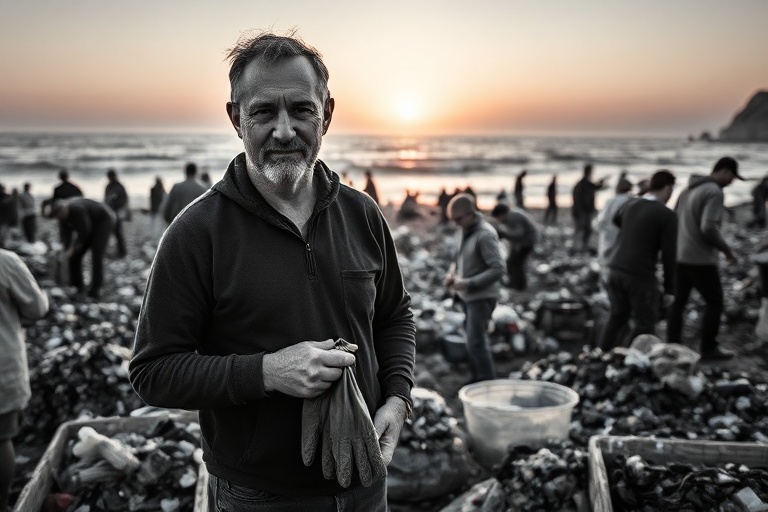
Andrew Lewin: How Podcasts Are Driving Ocean Conservation
Andrew Lewin has emerged as a prominent advocate for marine conservation, using his platform to amplify the urgency of protecting ocean ecosystems. Through his podcast, Speaking of the Ocean, he brings together scientists, policymakers, and activists to discuss pressing environmental issues. His work bridges the gap between research and public awareness, making complex topics accessible to a broad audience.
The Journey to Ocean Advocacy
Lewin’s passion for the ocean began in his childhood, inspired by family trips to coastal regions. A marine biology degree solidified his commitment, but it was his frustration with the slow pace of policy change that led him to leverage media. Unlike traditional conservationists who focus solely on fieldwork, Lewin recognized the power of storytelling to drive engagement. His transition from scientist to communicator reflects a growing trend among researchers who prioritize public outreach.
The podcast’s format—interviewing experts in short, digestible episodes—caters to busy audiences. Lewin’s ability to extract compelling narratives from technical discussions has earned him a loyal following. This approach aligns with studies showing that people retain information better when it’s presented in conversational formats rather than dense reports.
Key Initiatives and Impact
Under Lewin’s leadership, Speaking of the Ocean has tackled critical issues such as overfishing, plastic pollution, and coral reef degradation. One standout episode featured a collaboration with the Global Ocean Alliance, highlighting their campaign to protect 30% of the ocean by 2030. The episode reached over 50,000 listeners, demonstrating the podcast’s influence in policy circles.
Lewin also partners with organizations like Oceana and Sea Shepherd to amplify grassroots campaigns. His interviews often include actionable steps for listeners, such as advocating for local marine protected areas or reducing single-use plastics. This blend of education and activism underscores his holistic approach to conservation.
Notable Episodes and Their Reach
- “The Silent Extinction of Sharks” – Featured a marine biologist discussing the decline of shark populations due to finning. Garnered 12,000 downloads in its first month.
- “Coral Reefs: Can They Survive Climate Change?” – Brought together coral restoration experts to explore innovative solutions. Shared widely by environmental groups on social media.
- “The Hidden Life of Plastic” – Investigated microplastic pollution in deep-sea ecosystems. Led to increased donations for cleanup initiatives.
Challenges and Criticisms
Despite his success, Lewin faces challenges common to advocacy work. Skeptics argue that podcasts alone cannot enact systemic change, pointing to the slow progress in global ocean policies. Lewin acknowledges this but emphasizes the long-term impact of shifting public perception. “Awareness is the first step,” he notes in a recent interview. “Without it, policy changes lack the momentum needed to succeed.”
Another criticism targets the podcast’s reliance on guest experts. Some listeners prefer firsthand accounts from impacted communities, such as fishermen or coastal residents. Lewin has responded by diversifying his roster, including more voices from frontline communities in recent seasons. This evolution reflects his commitment to inclusive storytelling.
The Future of Ocean Advocacy
Looking ahead, Lewin plans to expand the podcast’s reach through partnerships with international broadcasters. He’s also exploring a documentary series to visualize the stories behind his episodes. These projects align with his belief that visual media can evoke stronger emotional responses than audio alone.
Long-term, Lewin hopes to see a generation of ocean-literate citizens who demand accountability from governments and corporations. His work serves as a blueprint for scientists seeking to engage beyond academic circles. By prioritizing clarity and accessibility, he proves that conservation doesn’t require jargon—it requires connection.
For those interested in diving deeper into ocean conservation, Lewin recommends exploring resources on Dave’s Locker, which curates educational tools for all ages. Whether you’re a student, educator, or simply curious, the tools are there to turn awareness into action.
Andrew Lewin’s work reminds us that the ocean’s fate isn’t just a scientific concern—it’s a human one. Through storytelling, he’s making sure we all hear the call to protect it.