Solar Flare Northern Lights: When the Sun Lights Up the Sky
The sun, our nearest star, occasionally offers a breathtaking spectacle when solar flares collide with Earth’s magnetic field. These intense bursts of energy create dazzling auroras—most vividly seen near the polar regions as the northern lights. But what exactly triggers this cosmic light show, and how often can skywatchers expect to witness it?
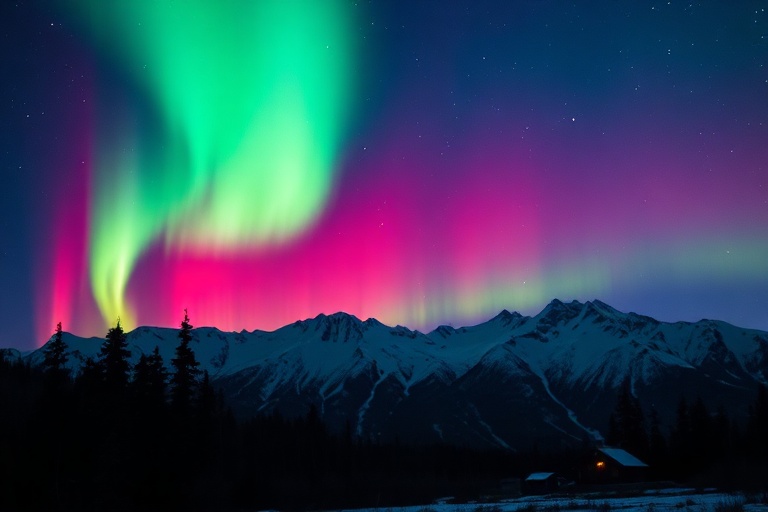
Solar flares are sudden, powerful eruptions of radiation from the sun’s surface, often accompanied by coronal mass ejections (CMEs). When these charged particles reach Earth, they interact with the atmosphere, producing vibrant hues of green, pink, and purple across the night sky. The phenomenon is most commonly observed in places like Norway, Canada, and Alaska, though stronger events can push the aurora borealis as far south as the northern United States.
The Science Behind the Solar Flare Northern Lights
At the heart of this celestial display lies solar activity. The sun operates on an 11-year cycle, with periods of high activity known as solar maximum. During these phases, sunspots and solar flares become more frequent, increasing the chances of geomagnetic storms on Earth. A solar flare’s intensity is measured on a scale from A (weakest) to X (strongest), with X-class flares capable of disrupting satellite communications and power grids.
When a CME collides with Earth’s magnetosphere, it compresses the magnetic field and funnels charged particles toward the poles. These particles excite oxygen and nitrogen molecules in the atmosphere, releasing energy in the form of light. Oxygen typically glows green or red, while nitrogen produces blue or purple hues. The result? A dynamic, shimmering curtain of color dancing across the horizon.
Not all solar flares lead to visible auroras, however. The strength of the flare, its direction, and Earth’s magnetic field conditions all play a role. Forecasters at the National Oceanic and Atmospheric Administration (NOAA) monitor solar activity closely, issuing geomagnetic storm watches when conditions are favorable for auroras.
Best Places and Times to See the Northern Lights
The northern lights are a bucket-list experience for many travelers, but timing and location are crucial. Auroras are most visible in high-latitude regions, particularly between September and March, when nights are longest and skies are darkest. Here are some top destinations for witnessing the spectacle:
- Tromsø, Norway: Known as the “Capital of the Arctic,” Tromsø offers high aurora activity rates and accessible viewing spots just outside the city.
- Fairbanks, Alaska: Located under the “Auroral Oval,” Fairbanks provides frequent displays and guided tours for enthusiasts.
- Yellowknife, Canada: With minimal light pollution and clear skies, this Canadian territory is a prime aurora hotspot.
- Reykjavik, Iceland: While Iceland’s capital has some light interference, nearby dark-sky reserves like Þingvellir National Park offer ideal conditions.
For optimal viewing, experts recommend escaping urban areas to reduce light pollution. Apps like Aurora Forecast and My Aurora Forecast provide real-time updates on aurora visibility based on solar wind data. Clear, moonless nights are ideal, as moonlight can diminish the aurora’s brilliance.
How Solar Flares Impact Technology and Daily Life
While the northern lights are a natural wonder, solar flares can pose challenges to modern infrastructure. In 1859, the Carrington Event—a massive solar storm—disrupted telegraph systems worldwide, sparking fires and sending electrical currents through wires. Today, a similar event could cripple power grids, satellite networks, and GPS systems.
In 1989, a geomagnetic storm caused by a solar flare knocked out power across Quebec, Canada, for nine hours. The incident highlighted the vulnerability of electrical grids to space weather. Since then, utility companies have implemented safeguards, such as grounding transformers and developing early warning systems.
Satellites, too, are at risk. High-energy particles can damage sensitive electronics, leading to malfunctions in communication and weather satellites. Space agencies like NASA and ESA continuously track solar activity to protect astronauts and spacecraft. For instance, the International Space Station has shielding to safeguard against radiation during solar storms.
Despite these risks, solar flares also inspire innovation. Researchers are exploring ways to harness solar energy more efficiently, while space weather forecasting has become a critical field. Understanding solar flares not only enhances our appreciation of the northern lights but also ensures our technological resilience.
Photographing the Aurora: Tips for Capturing the Magic
For photographers, the northern lights present a unique challenge. The aurora’s rapid movement and low light conditions require careful preparation. Here are some essential tips to capture the moment:
- Use a sturdy tripod: Long exposures are necessary, so stability is key to avoid blurry images.
- Set your camera to manual mode: Adjust ISO (1600-3200), aperture (f/2.8 or lower), and shutter speed (5-15 seconds).
- Focus manually: Autofocus struggles in the dark; set your lens to infinity or use a bright star as a reference.
- Shoot in RAW format: This allows for better post-processing adjustments.
- Be patient: Auroras can appear faint at first but intensify over time.
Popular aurora photography spots often attract crowds, so arriving early and scouting locations in daylight can improve your chances of a great shot. Websites like Dave’s Locker Travel offer guides to the best aurora-viewing destinations, including tips on local guides and accommodations.
For those without professional gear, smartphone cameras have improved significantly. Night mode settings and long-exposure apps can help capture the aurora’s glow, though the results may not match dedicated cameras.
Looking Ahead: The Future of Solar Activity and Auroras
As we approach the next solar maximum—expected around 2025—scientists predict heightened aurora activity. This presents an exciting opportunity for skywatchers and researchers alike. Advances in solar observation, such as NASA’s Parker Solar Probe, are providing unprecedented insights into the sun’s behavior.
Climate change also plays an indirect role. Melting ice in the Arctic is opening new travel routes and destinations for aurora chasers, while darker skies in some regions (due to reduced pollution) may enhance visibility. However, increased cloud cover from shifting weather patterns could pose challenges for viewers.
The northern lights remind us of our connection to the cosmos. They are a fleeting yet powerful reminder of the sun’s influence on our planet. Whether you’re an avid traveler, a science enthusiast, or simply someone who appreciates nature’s beauty, witnessing the solar flare northern lights is an experience that lingers long after the colors fade.
So, keep an eye on solar forecasts, plan your next adventure, and prepare to be amazed. The sky is waiting.