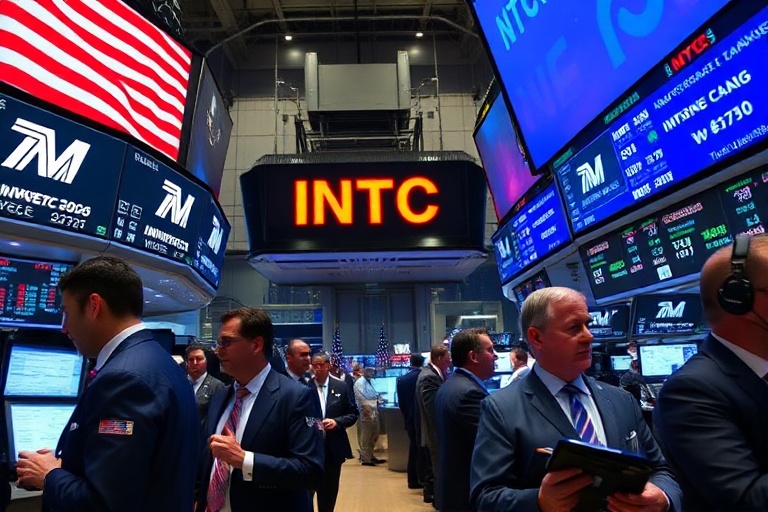
Intel Stock Price: What’s Driving the Semiconductor Giant’s Market Shift
Intel’s Stock Price: What’s Driving the Semiconductor Giant’s Momentum
Intel Corporation, once the undisputed leader of the global chip industry, has seen its stock price fluctuate amid shifting market dynamics, technological advancements, and geopolitical pressures. As the world’s demand for semiconductors surges—fueled by AI, data centers, and consumer electronics—Intel’s financial trajectory remains a focal point for investors and industry observers alike. The company’s stock, traded under the ticker INTC, has experienced periods of volatility, reflecting both internal strategic shifts and external economic forces.
To understand where Intel is headed, it’s essential to examine the factors shaping its stock performance. From manufacturing challenges to breakthrough innovations, the company’s ability to adapt will determine whether its valuation rebounds or continues to lag behind rivals like NVIDIA and AMD. Below, we break down the key drivers behind Intel’s stock price movements and what the future may hold.
The Role of Global Supply Chains in Intel’s Valuation
Intel’s stock price is inextricably linked to the stability and efficiency of global semiconductor supply chains. The COVID-19 pandemic exposed vulnerabilities in these networks, disrupting production and delaying shipments. While other chipmakers recovered faster, Intel faced additional scrutiny over its manufacturing delays, particularly in advanced process nodes like 7nm and 5nm.
Geopolitical tensions have further complicated matters. The U.S.-China trade war, compounded by export restrictions on advanced semiconductor technology, has forced Intel to reassess its supply chain strategies. The company has invested heavily in domestic production, with initiatives like the $20 billion investment in U.S.-based fabrication plants (fabs) in Arizona and Ohio. These moves aim to reduce reliance on foreign manufacturing while positioning Intel as a key player in America’s semiconductor independence.
However, supply chain resilience comes at a cost. Infrastructure upgrades and geopolitical maneuvering require significant capital, which can pressure short-term profitability. Investors must weigh these long-term benefits against immediate financial constraints.
AI and Data Centers: The New Growth Engine
One of the most significant catalysts for Intel’s stock price in recent years has been its pivot toward artificial intelligence (AI) and data center solutions. The explosion of generative AI applications—from cloud computing to edge devices—has created a massive demand for high-performance processors. Intel’s Gaudi AI accelerators and Xeon processors are central to this strategy, competing directly with NVIDIA’s dominance in AI chips.
Data centers, in particular, represent a lucrative market. As companies like Meta, Google, and Microsoft expand their AI infrastructure, demand for Intel’s data center GPUs and CPUs has surged. In 2023, Intel reported record revenue from its data center and AI group, signaling a potential turnaround in its financial performance.
Yet, competition remains fierce. NVIDIA’s CUDA platform has established a near-monopoly in AI training, while AMD’s EPYC processors are gaining ground in data center deployments. Intel’s ability to innovate and secure partnerships will be crucial in maintaining its market share.
Consumer Demand and the PC Market’s Uncertain Future
Intel’s stock price is also tied to the cyclical nature of the PC market. For decades, the company has been the dominant supplier of processors for personal computers, but recent trends suggest a decline in global PC shipments. The post-pandemic normalization of remote work and education has reduced demand, while consumers hold onto devices longer due to improved durability.
Despite these challenges, Intel has made strides in diversifying its offerings. The introduction of Meteor Lake and Alder Lake processors has improved energy efficiency and performance, appealing to both gamers and enterprise users. Additionally, Intel’s acquisition of Altera, a leader in programmable logic devices, strengthens its position in the growing edge computing market.
However, the company’s reliance on the PC market remains a vulnerability. If global economic conditions worsen or consumer spending declines further, Intel’s revenue could take a significant hit.
What’s Next for Intel’s Stock Price?
Predicting Intel’s stock price requires analyzing a mix of internal and external factors. Here are the key variables to watch:
- Manufacturing Execution: Can Intel successfully ramp up production of its 20A and 18A process nodes while meeting demand for advanced chips?
- AI and Data Center Growth: Will Intel’s investments in AI accelerators and data center solutions translate into sustained revenue growth?
- Geopolitical Risks: How will ongoing U.S.-China tensions impact Intel’s global supply chain and market access?
- Consumer Trends: Will the PC market rebound, or will Intel need to double down on alternative revenue streams?
For investors, Intel presents a high-risk, high-reward scenario. The company’s long-term viability depends on its ability to execute on ambitious plans while navigating an increasingly complex global landscape. Those betting on Intel’s stock must be prepared for volatility, but the potential rewards—given the right conditions—could be substantial.
Conclusion: A Semiconductor Giant at a Crossroads
Intel’s stock price is a reflection of its struggle to maintain relevance in an industry undergoing rapid transformation. While the company faces formidable challenges, its strategic investments in AI, domestic manufacturing, and advanced process technologies suggest a path forward. Whether these efforts will restore Intel to its former glory remains uncertain, but one thing is clear: the semiconductor industry’s future will be shaped by how well companies like Intel adapt to change.
For further insights into the tech industry’s evolving landscape, explore our Technology and Business sections. Staying informed on these trends is essential for anyone tracking the semiconductor market’s next moves.