National Portrait Gallery: How Portraits Shape History and Identity
The National Portrait Gallery stands not just as a building, but as a dynamic archive of human stories. Established in 1856, it has evolved from a modest collection of likenesses into a sprawling institution that captures the essence of national identity through art. Unlike traditional museums focused solely on artistic mastery, this gallery prioritizes the subjects—those who have shaped, challenged, and defined the cultural and political landscape of their time.
Its walls hold more than paint and pigment; they contain the weight of legacy, the texture of ambition, and the contradictions of history. Each portrait tells a story not only of the person depicted, but of the era that produced them. From monarchs to activists, scientists to artists, the Gallery serves as a mirror reflecting the diversity and complexity of society.
The Origins and Evolution of the National Portrait Gallery
The idea for a national portrait gallery originated in Victorian Britain, where the middle class was rapidly expanding and public interest in biography and history was growing. The 1851 Great Exhibition had showcased the nation’s industrial and cultural achievements, but there was a hunger for a more personal connection to history—through the faces of those who had shaped it.
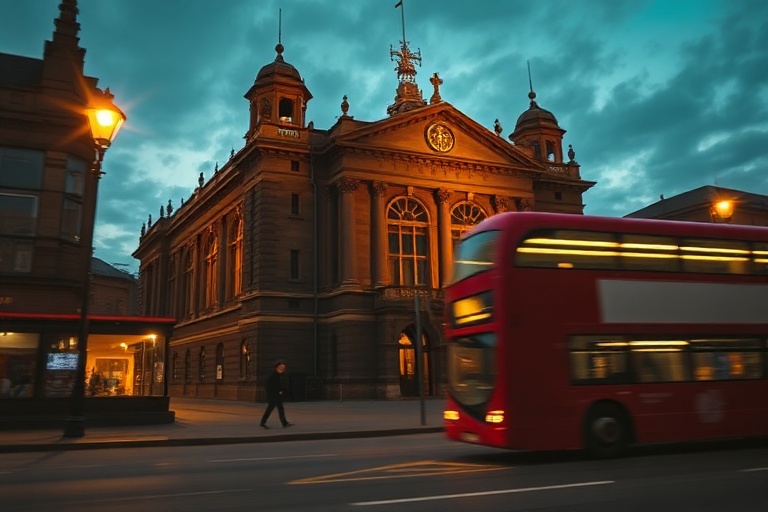
In 1856, the Gallery opened in temporary quarters at 29 Great George Street, London, with just 57 portraits. It moved to its current home at 2 St Martin’s Place in 1896, a grand building designed by Ewan Christian in the Venetian Renaissance style. Over the decades, the collection expanded exponentially. Today, it houses over 230,000 works, including paintings, drawings, photographs, and sculptures spanning five centuries.
The Gallery’s evolution reflects broader changes in how society views identity. Early portraits were often commissioned by the elite, reinforcing class and power structures. By the 20th century, the institution began to include women, people of color, and working-class figures—reflecting a growing commitment to representational justice. This shift mirrored social movements and challenged the dominant narratives of national history.
Why Portraits Matter: Art as a Lens on Society
A portrait is never just a visual record. It is a negotiation between artist, subject, and viewer. It encodes power, aspiration, resistance, and memory. When the National Portrait Gallery selects a subject for inclusion, it makes a statement about who belongs in the national story—and who does not.
Consider the case of Olive Morris, the Jamaican-born activist who became a symbol of Black British feminism in the 1970s. Her inclusion in the Gallery’s 2022 reopening exhibition was not merely an act of commemoration, but a deliberate correction to decades of historical erasure. Portraits like hers serve as visual reparations, offering visibility to those whose contributions were once ignored.
Similarly, the Gallery’s growing collection of photographic portraits captures moments of intimacy and immediacy that paintings often cannot. Think of Yinka Shonibare’s 2013 photograph of Doreen Lawrence, the mother of Stephen Lawrence, whose campaign for justice reshaped British attitudes toward racism. The photograph is not just an image—it is a document of grief, determination, and societal transformation.
These works do more than document history. They shape how we remember it. In an age of algorithmic curation and ephemeral digital content, the Gallery’s physical and curated presence offers a counterpoint—a space where memory is preserved with intention and depth.
Key Developments and Challenges in Modern Times
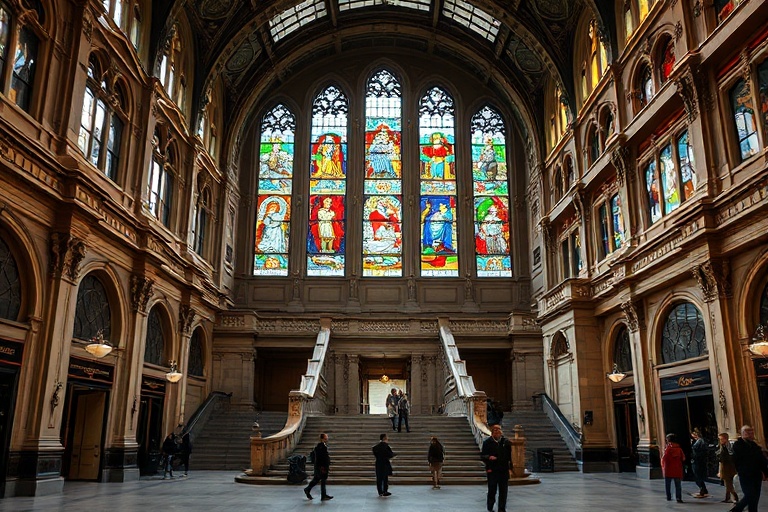
The National Portrait Gallery has not been immune to the pressures of modernity. In 2020, it temporarily closed for a £41 million redevelopment led by architects Stanton Williams. The project aimed to modernize the building, improve accessibility, and create new galleries for contemporary works. It reopened in June 2023 with expanded exhibition spaces, a new Learning Centre, and improved visitor facilities.
But the redevelopment also raised questions about inclusion and representation. Critics argued that the Gallery needed to do more than refurbish its physical space—it needed to rethink whose stories were being told. In response, the Gallery launched “Reframing Narratives,” an initiative to diversify its collection and commission new works from underrepresented artists.
Here are some key developments in recent years:
- Commissioning living subjects: The Gallery now regularly commissions portraits of contemporary figures, from climate activists to digital creators, ensuring the collection remains alive and relevant.
- Digital engagement: The launch of a comprehensive online catalog and virtual exhibitions allowed global audiences to engage with the collection during the pandemic and beyond.
- Youth programs: Initiatives like the “Young Portrait Prize” encourage young artists to explore identity and representation, fostering the next generation of creators.
- Restitution debates: Like many cultural institutions, the Gallery is grappling with calls to address colonial-era acquisitions and provenance gaps in its collection.
The Broader Implications: Memory, Power, and Public Culture
The National Portrait Gallery is more than a museum. It is a cultural arbiter, a site of public memory, and a participant in ongoing debates about identity. Its role becomes even more critical in an era of misinformation and fragmented narratives. In a world where history is often reduced to soundbites, the Gallery insists on complexity, nuance, and humanity.
Its exhibitions do not merely display art; they stage conversations. For instance, the 2024 exhibition “Faces of Change” juxtaposed portraits of suffragists with modern activists, tracing a century-long struggle for gender equality. Such thematic presentations reveal patterns, contradictions, and continuities in social progress.
The Gallery also plays a role in national healing. After the 2017 London terror attacks, it mounted “We Are Here,” an installation featuring portraits of survivors and first responders. The exhibition countered narratives of division with images of resilience and community. Art, in this context, becomes a form of civic dialogue.
Yet, the institution faces challenges. Funding pressures, calls for decolonization, and the need to remain relevant in a digital-first world demand constant adaptation. The Gallery’s leadership has acknowledged that its future depends on its ability to listen—to artists, communities, and critics—as much as it does on its ability to curate.
Ultimately, the National Portrait Gallery reminds us that identity is not static. It is contested, constructed, and constantly evolving. Through its portraits, it invites us to ask: Who do we celebrate? Whose stories do we preserve? And what kind of nation do we want to become?
In preserving these faces, the Gallery preserves the possibility of a more inclusive and honest future.
Visit and Engage
The National Portrait Gallery is open daily at 2 St Martin’s Place, London. Admission is free, though special exhibitions may require tickets. For those unable to visit in person, the Gallery’s online collection offers thousands of high-resolution images and virtual exhibitions.
For deeper analysis on how portraiture intersects with modern culture, explore our Culture and Art sections on Dave’s Locker. These pages feature essays, interviews, and critiques that examine the role of visual culture in shaping public consciousness.