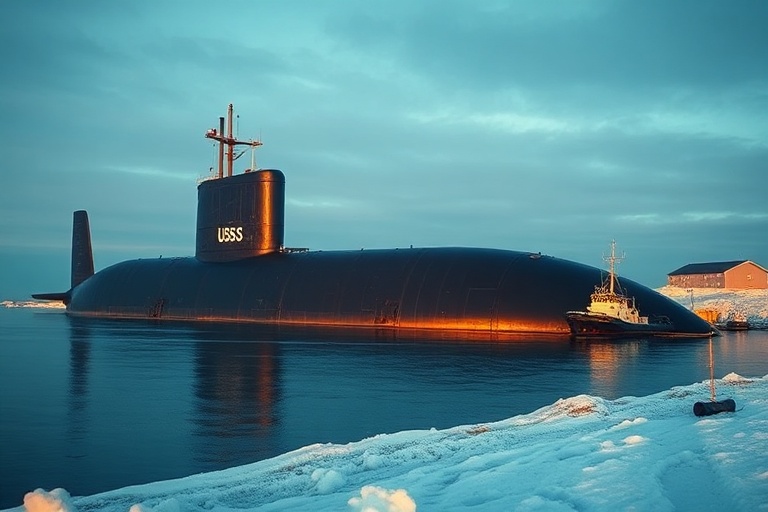
Ohio-Class Submarine: America’s Silent Nuclear Deterrent Explained
America’s Submerged Fortress: The Ohio-Class Submarine
The Ohio-class submarine remains one of the most formidable and technologically advanced weapons systems in the world. Serving as the backbone of the U.S. Navy’s nuclear deterrent since the 1980s, these submarines combine stealth, endurance, and firepower in ways few other platforms can match. Designed during the Cold War but continuously upgraded, the Ohio-class exemplifies how military technology evolves to meet shifting global threats.
At their core, Ohio-class submarines are nuclear-powered ballistic missile submarines (SSBNs), tasked with carrying and launching intercontinental ballistic missiles (ICBMs). Their primary mission is strategic deterrence—ensuring that any potential adversary understands the catastrophic consequences of a nuclear attack. With 14 active boats in service (down from 18, following the retirement of four converted into guided-missile submarines), the Ohio-class fleet remains a cornerstone of America’s national security strategy.
A Design Built for Stealth and Longevity
The Ohio-class submarines were commissioned between 1981 and 1997, with the lead boat, USS Ohio, entering service in 1981. Built by General Dynamics Electric Boat, these vessels were designed to operate silently beneath the ocean’s surface for months at a time, undetectable to enemy forces. Their nuclear reactors provide near-limitless range, allowing them to patrol global waters without refueling.
Key features of the Ohio-class include:
- Length and Displacement: The submarines measure 560 feet in length and displace approximately 18,750 tons when submerged, making them among the largest submarines ever built.
- Crew Capacity: Each Ohio-class boat accommodates around 155 personnel, including officers and enlisted sailors, with living conditions optimized for long deployments.
- Armament: Initially equipped with 24 Trident II D5 missiles, each capable of carrying multiple independently targetable warheads. The missiles have a range of over 7,500 miles.
- Stealth Technology: The submarines are coated with anechoic tiles to absorb sound, reducing their acoustic signature and making them extremely difficult to detect.
- Endurance: Ohio-class submarines can remain submerged for up to 70 days without surfacing, limited only by food supplies and crew endurance.
The Role of Ohio-Class in Nuclear Deterrence
The Ohio-class submarines play a critical role in the United States’ nuclear triad, which also includes land-based ICBMs and strategic bombers. Unlike land-based missiles, which are vulnerable to a first strike, Ohio-class submarines are nearly undetectable when submerged. This makes them a credible second-strike capability—the ultimate guarantee against nuclear aggression.
Each Trident II D5 missile carried by the Ohio-class can deliver up to eight W76 or W88 warheads, each with a yield of 100 kilotons or 475 kilotons, respectively. This means a single Ohio-class submarine could theoretically deliver a devastating retaliatory strike, ensuring that any adversary faces unacceptable damage in response to an attack.
In recent years, the U.S. Navy has begun transitioning to the Columbia-class submarine, which will eventually replace the Ohio-class. However, the Ohio-class boats are expected to remain in service through the 2030s, with some potentially operating into the 2040s. This extended lifespan is a testament to the robust design and continuous modernization efforts.
Modernization and Future Challenges
While the Ohio-class submarines have proven their worth, maintaining their relevance in an evolving security landscape requires ongoing upgrades. The U.S. Navy has invested in several modernization programs, including:
- Life Extension Programs (LEP): These programs extend the service life of Ohio-class submarines by 10-15 years, ensuring they remain operational while the Columbia-class is developed.
- Trident II D5 Life Extension: The missiles themselves are being upgraded to improve accuracy, reliability, and range, ensuring they remain a credible deterrent.
- Enhanced Cybersecurity: As cyber threats grow, the Navy has implemented advanced cybersecurity measures to protect the submarines’ communication systems and operational data.
- New Payload Options: Some Ohio-class submarines have been converted into guided-missile submarines (SSGNs), capable of launching Tomahawk cruise missiles for precision strikes. This versatility allows the submarines to support a broader range of missions, from strike warfare to special operations.
Despite these advancements, the Ohio-class fleet faces challenges. The increasing sophistication of anti-submarine warfare (ASW) technologies, particularly in countries like Russia and China, poses a growing threat to submarine stealth. Additionally, the cost of maintaining and modernizing these aging vessels is substantial, raising questions about the long-term viability of the Ohio-class as the Columbia-class approaches deployment.
Broader Implications for Global Security
The Ohio-class submarines are more than just weapons systems; they are a symbol of America’s commitment to global stability and deterrence. In an era where nuclear proliferation and regional conflicts threaten to destabilize international relations, the Ohio-class fleet serves as a stabilizing force. By ensuring a credible second-strike capability, these submarines discourage potential adversaries from initiating nuclear conflict.
Moreover, the Ohio-class submarines contribute to broader U.S. military objectives. Their ability to conduct covert operations, gather intelligence, and project power globally makes them invaluable assets. For example, the SSGN conversions have demonstrated the submarines’ flexibility in supporting counterterrorism operations and crisis response.
The transition to the Columbia-class will mark a new chapter in submarine warfare, but the Ohio-class’s legacy will endure. Their design principles, operational tactics, and technological innovations have set the standard for future generations of submarines. As geopolitical tensions rise, the Ohio-class submarines remain a silent but potent reminder of America’s military prowess and strategic foresight.
Conclusion: A Lasting Legacy Beneath the Waves
The Ohio-class submarine represents the pinnacle of Cold War-era innovation, refined and adapted to meet the challenges of the 21st century. For over four decades, these submarines have stood as an impenetrable shield, ensuring that America’s nuclear deterrent remains both credible and effective. While their eventual retirement is inevitable, their contributions to national security and global stability will not be forgotten.
As the U.S. Navy prepares for the next generation of submarines, the Ohio-class serves as a benchmark for what is possible in undersea warfare. Their blend of stealth, endurance, and firepower has set a standard that future submarines will strive to meet. In an increasingly uncertain world, the Ohio-class submarines remain a cornerstone of peace through strength.
For those interested in exploring more about submarine technology and its broader implications, visit our Technology and News sections on Dave’s Locker. These categories offer deeper insights into the technologies shaping modern military strategy and global security.