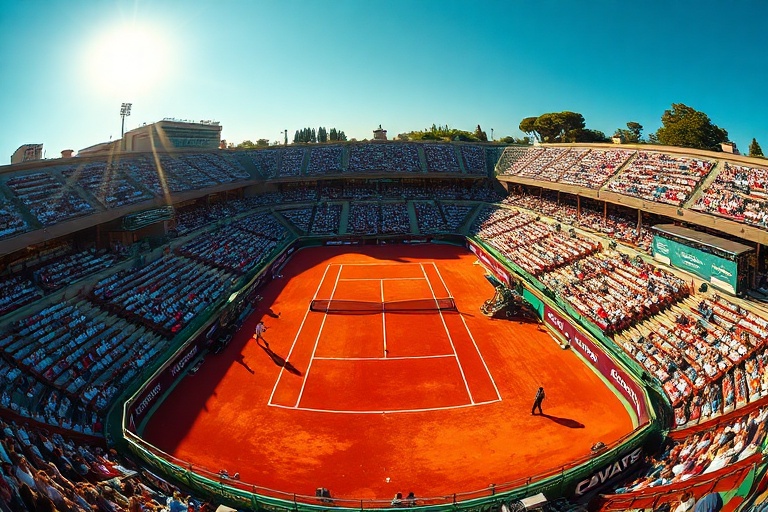
Rome’s Clay Courts: Why the ATP Italian Open Remains Tennis’ Ultimate Test
Rome’s Clay Legacy: A Tournament Steeped in History and Grit
The ATP Italian Open, held annually in Rome, is more than just a tennis tournament. It is a celebration of endurance, strategy, and the raw beauty of clay court tennis. Since its inception in 1930, the tournament has grown from a regional competition into one of the most prestigious events on the ATP Tour. Played at the iconic Foro Italico, the event blends athletic excellence with Italian culture, drawing players and fans from around the world.
The clay surface of Rome is unforgiving. It demands patience, precision, and a relentless work ethic from competitors. Unlike grass or hard courts, clay slows the ball down and rewards those who can construct points methodically. This makes the Italian Open a unique crucible where champions are forged. Rafael Nadal, the tournament’s most successful player with nine titles, has often described Rome as his favorite clay court event. His dominance here underscores the tournament’s significance in the sport’s history.
A Global Stage for Tennis’ Elite
The Italian Open attracts the best players on the planet, serving as a critical warm-up for the French Open, the year’s second Grand Slam. The tournament’s timing—played just weeks before Roland Garros—makes it a vital indicator of form and fitness. Players who excel in Rome often carry that momentum into Paris, where the clay is equally demanding but faster.
For spectators, the event offers a rare glimpse into the tactical nuances of top-tier tennis. Matches unfold over best-of-three sets, with points often stretching beyond 20 or 30. The slow surface magnifies every error, every missed opportunity. This level of scrutiny creates an electric atmosphere, where even casual fans can appreciate the sport’s intricacies.
Cultural Fusion: Tennis Meets Italian Tradition
Rome’s tennis culture is deeply intertwined with the city’s identity. The Foro Italico, with its striking white marble stadium and Mussolini-era architecture, provides a dramatic backdrop for the tournament. The venue itself tells a story of resilience, having hosted the event through wars, economic shifts, and evolving sporting landscapes.
Off the court, the Italian Open embraces the country’s rich culinary and artistic heritage. Fans indulge in espresso and gelato between matches, while local artisans showcase their crafts in pop-up markets. The tournament’s organizers have also prioritized sustainability in recent years, reducing waste and promoting eco-friendly initiatives—a reflection of Italy’s growing commitment to environmental responsibility.
“Rome is a special place for me. The crowd, the atmosphere, the history—it’s all part of what makes this tournament so unique.” — Novak Djokovic, 2023 Italian Open Champion
The Business of Tennis: Rome’s Economic and Sporting Impact
The Italian Open is not just a sporting spectacle; it is a major economic driver for Rome. The tournament injects millions into the local economy, benefiting hotels, restaurants, and transportation services. Sponsorships from global brands like Rolex and Qatar Airways further elevate its profile, ensuring its place in the international sporting calendar.
From a business perspective, the tournament serves as a key revenue stream for the ATP Tour. Broadcast deals, ticket sales, and merchandise contribute to a financial ecosystem that supports the sport at all levels. The Italian Open also plays a crucial role in nurturing young talent through its junior and qualifying events, ensuring a pipeline of future stars.
Key Contributions to the ATP Tour:
- Acts as a critical warm-up for the French Open, influencing seeding and player confidence.
- Provides a high-stakes environment where emerging talents can test themselves against the best.
- Generates significant revenue through sponsorships, broadcasting, and tourism.
- Supports grassroots tennis development through junior and qualifying events.
Why Rome Matters in the Modern Tennis Landscape
In an era dominated by hard court tournaments and indoor events, the Italian Open stands out as a bastion of tradition. Its clay surface offers a counterpoint to the fast-paced, power-driven style of modern tennis. Players must adapt their games, relying on spin, patience, and tactical acumen rather than sheer athleticism alone.
For fans, the tournament provides an opportunity to witness tennis in its purest form. The absence of retractable roofs or artificial lighting ensures that matches are played under the open sky, subject to the whims of Roman weather. This unpredictability adds to the drama, making every match a potential classic.
The Italian Open also serves as a cultural bridge, connecting tennis enthusiasts across continents. Players from Europe, South America, and beyond converge in Rome, creating a melting pot of styles and personalities. This diversity enriches the tournament, making it a true global celebration of the sport.
As tennis continues to evolve, the Italian Open remains a constant—a reminder of the game’s roots and the enduring appeal of clay court tennis. Whether you are a seasoned fan or a first-time spectator, the tournament offers an experience that transcends sport. It is a testament to the beauty of tennis, the passion of its players, and the vibrancy of Rome itself.
Final Thoughts: Rome’s Enduring Allure
The ATP Italian Open is more than a precursor to the French Open; it is a standalone spectacle with its own identity. Its clay courts challenge the world’s best, while its cultural backdrop immerses fans in the heart of Italy. The tournament’s ability to blend tradition with modernity ensures its place in the tennis calendar for decades to come.
For those who have yet to experience the Italian Open, the advice is simple: attend, watch, and soak in the atmosphere. Whether you are drawn by the tennis, the history, or the Italian way of life, Rome promises an unforgettable experience. And who knows? You might just witness the next great clay court champion emerge from the dust of the Foro Italico.
For more on the world of tennis and its most iconic tournaments, explore our Sports category, where we break down the stories shaping the game.