The Cold War Explained: How Ideology Shaped a Divided World
The Cold War was not a single battle or a fleeting conflict. It was a decades-long standoff that reshaped global politics, culture, and daily life. Unlike traditional wars fought on battlefields, this ideological struggle played out through espionage, propaganda, and proxy conflicts across continents. From the ruins of World War II to the fall of the Berlin Wall, the Cold War defined an era where the world teetered on the edge of nuclear annihilation while simultaneously fostering unprecedented cultural exchanges.
The Origins of a Global Divide
The roots of the Cold War stretch back to the uneasy alliance between the United States and the Soviet Union during World War II. Once allies against fascism, the two superpowers quickly found themselves at odds over the future of Europe and the balance of global power. By 1947, the term “Cold War” entered the lexicon, coined by journalist Walter Lippmann to describe the state of hostility without direct military confrontation.
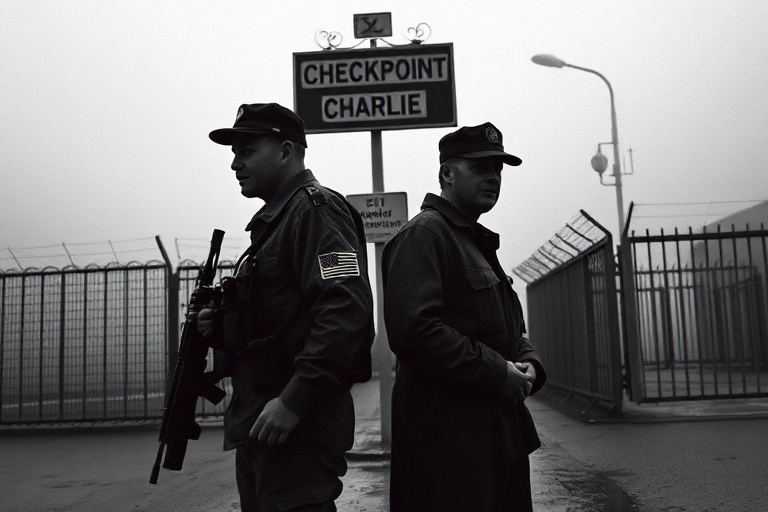
The division crystallized with the Truman Doctrine in 1947, which pledged U.S. support for nations resisting communist influence. The Marshall Plan followed, offering economic aid to rebuild war-torn Europe—except for Soviet-controlled areas. In response, the Soviet Union tightened its grip on Eastern Europe, establishing satellite states through coercion and ideological control. Berlin became the most visible flashpoint in 1948, when the Soviet blockade of West Berlin led to a year-long airlift by the U.S. and its allies. The city stood as a microcosm of the larger struggle, split between democratic and communist ideologies.
The formation of NATO in 1949 and the Warsaw Pact in 1955 formalized the military alliances that would define the era. These blocs locked the world into a bipolar system, where every regional conflict became a potential battleground in the larger ideological war. Even decolonization movements in Africa and Asia were often framed as contests between capitalism and communism, with superpowers backing opposing factions.
The Cultural Front: More Than Just Spies and Missiles
While geopolitics dominated headlines, the Cold War was also a cultural battleground. Both sides wielded soft power aggressively, using film, music, and literature to promote their values. Hollywood became a propaganda tool for the U.S., churning out movies that depicted communist villains and American heroes saving the world from red menace. Meanwhile, Soviet cinema celebrated collective struggle and scientific achievement, with films like Ballad of a Soldier offering a more nuanced portrayal of war and society.
Music served as another front in the cultural war. Jazz, banned in the Soviet Union for its “decadent” Western roots, found a home in the hearts of dissidents. American rock ‘n’ roll, from Elvis Presley to The Beatles, became symbols of freedom and rebellion, even as Soviet authorities tried to suppress it. The 1956 Hungarian Revolution saw protesters blaring Western music as a defiant act against Soviet control. On the flip side, Soviet classical composers like Dmitri Shostakovich were forced to navigate state censorship, their works often serving as coded critiques of the regime.
Sports became yet another arena for ideological competition. The Olympics, particularly during the Cold War, were less about athletic achievement and more about national prestige. The 1972 Munich Games saw the infamous “Blood in the Water” water polo match between Hungary and the Soviet Union, a brutal contest played amid rising tensions. The U.S. boycott of the 1980 Moscow Olympics and the Soviet boycott of the 1984 Los Angeles Games underscored how deeply sport was entangled with politics. Even chess, a game of strategy and intellect, became a proxy for Cold War rivalries. The 1972 World Chess Championship between Bobby Fischer and Boris Spassky was broadcast globally, with Fischer’s victory seen as a triumph for American individualism over Soviet collectivism.
Proxy Wars and the Human Cost
The Cold War’s most devastating consequences were felt not in direct confrontation but in the proxy wars that flared across the globe. These conflicts, often fought in developing nations, left millions dead and entire regions destabilized. In Korea, the 1950–1953 war ended in a stalemate but set the stage for decades of division. Vietnam became the most infamous of these wars, with the U.S. pouring resources into a losing effort against communist forces. The Soviet Union, in turn, faced its own quagmire in Afghanistan, a conflict that drained resources and morale before ultimately contributing to the USSR’s collapse.
Africa became another battleground, with the Angolan Civil War and Mozambican War of Independence drawing in Cuban and Soviet support for communist factions, and the U.S. and South Africa backing anti-communist forces. In Latin America, the CIA orchestrated coups in Guatemala (1954) and Chile (1973) to prevent leftist governments from gaining power. The Sandinista Revolution in Nicaragua and the Contra War that followed became another Cold War flashpoint, with the U.S. funding rebel groups to undermine Soviet-backed regimes.
The human cost of these conflicts was staggering. Entire generations were displaced, economies were ruined, and societies were fractured. The term “failed state” entered the global lexicon, often as a direct result of Cold War interventions. In Cambodia, the U.S. bombing campaign during the Vietnam War destabilized the country, paving the way for the Khmer Rouge’s genocidal regime. The legacy of these wars persists today, with ongoing conflicts in Afghanistan, Syria, and Ukraine bearing the hallmarks of Cold War-era divisions.
The Endgame: How the Cold War Shaped Today’s World
The Cold War officially ended in 1991 with the dissolution of the Soviet Union, but its effects linger in every corner of the globe. The ideological battle between capitalism and communism may have faded, but new divisions have emerged. The collapse of the USSR left a power vacuum in Eastern Europe, leading to ethnic conflicts like the Yugoslav Wars. Meanwhile, China’s rise as a global power has reintroduced a new form of ideological competition, with Western nations grappling with how to engage a communist-led economy.
Economically, the Cold War’s legacy is visible in the stark inequalities between former communist states and their Western counterparts. Countries like Poland and the Czech Republic have flourished as part of the European Union, while others, like Belarus and North Korea, remain isolated and impoverished. The transition from centrally planned economies to market-based systems has been uneven, with many nations still struggling to find a balance between growth and equity.
Culturally, the Cold War’s influence persists in the nostalgia for its era. Retro-futuristic aesthetics, from cyberpunk to Cold War-era spy thrillers, continue to captivate audiences. Video games like Call of Duty: Black Ops and Metal Gear Solid revisit the era, blending historical events with speculative fiction. Even fashion has seen a resurgence of 1980s styles, from shoulder pads to neon colors, as designers draw inspiration from the era’s bold, divisive aesthetic.
The nuclear threat that defined the Cold War has not disappeared. Today, nations like North Korea and Iran pursue nuclear programs, while the U.S. and Russia maintain vast arsenals. The doctrine of Mutually Assured Destruction (MAD) still underpins global security, a grim reminder of the Cold War’s most terrifying legacy. Meanwhile, cyber warfare has emerged as the new frontier of conflict, with nations like Russia and the U.S. engaging in digital espionage and sabotage reminiscent of Cold War-era spy games.
Ultimately, the Cold War was more than a historical footnote. It was a defining force that shaped the modern world, from the geopolitical map to the cultural landscape. Its lessons—about the dangers of ideological extremism, the importance of diplomacy, and the power of cultural exchange—remain as relevant today as they were during the height of the standoff. As the world continues to grapple with new forms of division, the Cold War serves as both a cautionary tale and a blueprint for navigating an increasingly complex global order.