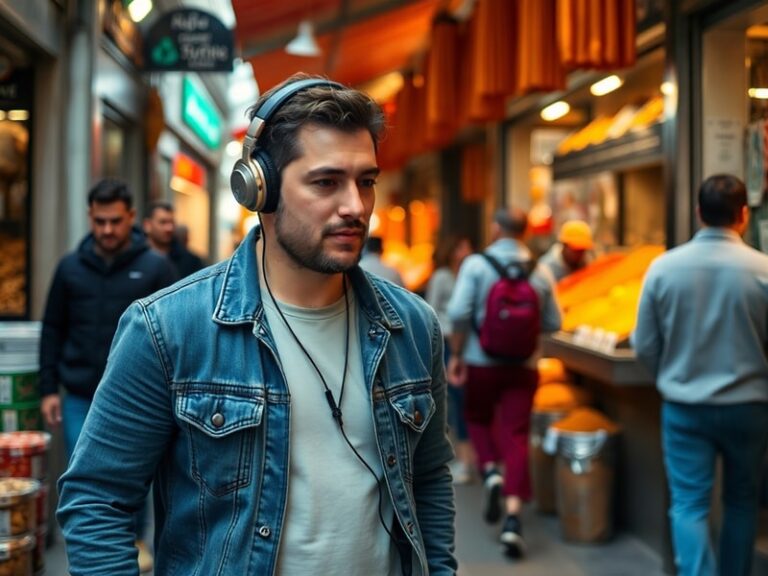
Alex Smalley: How an American Artist is Shaping Global Contemporary Art
Alex Smalley’s work has quietly but steadily carved a distinctive niche in the global contemporary art scene. Over the past decade, the American artist has transitioned from emerging talent to a respected figure whose pieces are sought after in galleries from New York to Seoul. His art—rooted in minimalism yet rich in emotional resonance—challenges conventional boundaries between abstraction and representation, often inviting viewers to explore personal and shared human experiences.
Born in Portland, Oregon, Smalley studied at the Rhode Island School of Design before moving to Berlin, a city long known as a magnet for creative experimentation. This transatlantic journey shaped his artistic vocabulary, blending American conceptual rigor with European avant-garde influences. Today, his work is exhibited in solo and group shows across North America, Europe, and Asia, reflecting a growing international recognition that transcends national artistic trends.
Early Influences and Artistic Evolution
Smalley’s artistic journey began in the Pacific Northwest, where the interplay of urban density and natural landscapes informed his early fascination with space, light, and form. His undergraduate studies at RISD immersed him in a rigorous tradition of formalism, but it was during his time in Berlin—where he lived for seven years—that his work began to expand beyond traditional mediums.
During this period, Smalley engaged deeply with installation art, performance, and digital media. He collaborated with musicians, filmmakers, and dancers, exploring how art could exist beyond the confines of the canvas. These interdisciplinary ventures laid the groundwork for his current practice, which often incorporates mixed media and site-specific installations.
A Shift in Perspective: From Object to Experience
Smalley’s breakthrough came with a series of large-scale installations that prioritize viewer immersion. Unlike traditional paintings, which are often viewed from a distance, his installations invite physical interaction. One notable example is Threshold (2018), a site-specific work created for a gallery in Leipzig, Germany. The piece used suspended fabric, light, and sound to transform the exhibition space into a meditative environment, encouraging visitors to move through the piece rather than merely observe it.
This shift from object-based to experience-based art reflects broader trends in contemporary art. As audiences increasingly value participation over passive consumption, artists like Smalley are reimagining how art functions in public and private spaces. His work aligns with a global movement toward art that fosters connection—both to oneself and to others—especially in an era marked by digital detachment.
Global Recognition and Cultural Impact
Smalley’s international profile began to solidify in 2019, when his solo exhibition Fragments of Light debuted in Tokyo. The show, which featured a series of abstract paintings layered with translucent resin, was praised for its delicate balance between control and spontaneity. Japanese critics highlighted the works’ meditative quality, drawing parallels to traditional Japanese aesthetics such as wabi-sabi—the beauty of imperfection and transience.
This cultural dialogue continued when Smalley exhibited in Seoul in 2021. His installation Horizon Line used reflective surfaces and subtle color gradients to evoke the liminal space between land and sky. Korean audiences, accustomed to art that often blends technology with nature, responded enthusiastically to Smalley’s analog-meets-digital approach. The exhibition was featured in Culture magazine, where critics noted how his work resonated with Korea’s deep-rooted appreciation for both tradition and innovation.
Cross-Cultural Dialogues in Art
Smalley’s art exists at the intersection of multiple cultural narratives. While his formal training is rooted in Western modernism, his experiences abroad have infused his work with Eastern philosophical concepts. He often cites the influence of Zen Buddhism on his understanding of space and emptiness, which manifests in his use of negative space and minimal color palettes.
This cross-pollination is not uncommon among globally mobile artists, but Smalley’s ability to translate abstract ideas into accessible visual experiences sets him apart. His work has been described as “universal yet deeply personal,” a quality that has made it relatable across diverse audiences. Whether in a high-end gallery in London or a community arts center in Mexico City, viewers often report feeling a quiet introspection when engaging with his pieces.
Recent Projects and Future Directions
In 2023, Smalley completed Echo Chamber, a large-scale public art commission in Vancouver, British Columbia. The installation consists of a circular pavilion made from reclaimed wood and mirrored steel, designed to reflect the surrounding landscape while creating a space for quiet reflection. The project was commissioned as part of the city’s initiative to integrate public art into urban planning, reflecting a growing global trend toward art that enhances civic life.
Looking ahead, Smalley is preparing for a major retrospective at the Museum of Contemporary Art in Denver, scheduled for 2025. The exhibition will trace his artistic development over the past 15 years, including new works that incorporate AI-generated elements. This foray into digital tools marks another evolution in his practice, as he explores how artificial intelligence can augment—not replace—human creativity.
Embracing Technology Without Losing the Human Touch
Smalley’s engagement with digital media reflects a broader generational shift in the art world. Younger artists today are increasingly fluent in both traditional and digital mediums, using technology as a means to expand creative possibilities rather than as a gimmick. For Smalley, AI serves as a collaborator—one that can generate patterns or variations that he then refines through his own hand.
This approach aligns with a growing critique of unchecked technological determinism in art. Rather than surrendering to algorithmic creation, Smalley uses digital tools to interrogate the boundaries of authorship and perception. His work asks: Can machines help us see the world more clearly, or do they merely reflect our own biases back at us?
Why Alex Smalley Matters in Today’s Art World
In an era where art is often reduced to spectacle or commodified into trends, Smalley’s commitment to depth and authenticity is noteworthy. His work reminds us that art can be both accessible and profound—a quiet counterpoint to the noise of the digital age. Whether through immersive installations, contemplative paintings, or experimental collaborations, he offers viewers a space to pause, reflect, and reconnect.
As global art fairs and biennials continue to dominate the cultural calendar, artists like Smalley provide a necessary counterbalance. His practice emphasizes process over product, experience over ownership, and introspection over consumption. In doing so, he contributes to a quieter, more human-centered vision of what art can be.
For aspiring artists and collectors alike, Smalley’s career offers valuable lessons: the importance of cultural curiosity, the power of interdisciplinary collaboration, and the courage to evolve. His journey from Portland to Berlin to the global stage is not just a personal success story—it reflects the evolving heart of contemporary art itself.
As we move forward in an increasingly interconnected world, artists like Alex Smalley will continue to shape how we see, feel, and understand the world around us. His work is a testament to the enduring power of art to transform not just spaces, but lives.