astana
Astana: A Modern Capital with Deep Historical Roots
Astana, the capital of Kazakhstan, stands as one of the world’s most unique urban centers. Built from scratch in the late 20th century, it was designed to reflect the nation’s ambition, modernity, and cultural identity. Unlike many capitals shaped by centuries of history, Astana emerged from the steppe as a symbol of progress and transformation.
The city’s origins trace back to 1830, when a small fortress named Akmoly was established by Siberian Cossacks. Over time, it evolved into a trading hub along the Kazakh steppe, known as Akmolinsk. However, its greatest transformation began in 1997, when Kazakhstan’s president, Nursultan Nazarbayev, declared it the new capital, renaming it Astana—Kazakh for “capital.” This bold move repositioned Kazakhstan on the global stage and set in motion one of the most ambitious urban projects of the 21st century.
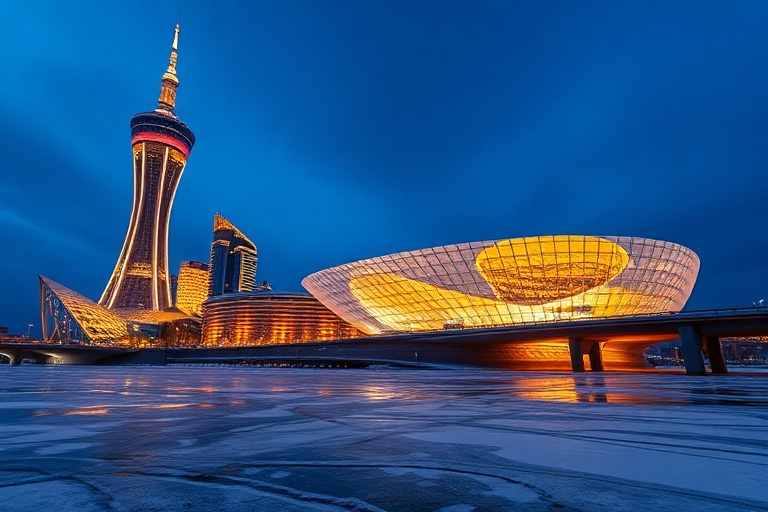
Today, Astana is a city of contrasts: sleek skyscrapers rise beside wide boulevards, while traditional Kazakh motifs blend with futuristic architecture. It hosts major international events, from the 2017 Winter Universiade to the 2019 Congress of Leaders of World and Traditional Religions, reinforcing its role as a bridge between East and West.
The Vision Behind Astana’s Transformation
The decision to relocate Kazakhstan’s capital from Almaty to Astana was driven by strategic and symbolic reasons. Almaty, the country’s largest city, was vulnerable to earthquakes and geographically isolated in the southeast. Astana, located in the north near the Ishim River, offered a more central position, better infrastructure, and a blank canvas for development.
Architectural innovation became a cornerstone of Astana’s identity. The city’s skyline is dominated by the Bayterek Tower, a golden sphere atop a slender stem that symbolizes a mythical tree of life. Nearby, the Khan Shatyr Entertainment Center—designed by Norman Foster—resembles a giant tent, a nod to Kazakhstan’s nomadic heritage. These structures are not just landmarks; they embody a narrative of national pride and forward-thinking design.
Urban planning in Astana prioritized wide, tree-lined avenues and pedestrian-friendly zones. The city’s layout avoids the gridiron monotony of many modern capitals, instead incorporating organic curves and green spaces. Parks like the Nurjol Boulevard and the Kazakh Eli Monument serve as communal gathering places, blending leisure with national symbolism.
Cultural Crossroads: Astana’s Global Identity
Astana’s location at the heart of Eurasia has made it a cultural crossroads. The city is home to over 100 ethnic groups, reflecting Kazakhstan’s diverse population. This multiculturalism is celebrated in institutions like the National Museum of the Republic of Kazakhstan, which showcases artifacts from ancient Silk Road civilizations to modern achievements.
Theater, music, and visual arts thrive in Astana. The Astana Opera, inaugurated in 2013, is a world-class venue hosting performances ranging from classical Russian opera to Kazakh folk music. Meanwhile, the Khan Shatyr hosts concerts, exhibitions, and festivals that draw international artists and audiences. These venues underscore Astana’s role not just as a political center, but as a cultural hub.
Education and innovation are also priorities. The Nazarbayev University, founded in 2010, is a flagship institution modeled after top global universities, offering programs in English and attracting scholars from around the world. The city’s science and technology parks foster startups and research, positioning Astana as a regional leader in innovation.
Challenges and Criticisms: The Other Side of Astana
Despite its grandeur, Astana faces challenges. Critics argue that its rapid development has come at a cost—both financially and socially. The city’s construction boom required billions in investment, leading to debates about resource allocation in a country where rural areas often lack basic infrastructure. Some observers question whether such a futuristic city truly serves the needs of ordinary citizens.
Environmental concerns have also emerged. The steppe climate brings extreme temperatures—from -40°C in winter to +40°C in summer—placing demands on heating, cooling, and urban resilience. Efforts to green the city, such as planting millions of trees, have had mixed results due to water scarcity and soil conditions. Sustainability remains a work in progress.
Politically, Astana’s role as a capital has been intertwined with the legacy of its founder, Nursultan Nazarbayev, who led Kazakhstan for nearly three decades. His resignation in 2019 marked a new chapter, raising questions about the city’s future direction and whether its identity will evolve beyond its founding vision.
A Gateway to Central Asia’s Future
Astana represents more than a city—it is a statement. It reflects Kazakhstan’s desire to assert its place in the world as a modern, dynamic nation. Whether through hosting international summits, fostering innovation, or celebrating cultural diversity, Astana continues to redefine what a capital can be in the 21st century.
As Kazakhstan looks ahead, Astana will likely remain at the center of its ambitions. Its architecture, institutions, and people tell a story of resilience, vision, and transformation. For travelers, diplomats, and investors alike, the city offers a window into Central Asia’s evolving identity—and a reminder that the future can be built, one bold decision at a time.