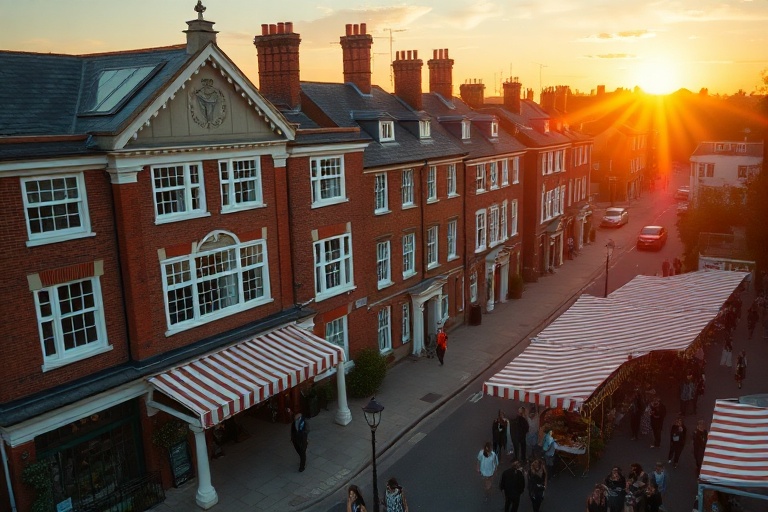
Exploring the history, culture, and modern appeal of this underrated borough.
The Historical Roots of Bexley
Bexley, a borough in Southeast London, has roots that stretch back to medieval times. Originally a small village, its name derives from the Old English words “Beohha’s leah,” meaning “Beohha’s clearing.” By the 12th century, Bexley was a well-established market town, serving as a vital hub for local trade and agriculture. The borough’s historical significance is further underscored by landmarks like Hall Place, a Tudor mansion built in 1537, which now serves as a cultural and educational center.
The arrival of the railway in the 19th century transformed Bexley from a rural village into a suburban community. The Bexleyheath Line, opened in 1895, connected the area to central London, paving the way for residential growth. Unlike more central boroughs, Bexley retained a sense of tranquility, blending historical charm with modern convenience. Today, it stands as a testament to London’s evolution, offering a unique blend of past and present.
A Walk Through Bexley’s Past
- Medieval Beginnings: Bexley’s origins as a market town date back to the 12th century.
- Tudor Legacy: Hall Place, a 16th-century mansion, remains a key historical site.
- Railway Revolution: The 19th-century railway expansion spurred suburban development.
- Modern Evolution: Bexley has grown into a thriving borough while preserving its heritage.
Cultural and Recreational Highlights
Bexley’s cultural scene may not dominate headlines like those of central London, but it offers a rich tapestry of experiences. The Bexley Heritage Trust, for instance, manages a network of historic sites, including the ancient Danson House and the Red House, a former home of poet William Morris. These sites provide glimpses into the borough’s artistic and literary past.
For those seeking outdoor activities, Bexley’s parks and green spaces are a major draw. Foots Cray Meadows, a Site of Special Scientific Interest, spans over 800 acres of woodland and wetlands, offering hiking trails and wildlife spotting opportunities. Meanwhile, the Bexleyheath Shopping Centre, a modern retail hub, caters to everyday needs while hosting events that foster community engagement.
Where to Experience Bexley’s Culture
- Hall Place & Gardens: A Tudor mansion with art exhibitions and seasonal events.
- Danson House: An 18th-century stately home with stunning interiors and gardens.
- Foots Cray Meadows: A sprawling natural reserve ideal for nature lovers.
- Bexleyheath Shopping Centre: A central spot for shopping and community gatherings.
Bexley’s Modern Appeal: Why It Stands Out
In an era where London’s affordability crisis pushes residents further from the city center, Bexley has emerged as a desirable alternative. Its relatively lower property prices compared to inner boroughs make it an attractive option for first-time buyers and families. Yet, Bexley’s appeal isn’t solely economic. The borough boasts excellent schools, low crime rates, and a strong sense of community—qualities that often elude more transient urban areas.
Transport links have also improved, with the Elizabeth Line now providing a direct route to central London in under 30 minutes. This connectivity has reinforced Bexley’s role as a commuter-friendly suburb without sacrificing its suburban charm. Additionally, local initiatives like the Bexley Business Awards highlight the borough’s growing entrepreneurial spirit, supporting small businesses and fostering economic resilience.
“Bexley’s strength lies in its balance—offering the amenities of a modern borough while maintaining the character of a traditional English town.”
Key Factors Driving Bexley’s Growth
- Affordability: More accessible housing options compared to central London.
- Connectivity: Improved transport links via the Elizabeth Line.
- Community Spirit: Strong local networks and low crime rates.
- Economic Development: Support for small businesses and local enterprises.
The Future of Bexley: Challenges and Opportunities
Despite its many advantages, Bexley faces challenges common to suburban areas. Rising demand for housing has led to debates over development and green space preservation. Some residents express concerns about overcrowding, particularly around transport hubs like Bexleyheath. Meanwhile, the borough’s aging infrastructure requires investment to meet the needs of a growing population.
Yet, these challenges also present opportunities. Bexley’s local council has outlined ambitious plans to enhance public spaces, improve digital connectivity, and promote sustainable living. Projects like the regeneration of the Bexleyheath town center aim to create a more vibrant and inclusive community hub. If executed well, these initiatives could position Bexley as a model for sustainable suburban growth in London.
For potential residents, investors, and visitors, Bexley offers a compelling proposition—a place where history, community, and modernity intersect. As London continues to evolve, boroughs like Bexley remind us that the city’s true character often lies beyond its most famous landmarks.
Bexley may not always grab headlines, but its quiet resilience and evolving identity make it a borough worth watching. Whether you’re drawn by its history, its green spaces, or its affordability, Bexley invites exploration beyond the usual tourist trail.