Robert Hutchings Goddard remains one of the most underrated yet influential figures in the history of science and technology. His work laid the foundation for modern rocketry, satellite technology, and even human spaceflight. While names like Einstein or Edison dominate public consciousness, Goddard’s contributions often lurk in the background—but their impact is undeniable.
The Early Years: A Visionary in the Making
Born in 1882 in Worcester, Massachusetts, Goddard displayed an early fascination with science and mechanics. As a child, he was captivated by the works of Jules Verne, particularly From the Earth to the Moon, which sparked his lifelong obsession with space exploration. His academic journey was marked by both brilliance and struggle; he earned a Ph.D. in physics from Clark University but faced skepticism from peers who dismissed his ideas as impractical.
In 1919, Goddard published A Method of Reaching Extreme Altitudes, a groundbreaking paper that outlined the principles of rocket propulsion. His calculations proved that rockets could function in the vacuum of space—a radical idea at the time. Despite ridicule from the scientific community, Goddard pressed forward, driven by an unshakable belief in his work.
Breaking Barriers: Goddard’s Groundbreaking Experiments
Goddard’s most significant contributions came in the realm of liquid-fueled rockets. While traditional rockets used solid fuels, Goddard envisioned a more efficient system that could be controlled and sustained. In 1926, he successfully launched the world’s first liquid-fueled rocket in Auburn, Massachusetts. Though it only reached an altitude of 41 feet and traveled 184 feet, the flight lasted just 2.5 seconds—but it was a monumental achievement.
Over the next decade, Goddard refined his designs, achieving higher altitudes and greater precision. His rockets introduced innovations like gyroscopic stabilization and multi-stage propulsion, concepts that would later become standard in aerospace engineering. By 1937, Goddard’s rockets were reaching altitudes of over 7,500 feet, demonstrating the viability of his theories.
Despite his successes, Goddard faced persistent challenges. Funding was scarce, and his work was often overshadowed by the Great Depression. Yet, he persisted, driven by a vision that extended beyond national borders. His patents and research became foundational for future generations of engineers, including those who would later develop the V-2 rocket during World War II.
The Legacy: How Goddard Shaped the Future of Space Exploration
Goddard’s influence extends far beyond his lifetime. His patents were acquired by the U.S. government in the 1960s, and his work directly informed the design of rockets used in the Apollo missions. Without his early experiments, the Space Race of the 1960s might have unfolded very differently.
Today, Goddard is remembered not just as a pioneer of rocketry but as a symbol of perseverance in the face of adversity. His story serves as a reminder that innovation often requires defying convention and enduring skepticism. While modern advancements in space travel—like reusable rockets and Mars rovers—are celebrated, they owe a debt to Goddard’s foundational research.
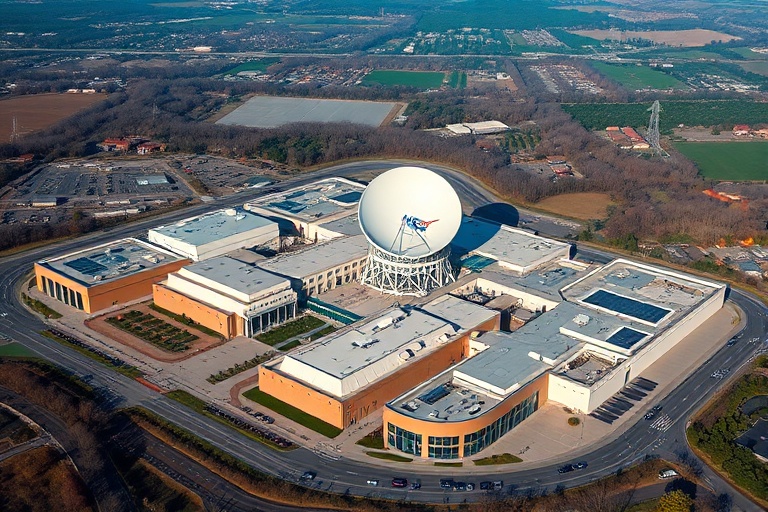
In recognition of his contributions, NASA named its Goddard Space Flight Center in Greenbelt, Maryland, after him. The center has played a crucial role in missions ranging from the Hubble Space Telescope to the James Webb Space Telescope, further cementing Goddard’s legacy in the annals of space exploration.
Why Goddard’s Work Still Matters Today
The principles Goddard established are still relevant in contemporary aerospace engineering. For instance, the push for reusable rockets by companies like SpaceX and Blue Origin echoes Goddard’s early emphasis on efficiency and sustainability. His work also underscores the importance of fundamental research—sometimes, the most groundbreaking discoveries come from those who dare to ask, “What if?”
Moreover, Goddard’s story highlights the challenges of securing funding for visionary projects. In an era where research often prioritizes immediate commercial applications, his experience serves as a cautionary tale about the need for long-term investment in science.
For those interested in the intersection of science and history, Goddard’s life offers a compelling narrative. His journey from a small-town boy with a dream to a revolutionary scientist is a testament to the power of curiosity and determination.
To explore more about the intersection of science and innovation, visit Dave’s Locker Technology section or Science category for deeper insights into how today’s breakthroughs build on the foundations laid by pioneers like Goddard.
Key Takeaways from Goddard’s Work
- Liquid-fueled rockets: Goddard’s development of liquid-fueled rockets revolutionized propulsion, enabling greater control and efficiency.
- Multi-stage propulsion: His designs introduced the concept of staging, where rockets shed weight to increase altitude—a principle still used in modern spaceflight.
- Gyroscopic stabilization: Goddard’s use of gyroscopes to stabilize rockets was a precursor to modern guidance systems.
- Long-term vision: Despite facing skepticism, Goddard’s work laid the groundwork for the Space Age, proving that persistence pays off.
- Foundational patents: Many of Goddard’s patents were later used by governments and private companies, including those involved in the Apollo missions.
Goddard’s life and work remind us that innovation is not just about grand gestures but also about incremental progress. His story is one of quiet determination, where each small step brought humanity closer to the stars.
A Final Thought: The Unfinished Journey
While Goddard’s contributions are monumental, his vision was only the beginning. Today, as private companies and government agencies push the boundaries of space exploration, it’s worth reflecting on the shoulders of giants like Goddard upon which these advancements stand. His legacy challenges us to ask: What other untold stories of innovation and perseverance are waiting to be uncovered?
The next time you look up at the night sky, remember that the journey to the stars began not with a single leap, but with a series of calculated steps—each one building on the work of those who came before.