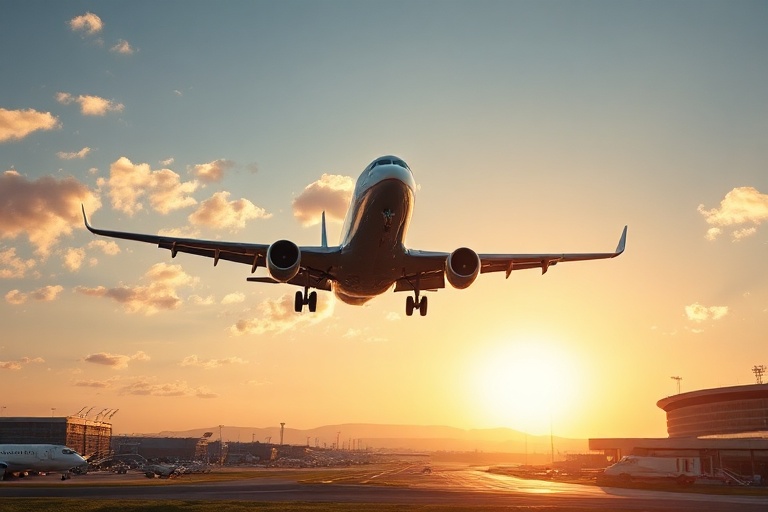
The airplane stands as one of humanity’s most transformative inventions, reshaping global connectivity, commerce, and culture. From the Wright brothers’ first powered flight in 1903 to today’s supersonic jets and autonomous aircraft, the evolution of flight has been nothing short of revolutionary. This journey reflects not only technological progress but also the relentless pursuit of human ambition.
A Brief History of Flight
The story of the airplane begins long before the Wright Flyer took off at Kitty Hawk. Leonardo da Vinci sketched flying machines in the 15th century, and inventors like George Cayley laid the groundwork for modern aerodynamics in the early 1800s. Yet it wasn’t until the late 19th and early 20th centuries that powered, controlled flight became possible.
The Wright brothers’ achievement on December 17, 1903, marked the first sustained, controlled, powered heavier-than-air manned flight. Their 12-second, 120-foot journey was modest by later standards, but it opened the door to an era of rapid innovation. By the 1920s, airlines began offering passenger services, and by the 1950s, commercial jetliners like the Boeing 707 made intercontinental travel accessible to the masses.
Military aviation also played a pivotal role. World War I saw the first aerial dogfights, while World War II accelerated aircraft design with the introduction of jet engines and long-range bombers. These advancements laid the foundation for the modern aviation industry.
How Airplanes Work: The Science Behind Flight
At its core, flight relies on four fundamental forces: lift, weight, thrust, and drag. Lift, generated by the wings as air flows over and under them, counteracts the plane’s weight. Thrust, produced by engines (whether piston, turbofan, or turboprop), overcomes drag—the resistance of air pushing against the aircraft.
Modern commercial airliners use jet engines, which operate on the principle of Newton’s third law: for every action, there is an equal and opposite reaction. Air is compressed, mixed with fuel, ignited, and expelled at high speed, propelling the aircraft forward. The wings are designed with an airfoil shape to maximize lift efficiency, especially during takeoff and landing.
Aviation safety has improved dramatically thanks to advances in materials science. Today’s aircraft are built with lightweight yet durable composites, such as carbon fiber, which reduce weight without compromising strength. Fly-by-wire systems, where electronic signals replace manual controls, enhance precision and reduce pilot workload.
Key Components of an Airplane
- Fuselage: The main body of the aircraft, housing passengers, cargo, and flight systems.
- Wings: Generate lift and often house fuel tanks and control surfaces like flaps and ailerons.
- Empennage (Tail Section): Includes the horizontal stabilizer, vertical stabilizer, and rudder, which provide stability and control.
- Landing Gear: Supports the aircraft on the ground and absorbs shock during landing.
- Avionics: Electronic systems for navigation, communication, and flight management.
The Economic and Social Impact of Aviation
The airplane has become the backbone of global commerce and travel. In 2019, airlines transported over 4.5 billion passengers and 61 million tons of cargo, according to the International Air Transport Association (IATA). This connectivity has enabled businesses to operate on a global scale, fostering trade and economic growth.
Tourism, too, has been transformed. Destinations once considered remote are now within reach, allowing cultures to intersect and economies to thrive. However, this growth has come with challenges, including environmental concerns and the need for sustainable aviation fuels (SAFs). Airlines are increasingly investing in SAFs, which can reduce carbon emissions by up to 80% compared to traditional jet fuel.
The COVID-19 pandemic demonstrated the fragility of the aviation industry. With air travel plummeting by over 60% in 2020, airlines faced unprecedented financial strain. Yet, recovery has been swift in some regions, with domestic travel rebounding strongly while international routes gradually reopen. The pandemic also accelerated the adoption of digital tools, such as contactless check-ins and health passports, which are likely to remain part of the travel experience.
The Future of Aviation: Innovation and Challenges
The next frontier in aviation includes electric and hybrid-electric aircraft, which promise to reduce emissions and noise pollution. Companies like Airbus and Boeing are investing in these technologies, with prototypes already undergoing testing. For example, Airbus’ E-Fan X program aims to develop a hybrid-electric regional aircraft.
Supersonic travel is also making a comeback. After the Concorde’s retirement in 2003, companies like Boom Supersonic are developing new supersonic jets designed to fly at speeds of Mach 1.7, cutting transatlantic flight times in half. These aircraft could revolutionize long-haul travel, though challenges remain in terms of cost and environmental impact.
However, the industry faces significant hurdles. Climate change is a pressing concern, with aviation contributing approximately 2.5% of global CO2 emissions. The push for sustainability will require collaboration between manufacturers, airlines, and policymakers to develop and adopt greener technologies. Additionally, the rise of drones and urban air mobility (UAM) presents both opportunities and regulatory challenges.
Emerging Trends in Aviation
- Electric and Hybrid-Electric Aircraft: Aimed at reducing emissions and operating costs for short-haul flights.
- Sustainable Aviation Fuels (SAFs): Derived from renewable sources, offering a lower-carbon alternative to conventional jet fuel.
- Supersonic Travel: New designs promise to bring back commercial supersonic flight with improved efficiency and reduced noise.
- Urban Air Mobility (UAM): Development of electric vertical takeoff and landing (eVTOL) aircraft for urban transportation.
- Artificial Intelligence: Used for predictive maintenance, flight optimization, and even autonomous flight systems.
As we look to the future, the airplane will continue to evolve, driven by innovation and necessity. The challenges ahead—climate change, technological integration, and safety—are significant, but so too are the opportunities. Aviation has always been a symbol of human ingenuity, and its next chapter promises to be as exciting as its past.
For those interested in exploring more about technology’s role in modern transportation, visit our Technology category. To dive deeper into the cultural impact of innovations, check out our Culture section.
The airplane is more than just a machine; it’s a testament to human ambition and our unyielding desire to connect, explore, and innovate. As we soar into the skies, we carry with us the lessons of the past and the dreams of the future.