Understanding Lambeth’s Political Landscape
Lambeth, a bustling borough in South London, has long been a microcosm of the UK’s broader political and cultural shifts. Home to a diverse population of over 340,000 people, it includes vibrant communities from Brixton to Clapham, each with distinct economic and social priorities. The upcoming council elections are poised to reflect not just local concerns but also wider national trends, including housing crises, public service funding, and the role of local government in an era of austerity.
The borough’s political history is rich and complex. Labour has dominated Lambeth politics for decades, but recent years have seen rising grassroots movements and independent candidates challenging the status quo. Issues like gentrification in areas like Brixton Market and the redevelopment of the South Lambeth estate have fueled debates about who truly benefits from urban renewal. These tensions make the council elections particularly consequential, as they will determine how Lambeth navigates its future amid competing interests.
The Key Issues Shaping Voter Priorities
For many residents, the most pressing concerns revolve around housing and affordability. Lambeth has some of the most expensive rental markets in the UK, pushing long-time residents out of their neighborhoods. The council faces pressure to address this through policies like rent controls and increased social housing investment. Meanwhile, public transport remains a critical issue, with calls for better connectivity to central London and improved reliability of the London Underground’s Northern Line.
- Housing affordability: The average rent for a one-bedroom flat in Lambeth exceeds £1,500 per month, pricing out many low-income families.
- Public services: Libraries, youth centers, and healthcare facilities have faced budget cuts, raising concerns about accessibility for vulnerable populations.
- Climate action: Lambeth has committed to becoming carbon-neutral by 2030, but progress has been slow, with critics demanding more aggressive policies.
- Crime and safety: While overall crime rates have fluctuated, residents in areas like Streatham and Clapham report persistent concerns about knife crime and anti-social behavior.
Beyond these immediate concerns, Lambeth’s elections are also a litmus test for broader political movements. The rise of the Green Party in local elections across London suggests that environmental issues are gaining traction among voters. At the same time, the Labour Party’s internal struggles—between traditionalists and progressive factions—play out in boroughs like Lambeth, where grassroots activism has pushed for policies like universal basic income experiments and community wealth-building initiatives.
The Role of Local Activism and Grassroots Movements
Lambeth’s political scene is not just shaped by traditional parties but also by a vibrant ecosystem of local activists, tenant unions, and community organizations. Groups like the Brixton Pound and the Lambeth Housing Standard have been instrumental in amplifying voices often ignored by mainstream politics. Their campaigns have forced issues like eviction resistance and cooperative housing onto the agenda, challenging the council to adopt more inclusive policies.
One notable example is the fight against the Aylesbury Estate redevelopment, a decades-long battle that has become a symbol of resistance against displacement. The estate, once home to thousands, has been partially demolished and redeveloped, with critics arguing that the new housing is unaffordable for former residents. This controversy has galvanized a generation of activists, many of whom are now running for council seats or influencing local policy from outside the political establishment.
The influence of these movements extends beyond Lambeth. Similar battles are playing out across the UK, from Manchester’s housing protests to London’s Extinction Rebellion chapters. Lambeth’s elections offer a case study in how grassroots pressure can reshape local governance, particularly in areas where traditional party structures are seen as unresponsive.
A Global Perspective: What Lambeth’s Elections Mean Beyond the UK
While Lambeth is a small borough in a single country, its elections resonate globally as a reflection of broader urban challenges. Cities worldwide are grappling with similar issues: rising inequality, the housing crisis, and the need for sustainable development. Lambeth’s struggles and innovations offer lessons for places as diverse as Berlin, where gentrification has transformed neighborhoods, or New York, where tenant unions have fought for rent control.
For international observers, Lambeth’s elections highlight the tension between local governance and global pressures. As multinational corporations and foreign investors shape urban landscapes, local councils like Lambeth’s struggle to maintain democratic accountability. The rise of “corporate gentrification” in areas like Vauxhall, where luxury developments dominate, underscores the need for policies that prioritize community needs over profit.
Moreover, Lambeth’s diverse population—with significant communities from the Caribbean, West Africa, and South Asia—brings cultural perspectives that enrich the political discourse. Issues like faith-based community centers, culturally appropriate healthcare, and anti-racism initiatives are central to many voters’ priorities. This diversity challenges traditional political narratives and demands a more inclusive approach to governance.
What’s Next for Lambeth?
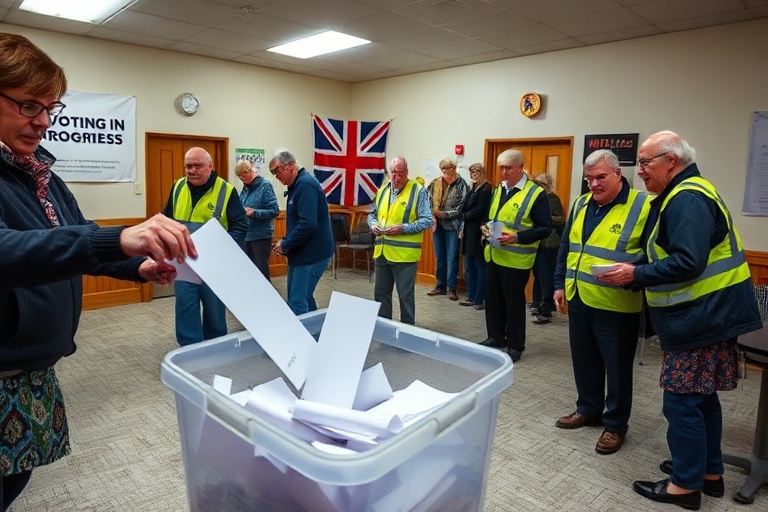
The outcome of the Lambeth Council elections will have ripple effects far beyond the borough’s borders. It will signal whether traditional parties can adapt to the demands of a changing electorate or whether grassroots movements will continue to gain ground. For residents, the results will determine whether their voices are heard in decisions about housing, public services, and the future of their communities.
Regardless of the outcome, one thing is clear: Lambeth’s political landscape is evolving. The interplay between local activism, party politics, and global trends ensures that the borough will remain a focal point for discussions about urban democracy, social justice, and the role of local government in the 21st century. As voters head to the polls, they are not just choosing councilors—they are shaping the future of a community that reflects both the challenges and the possibilities of modern urban life.
The elections also serve as a reminder that local politics matters. In an era where national and global issues often dominate headlines, the decisions made in town halls and council chambers can have a profound impact on daily life. Lambeth’s voters have the opportunity to set an example for how communities can reclaim agency in an increasingly complex world.