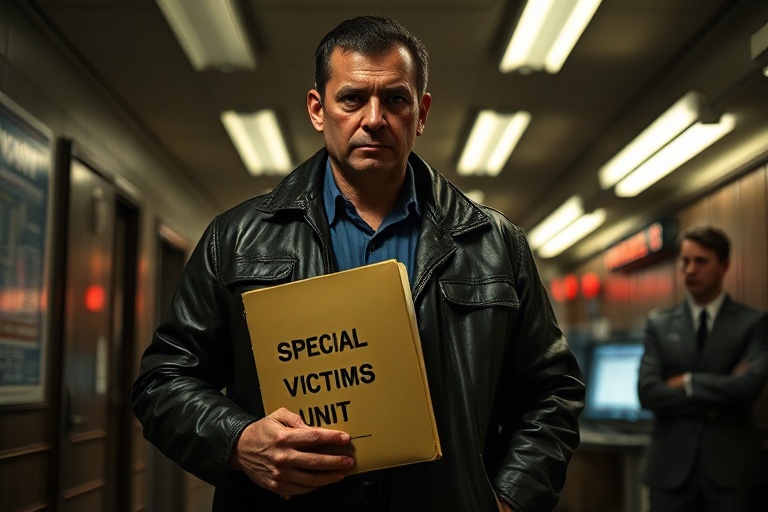
Law & Order: SVU at 25 – How a Crime Drama Shaped Global Justice
Law & Order: Special Victims Unit Turns 25 Years of Grit and Grit
Since its premiere in 1999, Law & Order: Special Victims Unit (SVU) has stood as a cornerstone of American television, blending crime procedural drama with unflinching explorations of human cruelty and resilience. Created by Dick Wolf, the series has not only endured but thrived, becoming the longest-running live-action primetime drama in U.S. television history. Its longevity reflects more than just formulaic storytelling—it mirrors societal shifts, evolving legal landscapes, and the global conversation about justice, trauma, and redemption.
From its New York City setting to its global audience, SVU has transcended borders, influencing international adaptations and sparking discussions about crime and punishment worldwide. The show’s ability to remain relevant stems from its willingness to confront uncomfortable truths, from sexual violence and child exploitation to systemic failures in law enforcement. In an era where crime dramas often prioritize spectacle over substance, SVU has consistently chosen realism, even when it tests viewers’ emotional limits.
The Evolution of a Cultural Institution
SVU began as a spin-off of the original Law & Order, focusing exclusively on crimes involving sexual violence, domestic abuse, and child endangerment. Over 25 seasons, it has expanded its scope while maintaining its core mission: to give voice to victims whose stories are too often silenced. The series introduced audiences to Detective Elliot Stabler (Christopher Meloni) and Detective Olivia Benson (Mariska Hargitay), whose partnership became the emotional backbone of the show.
The departure of Meloni in 2011 marked a turning point, but the series adapted by shifting focus to Benson’s leadership and the introduction of new characters like Detective Amanda Rollins (Kelli Giddish) and Detective Dominick “Sonny” Carisi (Peter Scanavino). This evolution reflects broader changes in law enforcement and media representation, where female-led narratives and diverse perspectives have gained prominence. Internationally, SVU has inspired adaptations in countries like Russia, France, and South Korea, each reinterpreting the format to fit local legal and cultural contexts.
Global Themes, Local Impact
SVU’s international appeal lies in its universal themes. Sexual violence, a central topic of the show, remains a global issue, with varying legal responses across continents. In some countries, victims face systemic barriers to justice, while others have made strides in survivor advocacy. SVU has played a role in shaping public perception, often serving as a catalyst for discussions about victim rights and legal reforms.
The show’s portrayal of law enforcement has also sparked debate. While SVU often depicts detectives as flawed but dedicated professionals, real-world policing varies widely. In countries like the UK and Canada, crime procedurals like Luther and Cardiac Arrest offer different takes on justice, emphasizing psychological depth over procedural grit. Meanwhile, in Japan, series like Keizoku 2: SPEC blend crime drama with supernatural elements, reflecting cultural priorities in storytelling.
SVU’s influence extends beyond entertainment. It has collaborated with organizations like the Rape, Abuse & Incest National Network (RAINN) to raise awareness about sexual violence. The show’s impact is evident in how it has shaped public discourse, from influencing legislation to inspiring real-life advocates. In 2020, during the global reckoning with sexual misconduct, SVU reruns and discussions surged, proving its enduring relevance.
The SVU Formula: Why It Works
At its core, SVU follows a familiar procedural format: a crime is committed, the detectives investigate, and justice is (sometimes) served. Yet what sets it apart is its commitment to character development and emotional depth. Episodes often delve into the personal lives of the SVU team, humanizing them in ways that resonate with audiences. Benson’s journey, in particular, has been a masterclass in resilience, from her traumatic past to her advocacy for victims.
The show’s writers have also embraced topical storytelling, addressing issues like cybercrime, human trafficking, and the #MeToo movement. This willingness to tackle current events ensures that SVU remains a mirror to society, reflecting both progress and persistent challenges. For example, its episodes on online exploitation have paralleled real-world crackdowns on digital crimes, while its handling of police brutality has sparked conversations about accountability.
SVU’s longevity can also be attributed to its ensemble cast. Over the years, actors like Dann Florek (Captain Cragen), Richard Belzer (Detective Munch), and Ice-T (Detective Fin Tutuola) have become fan favorites, each bringing a distinct perspective to the squad. Their chemistry has created a sense of continuity, even as characters come and go. This stability is rare in long-running series, where cast turnover often disrupts narrative flow.
The Future of SVU and Crime Dramas
As SVU enters its 26th season, its future remains secure, thanks to its dedicated fanbase and streaming availability. The series has also spawned a universe of spin-offs, including Law & Order: Organized Crime and Law & Order: For the Defense. Yet its core appeal lies in its authenticity. In an era of algorithm-driven content, SVU stands out for its human touch, proving that well-crafted storytelling can outlast trends.
Looking ahead, crime dramas face new challenges. The rise of true-crime podcasts and documentaries has shifted audience expectations, demanding deeper investigations and ethical storytelling. SVU has already adapted by incorporating more real-world cases and consulting experts to ensure accuracy. This approach not only enhances credibility but also reinforces the show’s commitment to its mission.
For fans of the genre, SVU offers more than just entertainment—it provides a lens through which to examine societal issues. Whether exploring the psychological toll of trauma or the complexities of legal justice, the series remains a vital cultural touchstone. As it continues to evolve, SVU’s legacy will likely endure, not just as a television phenomenon but as a testament to the power of storytelling to confront uncomfortable truths.
Where to Watch and Dive Deeper
If you’re new to Law & Order: Special Victims Unit, you can stream it on Peacock and Netflix, where all 25 seasons are available. For those interested in the broader Law & Order universe, the franchise includes multiple series that expand on the original’s themes.
For further reading, consider exploring crime drama analysis on Entertainment pages or diving into discussions about media representation in Culture. Whether you’re a longtime fan or a newcomer, SVU offers a compelling journey through the darkest and most resilient aspects of human nature.