Pentagon Island: A Remote Landmark with Military Secrets
In the vast expanse of the Pacific Ocean, roughly 1,200 miles southwest of Hawaii, lies a peculiar and rarely visited island. Known as Pentagon Island, this uninhabited atoll is part of the Marshall Islands and holds a unique place in both geography and geopolitics. Unlike its namesake, the Pentagon in Washington D.C., this island is not a hub of military command but a quiet outpost with a history tied to Cold War-era testing and strategic positioning.
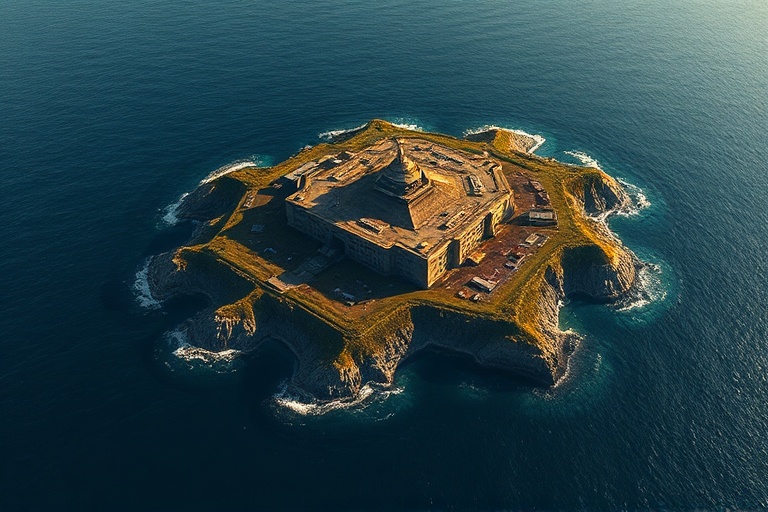
The island’s name stems from its distinctive shape—when viewed from above, its five islets form a rough pentagon, creating a natural fortification around a central lagoon. This unusual configuration has made it a subject of curiosity for decades, though its primary significance lies in its role during mid-20th century military operations. Today, Pentagon Island remains a relic of a bygone era, offering insights into the broader implications of nuclear testing and territorial control in the Pacific.
The Geographical and Historical Context of Pentagon Island
Pentagon Island is part of the Marshall Islands archipelago, a chain of volcanic and coral atolls spread across the central Pacific. The Marshall Islands, a sovereign nation in free association with the United States, has a complex history shaped by colonial rule, World War II, and nuclear testing during the Cold War. Pentagon Island itself was not a major battleground but became indirectly involved in these larger conflicts due to its strategic location.
The island gained attention in the 1950s when the U.S. military designated it as part of its Pacific Proving Grounds. While not a primary site for nuclear detonations—those took place at nearby Bikini Atoll and Enewetak Atoll—Pentagon Island served as a logistical and observational post. Its position allowed U.S. forces to monitor tests conducted hundreds of miles away, gathering data on radiation dispersion, blast effects, and the long-term environmental impacts of nuclear weapons.
This period left an indelible mark on the island’s legacy. Though no nuclear devices were detonated on Pentagon Island itself, its proximity to testing sites meant it was exposed to fallout. Today, the island remains uninhabited, and access is restricted due to lingering radiation concerns and the Marshall Islands government’s cautious approach to tourism and exploration.
Key Facts About Pentagon Island
- Location: Part of the Marshall Islands, approximately 1,200 miles southwest of Hawaii.
- Geography: Five islets arranged in a rough pentagon shape, encircling a central lagoon.
- History: Used as a logistical and observational post during U.S. nuclear testing in the 1950s.
- Population: Uninhabited; access is restricted due to radiation concerns.
- Significance: A relic of Cold War military strategy and a case study in the environmental and political aftermath of nuclear testing.
The Military and Environmental Legacy of Pentagon Island
The Cold War era was defined by a global arms race, and the Pacific Proving Grounds became a critical arena for the United States and the Soviet Union to demonstrate their nuclear capabilities. While Pentagon Island was not a testing ground, its role as a support site underscores the broader infrastructure that enabled these operations. The island’s lagoon provided a sheltered harbor for ships and aircraft, while its islets offered vantage points for monitoring tests conducted elsewhere in the region.
However, the environmental consequences of these activities have been severe. The Marshall Islands, including areas near Pentagon Island, experienced significant radioactive contamination from nuclear fallout. Studies conducted in the decades since the tests have documented elevated radiation levels in soil, water, and marine life, as well as long-term health impacts on local populations. The legacy of these tests has shaped modern discussions about nuclear disarmament, environmental justice, and the responsibilities of nations that conducted such experiments.
Pentagon Island itself has not been the focus of extensive environmental studies, but its proximity to known contaminated sites raises questions about its current state. The Marshall Islands government has prioritized monitoring and remediation efforts in more heavily affected areas, leaving Pentagon Island in a state of relative obscurity. Yet, its existence serves as a reminder of the far-reaching consequences of Cold War militarization.
Pentagon Island in the Modern Era: Tourism, Mystery, and Geopolitics
Today, Pentagon Island is a place of intrigue for historians, environmentalists, and adventurers. Unlike more accessible Pacific atolls, such as those in French Polynesia or Fiji, Pentagon Island remains off the beaten path. Its remote location, combined with restrictions on entry, has preserved its air of mystery. Satellite imagery and occasional research expeditions have provided glimpses of the island, but firsthand accounts are rare.
The island’s unique shape continues to captivate those who study it. The pentagonal arrangement of its islets is not just a geographical oddity; it has fueled speculation about whether the layout was natural or influenced by human design. Some historians suggest that the U.S. military may have considered using the lagoon as a secure anchorage, though no evidence confirms deliberate modification of the island’s structure.
From a geopolitical standpoint, Pentagon Island reflects the broader dynamics of the Pacific region. The Marshall Islands’ relationship with the United States, particularly through the Compact of Free Association, remains a topic of debate. This agreement grants the U.S. military continued access to certain facilities in exchange for financial support and defense guarantees. While Pentagon Island itself is not a current military asset, its history is intertwined with these larger agreements and the ongoing challenges of balancing security needs with environmental and humanitarian concerns.
The Broader Implications of Pentagon Island
The story of Pentagon Island is more than a footnote in military history; it is a lens through which to examine the intersections of science, politics, and ecology. The Cold War’s nuclear experiments left scars across the Pacific, and islands like this one serve as silent witnesses to those events. They also highlight the ethical dilemmas faced by nations that conducted such tests, many of which have yet to fully address the harm inflicted on local communities and ecosystems.
For researchers and policymakers, Pentagon Island offers lessons in risk assessment, environmental monitoring, and the long-term management of contaminated sites. Its remote location and restricted access make it a challenging case study, but one that could yield valuable data if studied more closely. Meanwhile, for the people of the Marshall Islands, the island represents a chapter in their history that is still unfolding, with unresolved questions about health, sovereignty, and justice.
As climate change threatens to alter the Pacific landscape, the fate of islands like Pentagon Island becomes even more uncertain. Rising sea levels, increased storm activity, and coastal erosion could further destabilize these already fragile environments. The Marshall Islands, like other low-lying nations, faces existential risks, and the legacy of nuclear testing adds another layer of vulnerability to their predicament.
Conclusion: A Forgotten Landmark with Enduring Lessons
Pentagon Island may not be a household name, but its story is a compelling reminder of the hidden histories that shape our world. From its role in Cold War military operations to its quiet existence today, the island encapsulates the complexities of power, science, and environmental stewardship. While it may never attract the tourism of more accessible Pacific destinations, its significance lies in what it represents—a cautionary tale and a call to action for future generations.
For those interested in exploring the intersections of history, military strategy, and environmental science, Pentagon Island offers a unique case study. It challenges us to look beyond the headlines and consider the long-term impacts of our actions, both deliberate and unintended. As the world grapples with nuclear proliferation, climate change, and geopolitical tensions, the lessons of Pentagon Island remain as relevant as ever.
To learn more about the Marshall Islands and its complex history, visit the Travel and Culture sections of Dave’s Locker. These pages offer deeper context on the Pacific region, its challenges, and its cultural heritage.