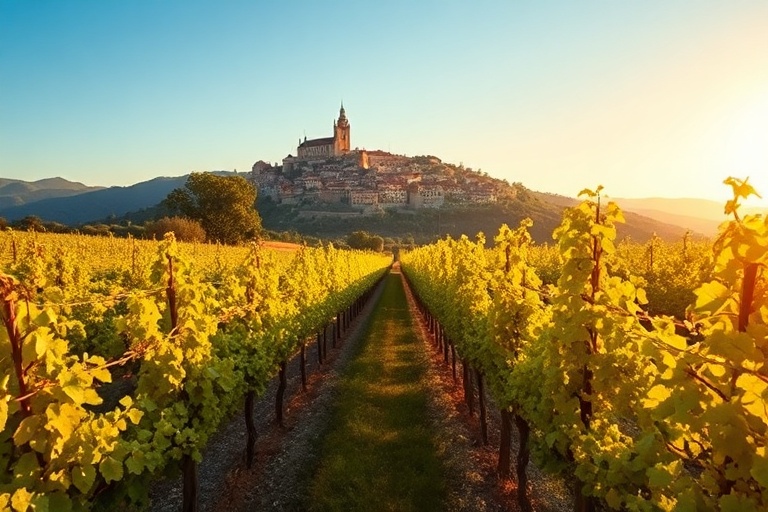
Nestled in the rolling hills of Lombardy, just south of Lake Iseo, lies one of Italy’s most underrated wine treasures. Franciacorta produces some of the world’s finest sparkling wines, yet remains largely unknown outside Italy. This region crafts wines that rival Champagne in quality, using the same traditional method of secondary fermentation in the bottle. What makes Franciacorta different, however, is its commitment to terroir, innovation, and sustainable practices that set it apart in the global wine landscape.
The Rise of Franciacorta in the Global Wine Scene
Franciacorta’s journey from local specialty to international recognition has been deliberate and methodical. Unlike many wine regions that grow organically over centuries, Franciacorta earned its DOC (Denominazione di Origine Controllata) status in 1967 and DOCG (Denominazione di Origine Controllata e Garantita) in 1995—the highest classification in Italian wine. This rapid ascent was no accident. A group of visionary producers recognized the region’s potential for sparkling wine long before others did.
The region’s winemakers embraced the metodo classico (traditional method), which involves a second fermentation in the bottle to create the bubbles. This technique, borrowed from Champagne, requires patience and precision. Franciacorta’s cool climate and mineral-rich soils provide the perfect conditions for producing base wines with high acidity and delicate fruit flavors. The result is a sparkling wine that balances elegance with complexity.
Key Factors Behind Franciacorta’s Success
- Strict Production Standards: Franciacorta adheres to rigorous regulations, including longer aging requirements than Champagne for some styles.
- Sustainable Farming: Many producers use organic or biodynamic practices, ensuring the land remains healthy for future generations.
- Terroir-Driven Wines: The region’s morainic soils, shaped by ancient glaciers, impart unique minerality to the wines.
- Innovation Within Tradition: While committed to metodo classico, some winemakers experiment with local grape varieties like Erbamat to add freshness and acidity.
Beyond Bubbles: Franciacorta’s Cultural and Economic Impact
Franciacorta’s influence extends far beyond the glass. The region has become a model for how small wine areas can achieve global prestige without compromising their identity. Its success has inspired other Italian regions to adopt stricter standards and focus on quality over quantity. Meanwhile, Franciacorta itself has become a cultural ambassador, hosting events like the Franciacorta Wine Festival that draw sommeliers and enthusiasts from around the world.
Economically, Franciacorta has demonstrated how wine tourism can revitalize rural communities. Wineries like Ca’ del Bosco and Bellavista have invested in state-of-the-art facilities, offering tastings, vineyard tours, and gourmet dining experiences. These businesses attract visitors who spend money not just on wine but on local hotels, restaurants, and artisan products. The result is a thriving ecosystem where agriculture, hospitality, and culture intersect.
Yet Franciacorta’s impact isn’t limited to Italy. As climate change threatens traditional sparkling wine regions like Champagne, Franciacorta’s cooler climate and adaptive winemaking techniques position it as a potential refuge for high-quality bubbly production. Some experts even suggest that Franciacorta could emerge as a leader in sustainable sparkling wine, offering an alternative to regions struggling with heatwaves and water scarcity.
What Sets Franciacorta Apart from Other Sparkling Wines
While Champagne is the most famous traditional-method sparkling wine, Franciacorta offers distinct advantages. For one, it’s made exclusively with Italian grapes—primarily Chardonnay, Pinot Noir, and Pinot Blanc. This gives the wines a fruit-forward profile with a different texture than Champagne, often described as creamier or more approachable. Franciacorta also tends to be less oxidized, preserving freshness and vibrancy.
Another key difference is the region’s labeling system. Unlike Champagne, which uses terms like Brut or Extra Brut loosely, Franciacorta has precise definitions:
- Pas Dosé: Bone dry, with less than 3 grams of residual sugar per liter.
- Extra Brut: Very dry, with up to 6 grams of sugar.
- Brut: The most common style, with up to 12 grams of sugar—still crisp and dry.
- Demi-Sec: Off-dry, with up to 32 grams of sugar, ideal for pairing with desserts.
This clarity helps consumers choose the right style for their palate or occasion.
The Future of Franciacorta: Challenges and Opportunities
Despite its successes, Franciacorta faces challenges. Global competition in the sparkling wine market is fierce, with Prosecco dominating in volume and Champagne in prestige. Franciacorta producers must balance tradition with innovation, ensuring their wines remain relevant without losing their identity. Some are experimenting with skin-contact sparkling wines or aging in amphorae to push boundaries while staying true to the region’s ethos.
Another hurdle is perception. Many consumers still associate Italy with Prosecco or Lambrusco, not Franciacorta. Education is key—wine schools, sommeliers, and influencers must highlight what makes Franciacorta unique. The recent surge in natural wine popularity could also work in its favor, as Franciacorta’s minimal-intervention approaches align with this trend.
Looking ahead, Franciacorta’s potential is vast. If it can continue to grow its reputation for quality, sustainability, and terroir-driven wines, it may well secure its place alongside Champagne and Cava in the global market. For now, it remains a hidden gem—a place where tradition and innovation create something truly extraordinary.
Why Franciacorta Deserves Your Attention
If you’re a wine lover seeking something new, Franciacorta offers a fresh perspective on sparkling wine. Its wines are versatile, food-friendly, and remarkably consistent in quality. Whether you’re pairing a Brut with oysters, a Rosé with charcuterie, or a Satèn with delicate pastries, Franciacorta delivers an experience that’s both refined and approachable.
For those interested in exploring beyond the usual suspects, our food and drink section features tasting notes and pairings for Franciacorta and other Italian wines. And if you’re planning a trip to Italy, consider adding Franciacorta to your itinerary—it’s a region where wine, landscape, and culture come together in perfect harmony.
“Franciacorta is not just a wine; it’s a philosophy. It’s about respecting the land, honoring tradition, and crafting something beautiful without compromise.” — Maurizio Zanella, Ca’ del Bosco
In a world where mass-produced wines dominate shelves, Franciacorta stands as a testament to what happens when passion, precision, and place come together. It’s time to raise a glass to this Italian treasure—and discover why it belongs in every wine lover’s collection.