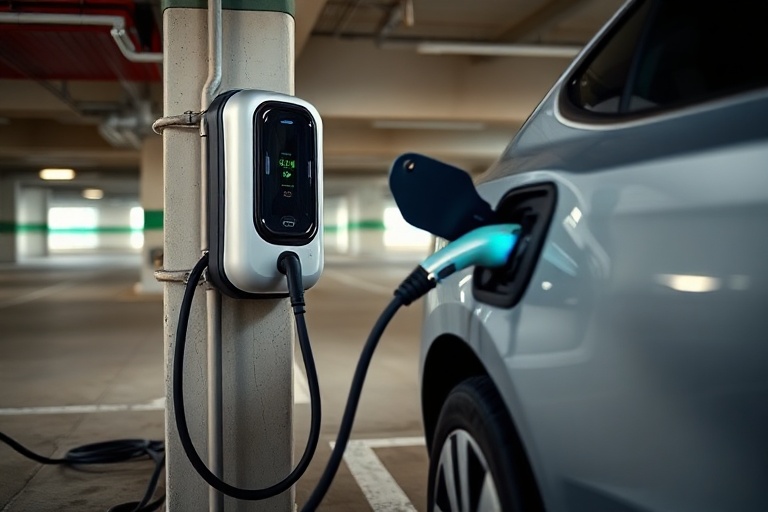
The transition to electric vehicles (EVs) is accelerating, and at its core lies a critical challenge: charging infrastructure. While the number of EVs on the road continues to rise, the availability and reliability of charging points remain uneven across regions. Governments, automakers, and energy companies are racing to build out networks that can support the growing demand, but gaps persist—especially in rural areas and along long-distance routes.
Today’s charging infrastructure is a patchwork of solutions, ranging from slow home chargers to high-speed public stations. The disparity in access often reflects socioeconomic divides, with wealthier urban neighborhoods boasting more options than lower-income or remote communities. Meanwhile, technological advancements promise faster charging speeds and smarter energy management, but adoption depends on overcoming regulatory hurdles and consumer confidence.
This article explores the current landscape of EV charging points, the obstacles to widespread deployment, and the innovations shaping the future. By examining real-world examples and policy initiatives, we uncover what it will take to create a truly accessible and sustainable charging network.
The Current State of EV Charging Infrastructure
As of 2024, the global count of public EV charging points has surpassed 2 million, according to the International Energy Agency (IEA). However, this figure masks significant regional disparities. Europe leads with over 600,000 chargers, while the United States has around 130,000—many of which are concentrated in a handful of states like California and New York. China, the world’s largest EV market, has installed nearly 1.2 million chargers, reflecting its aggressive push toward electrification.
Public charging points are categorized by power output and speed. Level 1 chargers, which use standard household outlets, provide just 3–5 miles of range per hour—a slow solution typically reserved for overnight home charging. Level 2 chargers, common in workplaces and shopping centers, deliver 12–80 miles per hour, making them suitable for daily commuters. DC fast chargers (Level 3) are the gold standard for long-distance travel, offering 60–100 miles of range in just 20 minutes, though they require specialized equipment and higher power grids.
One emerging trend is the integration of charging stations with renewable energy sources. Solar-powered chargers, often found in urban plazas or highway rest stops, reduce strain on the grid and lower carbon footprints. Companies like Tesla and ChargePoint have also begun deploying battery-buffered chargers, which store energy during off-peak hours and release it during high-demand periods, improving efficiency and reliability.
Accessibility and Equity Challenges
Despite progress, access to charging remains uneven. A 2023 study by the American Council for an Energy-Efficient Economy (ACEEE) found that 25% of U.S. counties have no public EV chargers at all. Rural areas, where grid infrastructure is often weaker, face the steepest barriers. Meanwhile, urban residents without home garages or dedicated parking spots rely heavily on public chargers, leading to congestion at popular stations.
Equity concerns extend beyond geography. Low-income communities and communities of color are less likely to have access to charging infrastructure, exacerbating existing transportation disparities. For example, a 2022 report from the Union of Concerned Scientists highlighted that predominantly Black and Latino neighborhoods in major U.S. cities have 30% fewer charging stations per capita than white neighborhoods.
To address these gaps, some states and municipalities have launched incentive programs. California’s EV Charging Infrastructure Project offers grants for installing chargers in disadvantaged communities, while New York’s Charge Ready NY program provides rebates for Level 2 chargers in workplaces and multi-unit dwellings. Federal initiatives, such as the U.S. National Electric Vehicle Infrastructure (NEVI) Formula Program, allocate $5 billion over five years to build out a national charging network, prioritizing rural and underserved areas.
Technological Innovations Driving Change
The next generation of EV charging technology aims to address speed, convenience, and sustainability. One of the most promising developments is 800-volt architecture, which enables ultra-fast charging by reducing the time required to reach 80% battery capacity to under 20 minutes. Automakers like Porsche, Hyundai, and Lucid have adopted this technology in their latest models, and charging networks like Electrify America and Ionity are expanding their 800-volt-capable stations.
Wireless charging is another frontier. Companies such as WiTricity and BMW are testing inductive charging pads embedded in roads or parking spots, allowing EVs to charge while stationary or even in motion. While still in early stages, wireless charging could eliminate the need for cables and reduce wear on charging ports. Pilot projects in cities like Detroit and Oslo are exploring its feasibility for public transit and ride-sharing fleets.
On the software side, smart charging platforms are optimizing energy use and grid stability. Services like ChargePoint’s Power Management and Tesla’s FleetAPI allow charging networks to distribute power dynamically, preventing overloads during peak hours. These systems also enable vehicle-to-grid (V2G) technology, where EVs feed excess energy back into the grid during high-demand periods—a concept already being tested in places like Japan and the UK.
The Role of Automakers and Energy Companies
Automakers are increasingly investing in charging infrastructure as part of their long-term strategies. Tesla, which built its reputation on its proprietary Supercharger network, has opened its stations to non-Tesla EVs in North America and Europe, positioning itself as a neutral provider. Rivian and Ford have partnered with third-party networks to offer seamless charging for their customers, while Volkswagen’s Electrify America subsidiary has pledged to install 10,000 fast chargers across the U.S. by 2026.
Energy companies are also stepping up. Shell, BP, and TotalEnergies have acquired or partnered with charging networks to diversify their offerings. Shell, for instance, acquired Ubitricity in 2021 and now operates over 100,000 charge points across Europe. These moves reflect a broader shift in the energy sector, where traditional oil giants are rebranding as mobility providers.
However, collaboration remains inconsistent. Some automakers guard their charging networks as competitive advantages, while energy companies struggle to balance profitability with the public good. The lack of standardization—particularly in payment systems and connector types—further complicates interoperability, leaving consumers frustrated by incompatible apps and pricing models.
Policy and Regulatory Hurdles
Government policies play a pivotal role in shaping the EV charging landscape, but regulatory frameworks vary widely by country and region. In the European Union, the Alternative Fuels Infrastructure Regulation (AFIR) mandates that member states ensure a minimum density of charging points, with targets of one charger per 10 EVs by 2025. The U.K. has set a goal of 300,000 public chargers by 2030, while China’s 14th Five-Year Plan includes subsidies for rural charging stations and incentives for private investment.
In the U.S., the federal NEVI program provides a framework for states to plan and fund charging networks, but implementation has been uneven. Some states, like California and Oregon, have moved quickly to deploy chargers along designated Alternative Fuel Corridors, while others lag due to bureaucratic delays or lack of funding. Local governments also impose their own regulations, from zoning laws that restrict charger installations to permitting processes that can take months to navigate.
Another challenge is the patchwork of standards. In the U.S., the Combined Charging System (CCS) is the dominant standard for DC fast charging, while Tesla uses its proprietary connector (though it has committed to adopting the North American Charging Standard, or NACS, moving forward). Europe relies on the Combined Charging System (CCS) and the older CHAdeMO standard, while China uses GB/T. This fragmentation forces automakers to produce multiple versions of their vehicles or rely on adapters, increasing costs and complexity.
Streamlining Permitting and Incentives
To accelerate deployment, some jurisdictions are simplifying permitting processes. In 2023, the U.S. Department of Transportation issued guidance to expedite NEVI-funded projects, encouraging states to pre-approve sites and reduce review times. Similarly, the U.K. has introduced a “fast-track” permitting system for chargers in urban areas, cutting approval times from months to weeks.
Incentives are another critical tool. Tax credits for businesses and individuals installing chargers have proven effective in driving adoption. The U.S. federal government offers a 30% tax credit for residential chargers (up to $1,000) and a 30% credit for commercial installations (up to $30,000). States like Colorado and Massachusetts have layered additional rebates on top of federal incentives, making it more affordable for small businesses and landlords to participate.
However, incentive programs often face criticism for being too complex or poorly targeted. A 2023 report by the Atlantic Council found that many rebates go unused due to confusing eligibility rules or lack of awareness. Streamlining applications and increasing transparency could unlock more funding and encourage broader participation.
What’s Next for EV Charging Points?
The road ahead for EV charging is both promising and complex. By 2030, the IEA projects that the global stock of public chargers could reach 15 million, driven by government mandates and private investment. Yet, achieving this scale will require overcoming persistent challenges: ensuring equitable access, standardizing technology, and integrating charging networks with renewable energy systems.
One potential solution is the rise of “charging hubs”—large, amenity-rich stations that combine fast chargers with retail spaces, food courts, and even gyms. Examples include Electrify America’s stations in California and Greenlots’ hubs in Singapore, which offer lounges, Wi-Fi, and even EV rentals. These hubs not only improve the charging experience but also generate revenue to sustain operations.
Another trend is the convergence of mobility and energy. Companies like Fermata Energy and Nuvve are developing platforms that allow EV owners to sell excess battery power back to the grid during peak demand, creating a new revenue stream. Pilot programs in California and Germany have shown that V2G technology can reduce energy costs for consumers while supporting grid resilience.
For consumers, the future hinges on reliability and convenience. Today, range anxiety is often a misplaced fear—most EV owners charge at home or work and