Rome Open 2024: Tennis Meets History in Italy’s Grand Clay Classic
Rome Open 2024: A Global Tennis Showcase in the Heart of History
The Rome Open, officially known as the Internazionali BNL d’Italia, returned to the clay courts of Foro Italico in May 2024. This prestigious sports event, now in its 81st edition, serves as a crucial warm-up for the French Open while also standing as a marquee tournament in its own right. With a field featuring the world’s top players, the Rome Open blends athletic excellence with the timeless backdrop of Rome’s architectural grandeur.
For decades, the tournament has occupied a unique space in the tennis calendar. It bridges the gap between hard-court dominance in early spring and the clay-court grind of Roland Garros. This dual role gives it a distinctive character—part tactical laboratory, part pressure test. The 2024 edition, under sunny Mediterranean skies, delivered drama, upsets, and a reminder of why Italian tennis culture remains so deeply embedded in the sport’s fabric.
The Tournament’s Global Reputation and Cultural Footprint
The Rome Open is more than a tennis event; it’s a cultural institution. Held at the iconic Foro Italico, a 1930s-era sports complex designed under Mussolini’s regime, the venue tells a story of power, propaganda, and later, sporting redemption. Its white-marble stadium, framed by cypress trees and the distant dome of St. Peter’s Basilica, offers a visual contrast unlike any other on the ATP and WTA tours. The setting elevates the tournament from a mere competition to a spectacle of sport and spectacle.
Globally, the Rome Open commands attention. It ranks as the third-most prestigious clay-court event after Roland Garros and Madrid, drawing top seeds, media attention, and a cosmopolitan audience. In 2024, over 200,000 spectators passed through the gates, with significant representation from Europe, the Americas, and Asia. Broadcast in over 180 countries, the tournament reaches millions, reinforcing Italy’s role as a cultural crossroads for sport.
Its influence extends beyond the court. The event has become a platform for fashion, art, and gastronomy. Local Italian brands showcase designs inspired by tennis heritage, while pop-up exhibitions highlight the intersection of sport and design. Food vendors offer regional specialties like supplì and porchetta, turning match breaks into culinary tours of Italy. This fusion of sport and culture reflects a broader trend in global sports tourism, where tournaments are no longer isolated athletic contests but immersive experiences.
2024 Highlights: Champions, Comebacks, and Controversies
The 2024 Rome Open delivered a tournament of contrasts. On the men’s side, Novak Djokovic extended his dominance with a commanding final victory over Jannik Sinner, marking his sixth title in the Italian capital. The match showcased Djokovic’s trademark resilience, particularly in a third-set tiebreak where he saved multiple set points. His win further cemented his status as the most successful male player in Rome’s history, a record that speaks to both longevity and adaptability.
The women’s draw was equally compelling. Iga Świątek claimed her third Rome title, defeating Aryna Sabalenka in a three-set thriller that lasted nearly three hours. Świątek’s victory was notable for its tactical depth, as she shifted between baseline rallies and net approaches to disrupt Sabalenka’s power game. The win also underscored Poland’s growing influence in women’s tennis, a trend that has reshaped the sport’s competitive landscape.
Yet the tournament was not without drama off the court. A high-profile doping case involving a rising Italian player drew scrutiny in the days leading up to the event. While authorities cleared the player to compete, the controversy sparked debates about transparency in anti-doping protocols. Meanwhile, a scheduling dispute between tournament organizers and a major sponsor led to last-minute changes in broadcast times, highlighting the commercial pressures that increasingly shape top-tier events.
Below are some of the standout moments from Rome Open 2024:
- Men’s Singles Final: Novak Djokovic def. Jannik Sinner, 6–2, 6–7(6), 6–3
- Women’s Singles Final: Iga Świątek def. Aryna Sabalenka, 6–4, 6–7(5), 6–4
- Men’s Doubles Champions: Marcel Granollers / Horacio Zeballos
- Women’s Doubles Champions: Coco Gauff / Jessica Pegula
- Top Seed Upset: Carlos Alcaraz lost in the quarterfinals to Lorenzo Musetti
The inclusion of Next Gen players like Musetti and Ben Shelton added fresh energy to the draw, signaling a generational shift. Their performances hinted at a future where the sport’s hierarchy is increasingly fluid, with no single player or nation holding permanent dominance.
Rome as a Stage: Why the City Matters Beyond Tennis
Rome’s significance as a host city transcends the boundaries of sport. As the capital of Italy and a UNESCO World Heritage site, it represents a living museum of Western civilization. The juxtaposition of ancient ruins, Renaissance art, and modern infrastructure creates a backdrop that is both familiar and surreal for athletes and fans alike.
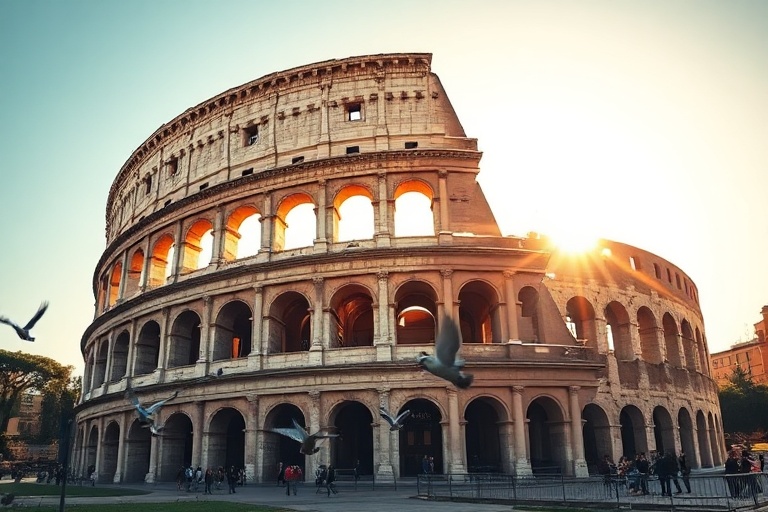
For players, competing in Rome is as much about immersion as it is about competition. Many athletes extend their stays to explore the city’s historic sites—running along the Tiber River, visiting the Colosseum, or dining in Trastevere’s narrow alleys. This cultural engagement fosters a deeper connection between the sport and its host, turning the tournament into a bridge between athletic achievement and human experience.
Economically, the Rome Open injects millions into the local economy. Hotels, restaurants, and transportation services see a surge in activity, particularly during the tournament’s two-week duration. The event has also spurred infrastructure improvements, including upgrades to public transit and accessibility around Foro Italico. These investments have long-term benefits, enhancing Rome’s appeal as a global destination for both leisure and elite sport.
Moreover, the tournament plays a role in youth engagement. Local tennis clubs report increased participation after the event, as aspiring players are inspired by watching their idols on center court. Initiatives like the Rome Open’s “Tennis in the Parks” program bring free clinics to underserved neighborhoods, using the tournament’s platform to promote inclusion and accessibility in sport.
A Legacy of Excellence and the Road Ahead
As the Rome Open looks toward its centenary in 2025, it stands at a crossroads. The tournament must balance tradition with innovation—preserving the historic charm of Foro Italico while embracing modern demands in sustainability, technology, and fan experience. Recent efforts to reduce plastic waste and promote eco-friendly transportation reflect a growing awareness of environmental responsibility in sports.
Looking ahead, the tournament’s organizers face the challenge of maintaining relevance in an era of expanding global events. The rise of Middle Eastern tournaments like Dubai and the increasing popularity of Asian swing events mean that Rome must continually innovate to attract top players and audiences. Yet its unique cultural resonance gives it an enduring advantage—one that cannot be replicated by newer venues.
For tennis fans, the Rome Open remains a highlight of the season. It offers a blend of high-stakes competition, artistic beauty, and emotional resonance. Whether it’s Djokovic lifting the trophy under the Roman sun or a young Italian player winning their first ATP match on home soil, the tournament captures the soul of the sport.
As the clay dust settles each May, Rome does more than host a tennis event. It reaffirms the idea that sport, at its best, is a celebration of human potential—set against the backdrop of history, culture, and community.