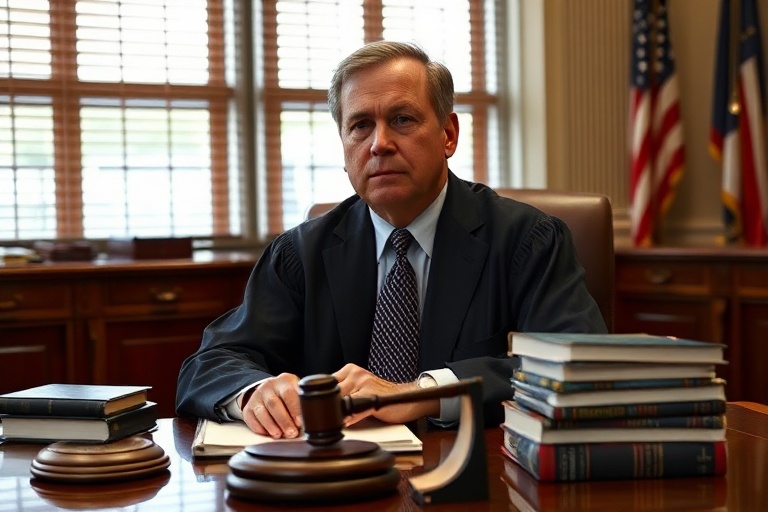
samuel alito
When Samuel Alito joined the U.S. Supreme Court in 2006, he brought with him a judicial philosophy that would leave an indelible mark on American law. Over nearly two decades on the bench, Alito has distinguished himself as one of the most consequential justices in recent memory. His opinions, often delivered with sharp precision, have reshaped constitutional interpretation while drawing both fervent support and fierce criticism.
Alito’s influence extends beyond individual rulings. His approach to constitutional originalism and textualism has become a cornerstone of the Court’s conservative bloc. From religious liberty to abortion rights, his votes and written opinions frequently set the tone for the nation’s legal discourse. As the Court continues to navigate contentious social issues, Alito’s voice remains one of the most defining.
Early Life and Legal Career
Born in 1950 in Trenton, New Jersey, Samuel Anthony Alito Jr. grew up in a family that valued public service. His father, an Italian immigrant, worked as a high school teacher and later became the director of the New Jersey Division of Alcoholic Beverage Control. His mother, also an educator, instilled in him a strong work ethic and a commitment to civic duty.
Alito attended Princeton University, where he earned his bachelor’s degree in 1972. His time at Princeton was marked by both academic achievement and personal growth. He was involved in student government and later reflected on how his experiences there shaped his views on constitutional principles. He then attended Yale Law School, graduating in 1975, where he honed his legal reasoning skills in an environment that emphasized rigorous analysis.
After law school, Alito clerked for Judge Leonard I. Garth on the U.S. Court of Appeals for the Third Circuit. This early mentorship under a respected jurist provided him with a foundation in appellate practice. His subsequent career in the Justice Department during the Reagan administration solidified his reputation as a sharp legal mind, particularly in the Office of Legal Counsel, where he contributed to key constitutional arguments.
Judicial Philosophy and Key Rulings
Alito’s judicial philosophy is rooted in originalism and textualism—principles that guide his interpretation of the Constitution and statutes. Originalism, in his view, requires judges to discern the meaning of constitutional provisions as they were understood at the time of their adoption. Textualism, meanwhile, emphasizes the plain meaning of legal texts rather than legislative intent or broader policy considerations.
These principles have shaped his approach to some of the most divisive issues before the Court. In Dobbs v. Jackson Women’s Health Organization (2022), Alito authored the majority opinion overturning Roe v. Wade, arguing that the constitutional right to abortion was not deeply rooted in the nation’s history and tradition. The decision marked a seismic shift in reproductive rights law and underscored Alito’s commitment to originalist interpretation.
Alito’s opinions often reflect a deep skepticism of judicial overreach. In Citizens United v. FEC (2010), he joined the majority in expanding corporate political speech rights, a ruling that continues to shape campaign finance law. His concurrence in United States v. Texas (2023), which limited the Biden administration’s immigration policies, further demonstrated his reluctance to defer to executive branch interpretations of the law.
Yet Alito’s jurisprudence is not monolithic. While he is often associated with conservative outcomes, his opinions sometimes reveal a nuanced understanding of institutional limits. For example, in Bostock v. Clayton County (2020), he joined the majority in ruling that workplace discrimination based on sexual orientation or gender identity violates Title VII of the Civil Rights Act. The decision surprised some observers, given his generally restrained approach to statutory interpretation.
Notable Cases and Their Broader Implications
The impact of Alito’s rulings extends far beyond the courtroom. His opinions have redefined the boundaries of religious liberty, gun rights, and free speech while prompting widespread debate about the role of the judiciary in American democracy. Below are some of the most consequential cases associated with his tenure:
- Burwell v. Hobby Lobby (2014): Alito authored the majority opinion allowing closely held for-profit corporations to refuse, on religious grounds, to cover contraception in their employee health plans. The ruling expanded the scope of religious exemptions under the First Amendment and the Religious Freedom Restoration Act.
- McDonald v. City of Chicago (2010): Alito joined the majority in incorporating the Second Amendment against state and local governments, striking down Chicago’s handgun ban. The decision extended the Court’s landmark District of Columbia v. Heller ruling to all jurisdictions.
- Janus v. AFSCME (2018): In a major blow to public-sector unions, Alito wrote the majority opinion prohibiting unions from collecting fees from non-members. The decision reshaped labor law and weakened union power across the country.
- Dobbs v. Jackson Women’s Health Organization (2022): As mentioned earlier, this ruling overturned Roe v. Wade and Planned Parenthood v. Casey, returning abortion regulation to the states. The decision sparked protests, legislative battles, and a national conversation about the limits of judicial power.
Controversies and Public Perception
Alito’s tenure has not been without controversy. His opinions, particularly in high-profile cases, have drawn sharp criticism from liberal advocates, legal scholars, and even some of his colleagues. Critics argue that his originalist approach is selectively applied, pointing to his willingness to embrace expansive readings of constitutional provisions when it aligns with conservative outcomes.
Perhaps the most enduring controversy surrounding Alito involves his conduct outside the courtroom. In 2020, it was revealed that he and his wife had attended a dinner hosted by Leonard Leo, a prominent conservative activist who helped shape the Court’s conservative majority. The event was funded by a network of donors with interests before the Court, raising ethical concerns. While Alito defended the gathering as a private event, the revelation fueled accusations of impropriety and compromised judicial independence.
Alito’s public statements have also sparked backlash. In a 2020 opinion joined by Justice Clarence Thomas, he suggested that the Court might reconsider landmark precedents like Griswold v. Connecticut (which established a right to contraception) and Lawrence v. Texas (which struck down sodomy laws). The remarks were seen by many as a signal that these rights could be next on the chopping block, further polarizing public opinion.
Despite these controversies, Alito remains a hero to many conservatives. His unwavering commitment to originalism and textualism has earned him a reputation as a principled jurist willing to challenge prevailing legal orthodoxies. For his supporters, he embodies the ideal of a judge who interprets the law as written, rather than imposing personal policy preferences.
The Future of Alito’s Legacy
As Samuel Alito enters the later stages of his judicial career, his legacy is already secure as one of the most consequential justices in modern history. His opinions have reshaped constitutional law, influenced national policy debates, and set the stage for future legal battles. Whether through his votes, his written dissents, or his public statements, Alito has ensured that his judicial philosophy will endure long after he leaves the bench.
Looking ahead, the Supreme Court’s docket is likely to feature cases that test the limits of Alito’s principles. Issues like affirmative action, LGBTQ+ rights, and executive power will demand his attention, and his approach to these challenges will continue to shape the Court’s direction. For better or worse, Alito’s influence will be felt in every major decision that touches on constitutional interpretation.
Yet the longevity of his legacy may hinge on broader questions about the Court’s role in American democracy. As public trust in the judiciary wanes and calls for reform grow louder, Alito’s uncompromising approach may increasingly be seen as emblematic of an institution out of step with contemporary values. Whether this perception will diminish his historical standing remains an open question.
What is certain is that Samuel Alito’s impact on the law is already profound. His opinions have redefined constitutional boundaries, his controversies have fueled national debates, and his judicial philosophy has set the agenda for the Court’s conservative wing. As the nation continues to grapple with the implications of his rulings, Alito’s place in history is assured—as a justice who reshaped the law, for better or for worse.
For those interested in exploring more about the Supreme Court’s evolving dynamics, visit our Politics and Analysis sections for in-depth coverage of legal and political trends.