Top Gear’s Global Legacy: How the British Show Changed Car Culture Forever
The hum of a V8 engine. The crunch of gravel under tires. The dry British wit cutting through the noise. For over four decades, Top Gear has evolved from a modest British motoring program into a cultural institution that transcends borders. Its influence stretches from suburban garages in the UK to living rooms across six continents. The show’s ability to blend automotive journalism with entertainment has made it a benchmark for car culture worldwide.
What began in 1977 as a straightforward BBC program about automobiles has transformed into a global brand. The reboot in 2002, helmed by Jeremy Clarkson, Richard Hammond, and James May, catapulted the series into mainstream consciousness. Beyond the trio’s chemistry, the show’s format—part review, part challenge, part spectacle—created a blueprint that countless automotive programs have tried to emulate.
The Evolution of a Cultural Icon
Top Gear’s origins were humble. Initially, it served as a practical guide for drivers, offering maintenance tips and road tests during an era when car ownership was becoming widespread. By the 1980s and 1990s, it began to carve out a more distinctive identity under presenters like Quentin Willson and Tiff Needell, who introduced a blend of humor and irreverence.
The 2002 relaunch was a turning point. Clarkson, Hammond, and May brought a chemistry that felt both familiar and fresh. Their banter, combined with ambitious challenges—like building a car in a week or racing across the world in improbable vehicles—gave the show a dynamic energy. The trio’s global appeal was undeniable, and their personalities became synonymous with the program.
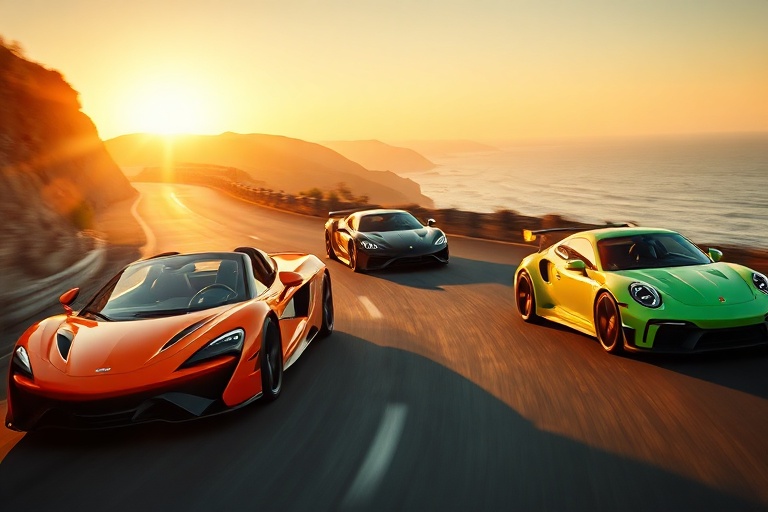
Under their tenure, Top Gear expanded its scope. It wasn’t just about reviewing cars anymore; it was about storytelling. Episodes featured everything from a British family’s journey across Africa in a Toyota pickup to a comparison of hypercars on a German autobahn. The show’s global adventures mirrored the increasing interconnectedness of the automotive world, where brands like Porsche, Ferrari, and Tesla competed not just in performance, but in perception.
The Global Reach of British Automotive Culture
Top Gear’s international success can be attributed to its universal themes: speed, innovation, and the thrill of the open road. Yet, it also carries a distinctly British sensibility—self-deprecating humor, a love for eccentric challenges, and a willingness to push boundaries. This blend has resonated far beyond the UK, particularly in markets where car culture runs deep.
In the United States, Top Gear found an audience among enthusiasts who appreciated its no-nonsense approach to car reviews. While American automotive media often focused on horsepower and price, Top Gear emphasized driving dynamics and real-world usability. Its global challenges, such as the transcontinental races, also tapped into a sense of adventure that appeals to American audiences.
In Europe, the show’s irreverence and high-speed antics struck a chord. German viewers, known for their precision engineering, embraced the show’s mix of humor and technical insight. Meanwhile, in Asia, where car ownership is rapidly expanding, Top Gear introduced audiences to brands and models they might not have encountered otherwise. The show’s global appeal is evident in its international spin-offs, including Top Gear Australia and Top Gear Korea.
The show’s format has also inspired local adaptations. In India, for example, Top Gear India brought the same blend of humor and automotive journalism to a market where car culture is growing rapidly. These adaptations prove that the core appeal of Top Gear—its ability to make cars exciting and accessible—transcends language and geography.
The Challenges and Controversies That Defined the Show
No discussion of Top Gear would be complete without acknowledging its controversies. The show has faced criticism for its portrayal of women, its sometimes reckless challenges, and the public fallout involving its most famous presenter, Jeremy Clarkson.
In 2015, Clarkson was dismissed from the show following a physical altercation with a producer, a moment that underscored the darker side of the program’s culture. The incident sparked debates about accountability in media and the responsibilities of public figures. The BBC ultimately canceled the original iteration of Top Gear, though it was later revived on Amazon Prime with a new lineup, including Chris Evans and later Freddie Flintoff, Rory Reid, and Chris Harris.
The controversies surrounding Top Gear highlight the tension between entertainment and responsibility. The show’s challenges, often involving high-speed stunts or destructive races, have drawn criticism for glorifying reckless behavior. Yet, these moments have also been part of its appeal, creating a sense of unpredictability that keeps viewers engaged.
Despite these challenges, Top Gear has persevered, proving its resilience as a cultural force. The show’s ability to adapt—whether through new presenters, formats, or platforms—has kept it relevant in an ever-changing media landscape. Its controversies, rather than sinking the show, have become part of its narrative, adding layers to its legacy.
The Legacy and Future of Top Gear
Top Gear’s impact on automotive media cannot be overstated. It has influenced countless programs, from automotive reviews to reality TV. The show’s emphasis on storytelling and entertainment over pure technical analysis has redefined how cars are presented to the public.
Looking ahead, the future of Top Gear will likely be shaped by several key trends. The rise of electric vehicles (EVs) presents a new frontier for the show. As automakers like Tesla, Rivian, and Lucid push the boundaries of electric performance, Top Gear will need to adapt its reviews and challenges to reflect this shift. Already, the show has begun exploring EVs, but its ability to capture the excitement of electric driving will be crucial.
The digital revolution has also transformed the media landscape. While Top Gear remains a television staple, its online presence—through YouTube clips, social media, and streaming platforms—has expanded its reach. The show’s challenges and reviews are now consumed in bite-sized formats, catering to a generation that prefers on-demand content.
Another factor is the changing demographics of car enthusiasts. Younger audiences, particularly in urban areas, are less interested in traditional car ownership and more focused on mobility solutions like ride-sharing and electric scooters. Top Gear will need to evolve to stay relevant, perhaps by exploring broader themes of transportation and innovation.
Yet, at its core, Top Gear remains a celebration of the automobile. Whether it’s the raw power of a supercar, the ingenuity of a homemade vehicle, or the simple joy of a Sunday drive, the show taps into a universal passion. Its ability to blend humor, adventure, and automotive passion ensures that it will continue to captivate audiences for years to come.
The Enduring Appeal of Top Gear
What makes Top Gear endure? It’s more than just cars; it’s about the stories they tell. The show’s challenges, whether racing across continents or transforming a mundane vehicle into something extraordinary, are metaphors for human ambition. Its humor, often at the expense of its presenters’ egos or the absurdity of certain challenges, makes it relatable. And its global perspective reminds viewers that the love of driving is a shared experience.
In an era where automotive media is increasingly fragmented, Top Gear stands out as a unifying force. It has transcended its origins to become a cultural touchstone, a testament to the power of storytelling in the automotive world. As long as there are roads to drive and stories to tell, Top Gear will remain a vital part of the conversation.
For millions of viewers, the rev of an engine, the sight of a car sliding sideways on a test track, or the laughter of its presenters will always evoke a sense of excitement. That’s the magic of Top Gear—it doesn’t just show you cars. It makes you feel them.