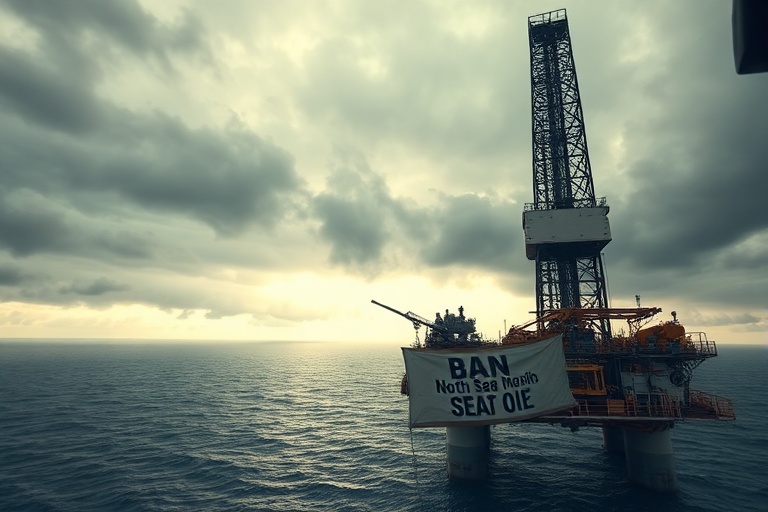
UK North Sea Oil Ban: Economic and Energy Impact Explained
The UK government’s recent announcement to phase out new oil and gas licenses in the North Sea marks a pivotal moment in the country’s energy policy. This decision, embedded in broader commitments to climate goals, has sparked intense debate among policymakers, industry leaders, and environmental advocates. While the move aligns with the UK’s net-zero ambitions, it raises critical questions about energy security, economic stability, and the transition to renewable alternatives.
The Policy Shift and Its Origins
In April 2024, Prime Minister Keir Starmer confirmed that no new licenses would be issued for oil and gas exploration in the North Sea. This decision follows years of pressure from climate activists and aligns with Labour’s election manifesto promises. The rationale is clear: reducing carbon emissions and accelerating the shift toward renewable energy sources like wind and solar.
However, the policy wasn’t developed in a vacuum. The UK has long been a global leader in offshore energy, with the North Sea serving as a cornerstone of its economy since the 1970s. The region has produced billions of barrels of oil and trillions of cubic feet of gas, fueling industries and households alike. But as climate science intensifies its warnings, the government faces a delicate balancing act—supporting an industry that has driven prosperity while charting a course away from fossil fuels.
Critics argue that the ban could undermine energy security, particularly as the UK still relies on oil and gas for over 70% of its energy needs. The government counters that existing fields will continue producing until renewable infrastructure scales up sufficiently. Yet, the transition’s timeline remains a point of contention.
Key Implications for the UK Economy
The economic consequences of the North Sea oil ban are multifaceted. While the long-term benefits of reduced carbon emissions are undeniable, short-term disruptions could reshape industries and labor markets.
- Job Market Shifts: The oil and gas sector employs over 200,000 people directly and indirectly. A sudden halt in new projects could lead to job losses, particularly in regions like Aberdeen, Scotland, where the industry is deeply entrenched. Retraining programs and green energy initiatives may mitigate some of these impacts, but the transition won’t happen overnight.
- Investment Uncertainty: Oil companies, including giants like BP and Shell, may redirect investments to regions with more favorable policies. This could slow innovation in carbon capture and storage technologies, which the UK has prioritized as part of its net-zero strategy.
- Energy Prices: With domestic production declining, the UK may become more reliant on imports, potentially increasing energy costs. This could disproportionately affect low-income households already struggling with rising living expenses.
- Tax Revenue Impact: North Sea oil and gas contribute billions in tax revenue annually. A decline in production could strain public finances, forcing the government to rethink its fiscal strategies.
Proponents of the ban argue that the economic risks are overstated. They point to the rapidly growing renewable energy sector, which now employs more people than oil and gas across the UK. The government has pledged £28 billion in green investment, aiming to create 480,000 jobs by 2030. Yet, the success of this transition hinges on execution—a challenge that won’t be solved by policy alone.
Energy Security in a Changing Landscape
Energy security has emerged as the most contentious issue surrounding the North Sea oil ban. The UK’s energy mix remains heavily dependent on fossil fuels, and the government’s plan to replace them with renewables by 2035 is ambitious, to say the least.
One of the biggest concerns is the UK’s reliance on imported gas, particularly from Qatar and Norway. While these imports are currently stable, geopolitical tensions or supply chain disruptions could lead to shortages. The war in Ukraine has already demonstrated how vulnerable energy markets can be, and the UK is not immune to such risks.
To address these concerns, the government has emphasized the need for a diversified energy portfolio. This includes expanding nuclear power, accelerating offshore wind projects, and investing in hydrogen and carbon capture technologies. However, each of these solutions comes with its own set of challenges, from regulatory hurdles to technological limitations.
Another critical factor is the role of the North Sea’s existing infrastructure. Even as new licenses are banned, the UK will continue extracting oil and gas from current fields for decades. This creates a paradox: the country is simultaneously phasing out fossil fuels while relying on them for the foreseeable future. The government’s plan to repurpose North Sea platforms for carbon storage and hydrogen production could offer a partial solution, but the timeline for such transitions remains uncertain.
Global Comparisons and Broader Context
The UK is not alone in its pivot away from fossil fuels. Countries like Norway and Denmark have also set ambitious net-zero targets, though their approaches differ. Norway, for instance, continues to explore new oil and gas fields in the Arctic while investing heavily in renewables. Denmark, on the other hand, has adopted a more aggressive stance, banning new oil and gas licenses entirely by 2050.
What sets the UK apart is its historical dependence on North Sea oil and gas. Unlike Denmark, which has long prioritized wind energy, the UK’s energy transition is a more complex endeavor. The government’s decision reflects a broader global trend: the recognition that fossil fuels must eventually be phased out, but the path forward is far from clear.
The UK’s approach also contrasts with that of the United States, where the Biden administration has approved new oil and gas leases while simultaneously pushing for clean energy investments. This divergence highlights the challenges of balancing economic realities with environmental goals—a tension that will define energy policy for decades to come.
Conclusion: A Balancing Act Ahead
The UK’s decision to ban new North Sea oil and gas licenses is a bold step toward a greener future. Yet, its success depends on more than just policy—it requires careful planning, substantial investment, and a willingness to navigate the complexities of a rapidly changing energy landscape.
For now, the government’s focus must be on ensuring a just transition for workers, securing energy supplies, and accelerating the development of renewable alternatives. The road ahead is fraught with challenges, but the potential rewards—lower carbon emissions, a thriving green economy, and greater energy independence—are worth pursuing.
As the UK charts this course, the world will be watching. The lessons learned here could shape energy policy globally, proving that even in an era of climate urgency, the transition away from fossil fuels must be managed with foresight and pragmatism.
For more insights into the intersection of energy and policy, explore our News and Politics sections on Dave’s Locker.